

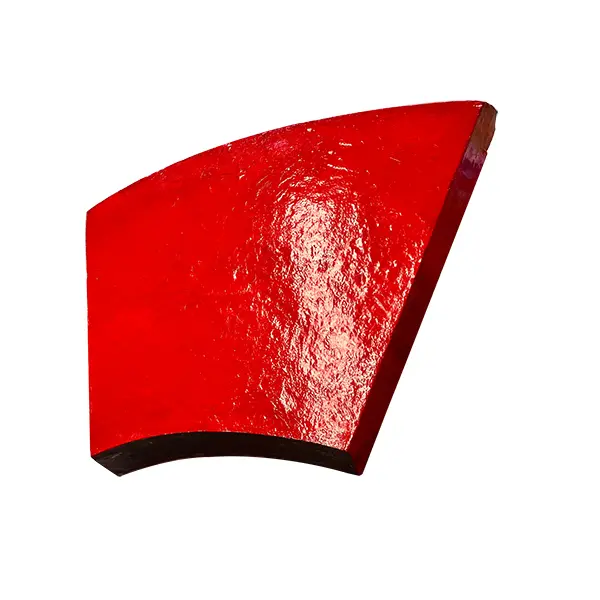
Vertical Roller Mill Grinding Table / Vertical Mill Liner
VRM Grinding Table Segments & Table Liners — Ni-Hard IV / High Chrome Alloy (Cr20 / Cr26 / Cr27Mo2) / Hardfaced Composite — For Loesche / Pfeiffer / FLSmidth Atox / Polysius
Vertical Roller Mill Grinding Table / Vertical Mill Liner
Material Specifications & Selection Guide
| Parameter | Ni-Hard IV | High Cr Cr15 | High Cr Cr20 | High Cr Cr26 | Cr27Mo2 |
|---|---|---|---|---|---|
| Standard | ASTM A532 I-D | ASTM A532 II | ASTM A532 II | II-E / GB/T 8263 | GB/T 8263 / EN 12513 |
| C% | 2.8-3.6 | 2.4-3.2 | 2.4-3.2 | 2.3-3.0 | 2.3-2.9 |
| Cr% | 7.0-11.0 | 14.0-17.0 | 18.0-22.0 | 23.0-28.0 | 26.0-29.0 |
| Mo% / Ni% | Mo 0-1.0 / Ni 3.5-5.0 | Mo 0.5-1.5 | Mo 0.5-2.0 | Mo 0-1.5 | Mo 1.5-2.5 |
| Hardness | 55-60 HRC | 56-60 HRC | 58-62 HRC | 58-63 HRC | 58-65 HRC |
| Carbide Vol. | 20-28% | 22-30% | 25-33% | 28-38% | 30-42% |
| Matrix | Martensite+Austenite | Martensite+Austenite | Martensite+Austenite | Martensite+fine carbides | Tempered Martensite |
| Impact (J/cm2) | 3-5 | 4-6 | 4-7 | 5-8 | 6-9 |
| Life Factor | 1.0x | 1.1-1.2x | 1.3-1.5x | 1.5-1.8x | 1.8-2.2x |
| Max Temp | 250 C | 300 C | 350 C | 400 C | 450 C |
| Max Segment | 5,000 kg | 8,000 kg | 10,000 kg | 12,000 kg | 15,000 kg |
| Parameter | Standard HF | Heavy-Duty HF | Premium HF | Bi-Metallic |
|---|---|---|---|---|
| Base Material | Cr20 Casting | Cr26 Casting | Cr27Mo2 Casting | Mn13Cr2 + Cr HF |
| Overlay Process | Single-layer open arc | Double-layer open arc | Multi-layer (3-5x) | Cast-in-place + overlay |
| Weld Wire | Fe-Cr-C (Cr28-33%) | Fe-Cr-C-Nb (Nb4-7%) | Fe-Cr-C-Nb-W-V | WC-reinforced NiCrBSi |
| Thickness | 3-5 mm | 5-8 mm | 8-15 mm | 6-10 mm |
| Hardness | 58-62 HRC | 60-64 HRC | 63-68 HRC | 62-67 HRC |
| Carbide HV | 1200-1400 | 1400-1600 | 1600-2000 | 1800-2400 (WC) |
| Coverage | Top face only | Top + inner groove | Full coverage | Top (bi-metal bond) |
| Re-Hardenable | 2-3 times | 3-4 times | 3-5 times | Replace overlay only |
| HF Interval | 2,000-2,500 hrs | 2,500-3,500 hrs | 3,500-5,000 hrs | 2,500-4,000 hrs |
| Brand | Model | Table Dia. | Segments | Seg. Wt (kg) | Material | kW | tph |
|---|---|---|---|---|---|---|---|
| Loesche | LM 28.3D | 2,800 | 12 | 380-500 | Cr20 | 1,200 | 150-180 |
| Loesche | LM 46.4 | 4,600 | 12 | 1,600-2,200 | Cr26 | 3,300 | 340-400 |
| Loesche | LM 56.3+3 CS | 5,600 | 12 | 3,500-5,000 | Cr27Mo2 | 5,400 | 500-600 |
| Pfeiffer | MPS 3750 B | 3,020 | 8 | 600-850 | Cr20 | 1,500 | 160-200 |
| Pfeiffer | MPS 4750 B | 3,750 | 12 | 1,200-1,800 | Cr26 | 2,800 | 280-340 |
| Pfeiffer | MPS 5600 BC | 4,400 | 12 | 2,000-3,000 | Cr27Mo2 | 5,400 | 450-540 |
| FLSmidth | Atox 35 | 3,000 | 8 | 550-800 | Cr20 | 1,600 | 180-220 |
| FLSmidth | Atox 50 | 4,250 | 12 | 1,800-2,800 | Cr26 | 3,600 | 370-440 |
| FLSmidth | OK 42-4 | 3,600 | 8 | 1,000-1,500 | Cr26 | 3,200 | 220-280 |
| Polysius | RM 41/19 | 3,300 | 12 | 800-1,200 | Cr20 | 2,000 | 200-250 |
| Polysius | RM 54/27 | 4,350 | 12 | 2,200-3,500 | Cr26 | 4,500 | 380-460 |
| UBE | UM 38.4 | 3,800 | 12 | 1,200-1,800 | Cr26 | 2,600 | 240-300 |
| UBE | UM 50.4 | 5,000 | 12 | 3,500-5,500 | Cr27Mo2 | 5,000 | 430-520 |
| Sinoma | TRM 38.4 | 3,800 | 12 | 1,100-1,700 | Cr20/Cr26 | 2,600 | 220-280 |
| Sinoma | TRM 53.4 | 5,300 | 12 | 3,000-4,800 | Cr27Mo2 | 5,000 | 430-520 |
| Citic | CLM 3630 | 3,630 | 12 | 950-1,400 | Cr20/Cr26 | 2,250 | 200-260 |
Selection Quick Reference
- Coal mill grinding table (lower abrasion, moderate temp): Ni-Hard IV or Cr15 — most economical, segments 200-1,500 kg, service life 15,000-22,000 hrs
- Raw meal grinding (limestone + clay, standard abrasion): Cr20 standard; upgrade to Cr26 for hard limestone with chert/flint nodules, table 2.8-5.6m, segments 1,000-6,000 kg
- Slag grinding / GGBFS (high silica, 30-35% SiO2): Cr26 minimum, Cr27Mo2 preferred for >200 tph, requires hardfacing rebuild every 2,000-3,000 hrs
- Cement finish grinding (250-350 C, clinker + gypsum): Cr27Mo2 with multi-layer hardfacing — Mo content >1.5% essential for hot hardness retention at elevated temps
- Mineral / ore grinding (quartz, iron ore, extreme abrasion): Cr27Mo2 + WC-reinforced hardfacing mandatory, NDT inspection every 1,000 hrs, life 5,000-8,000 hrs
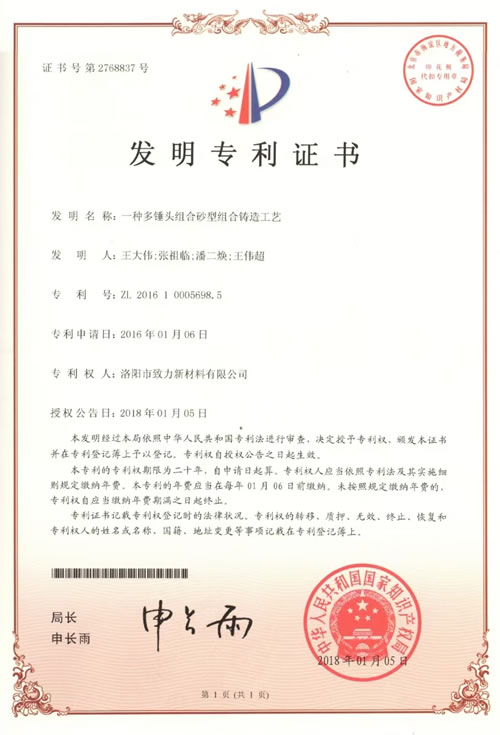
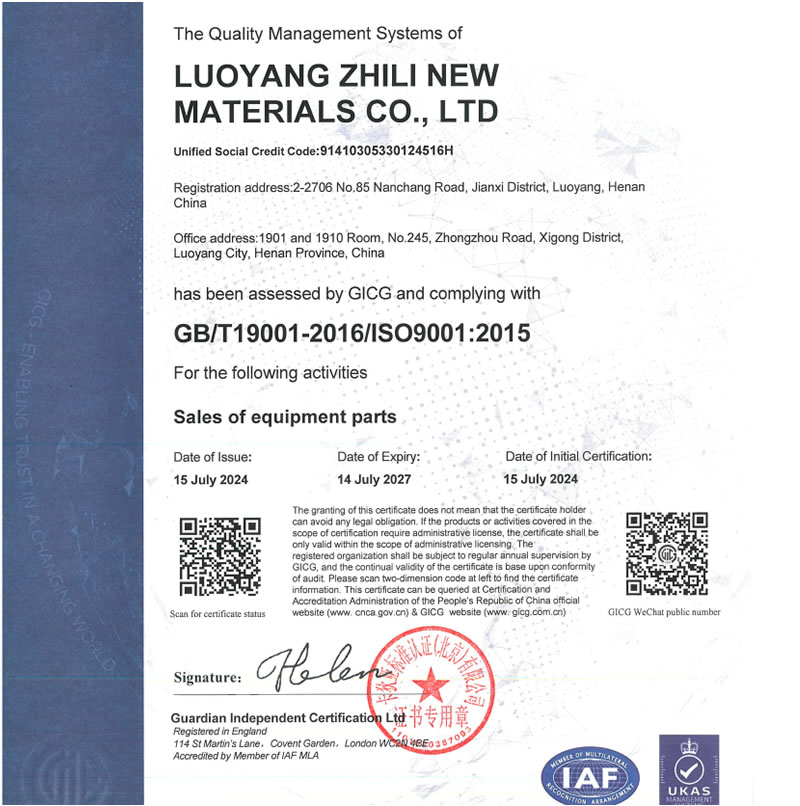
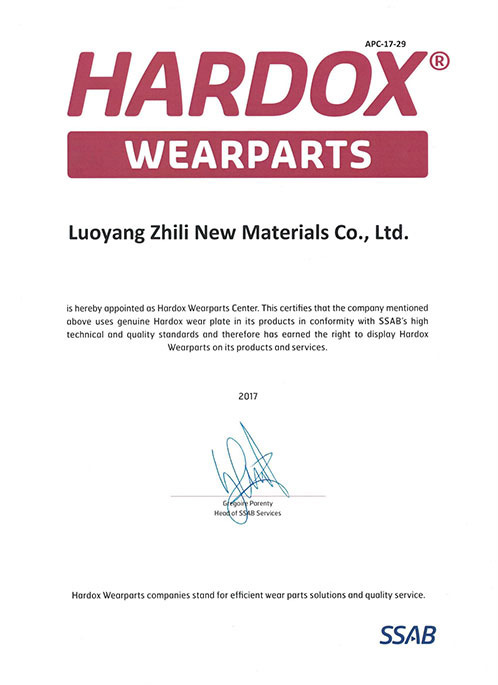
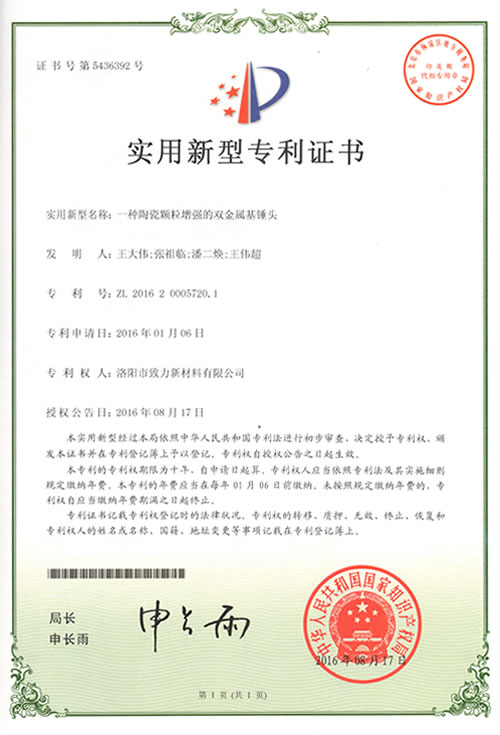
Certifications & Authorizations
Quality you can verify. Partners you can trust.
Custom OEM / ODM
From drawing to delivery — one-stop customization, no minimum order
Send Drawing
Upload your technical drawing (PDF, DWG, STEP, IGES) or share sample photos with dimensions
Engineering Review
Material recommendation, casting process design, DFM analysis — free quotation within 24 hours
Sampling & Test
Prototype production with full inspection: hardness test, spectrometer, dimensional check
Production & Ship
ISO 9001 certified. 15-25 days standard lead time. Global shipping with full documentation
Frequently Asked Questions
VRM grinding table segment service life depends primarily on feed material abrasiveness, operating hours, and material grade selection. Here are the typical service life ranges by application:
Key factors affecting service life:
- Silica content (SiO2): The single most critical factor. Slag with 30-35% SiO2 wears segments 2-3x faster than raw meal with 5-8% SiO2.
- Feed size distribution: Oversized particles (>5% above 30mm) cause uneven wear and localized gouging.
- Operating pressure: Higher grinding pressure accelerates wear; each +1 MPa above design specification reduces life by approximately 8-12%.
- Material grade: Upgrading from Ni-Hard IV to Cr27Mo2 typically extends life by 1.8-2.2x. Adding multi-layer hardfacing extends intervals by an additional 40-60%.
- Table maintenance: Uneven bed depth or worn dam ring accelerates localized wear. Inspect bed profile every 500 operating hours.
- Temperature cycling: Frequent start/stop cycles cause thermal fatigue cracking. Continuous operation yields 15-20% longer life.
ZHILI recommendation: We help clients optimize material selection based on your specific feed analysis and operational data. Contact us with a feed sample and we will provide a detailed wear rate projection and material recommendation free of charge.
Yes. ZHILI offers three rebuild service levels to minimize your downtime and maximize segment utilization:
1. On-Site Hardfacing (Mobile Service)
- Our mobile team deploys to your plant with complete welding equipment within 7-10 days of order confirmation.
- Hardfacing is performed inside the mill without removing the grinding table — zero segment removal downtime.
- Flux-cored open-arc welding, deposition rate 10-15 kg/hr. Standard Fe-Cr-C or premium Nb/WC-reinforced wire available.
- Overlay thickness: 3-8mm per pass. Multi-pass available up to 15mm total buildup.
- Typical on-site rebuild time: 24-48 hours for a 12-segment table (depending on wear depth).
2. Workshop Rebuild (Full Restoration)
- Segments are removed, shipped to our facility, and fully rebuilt under controlled factory conditions.
- Process: incoming UT/MT inspection, crack gouging and repair welding, preheat to 300-400 C, multi-layer automated robotic overlay (6-axis robot, +/-0.3mm uniformity), post-weld heat treatment for stress relief, final CMM dimensional verification.
- Returns segment to original OEM profile within +/- 1.5mm.
- Includes full documentation: NDT report, chemical analysis of overlay, dimensional report, EN 10204 3.1 certificate.
3. New Segment with Pre-Hardfacing (Factory Option)
- New Cr20/Cr26/Cr27Mo2 casting + factory-applied hardfacing overlay before first installation.
- Eliminates the initial wear-in period. Reduces first-year wear by 35-40%.
- Approximately +15% cost premium vs un-treated segment, but typically pays back within the first 12 months through reduced maintenance downtime.
Which option is right for you? On-site = fastest, Workshop = highest quality, Pre-hardfaced new = longest initial interval. Our engineers can help you evaluate based on your remaining segment thickness, production schedule, and budget. Contact us for a site assessment.
The right material grade depends on feed type, abrasiveness, and operating temperature. Here is a simplified decision framework:
Decision logic:
- Start with feed SiO2 content: <5% SiO2 -> Ni-Hard IV or Cr20; 5-15% -> Cr26; >15% -> Cr27Mo2 + hardfacing.
- Consider operating temperature: Above 300 C, Mo content becomes critical for hot hardness. Ni-Hard IV softens above 250 C; Cr27Mo2 retains hardness to 450 C.
- Factor in tramp metal risk: If your feed contains occasional tramp iron (from upstream crushing or handling), choose Mn13Cr2 bi-metallic composite for impact toughness rather than brittle high-Cr grades.
- Evaluate total cost of ownership (TCO): Although Cr27Mo2 + premium hardfacing costs 2.0-2.5x more upfront than Ni-Hard IV, the 1.8-2.2x longer service life and reduced shutdown frequency typically yield 30-40% lower TCO over 5 years for slag or cement applications.
- Match to mill size: Larger mills (>4,000kW motor) benefit disproportionately from premium materials because each shutdown costs more in lost production. For example, an LM 56.3 shutdown costs approximately $80,000-120,000/day in lost cement output.
ZHILI recommendation flow: Send us your (1) feed material analysis (SiO2%, moisture, particle size), (2) current segment material and wear rate (mm/1,000 hours), and (3) annual production target. Our metallurgists will provide a 3-option recommendation with service life projections and ROI comparison within 48 hours.
Related Products
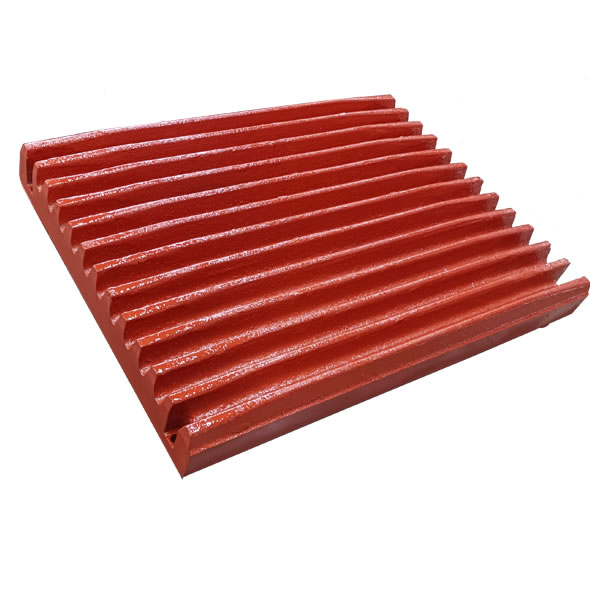
Jaw Plate
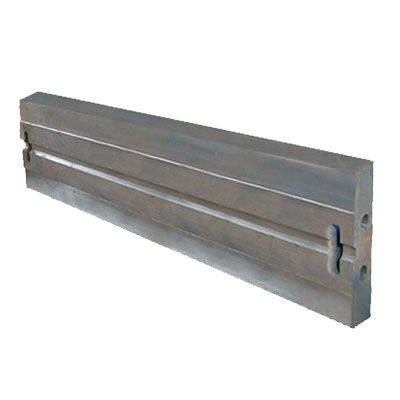
Blow Bar
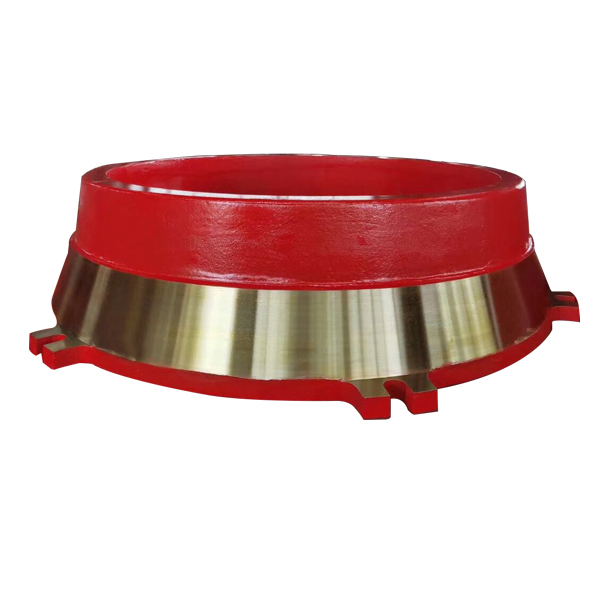
Mantle & Concave
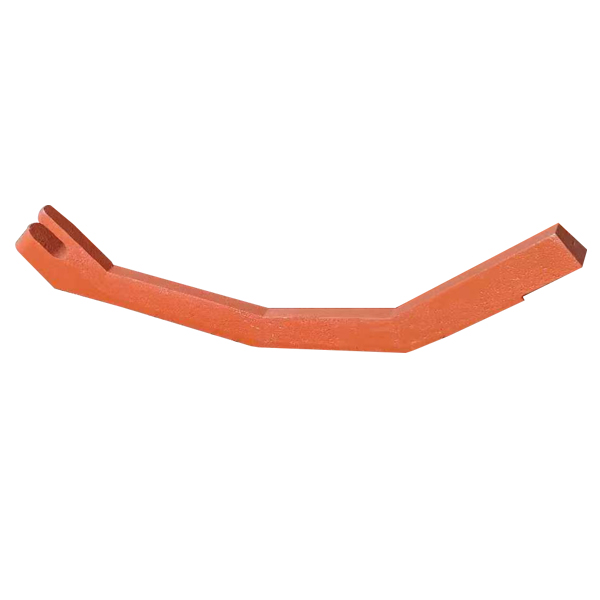
Grate Bar
Contact Us
Get a quote within 24 hours. Send us your inquiry today.

+86 199 8785 7268
Mon-Sat 8AM-10PM CST Scan to chat — English, Spanish, Chinese Send photos of worn parts for instant quote

+86 199 8785 7268
Scan to follow — factory updates and quotes Chat in Chinese or English