

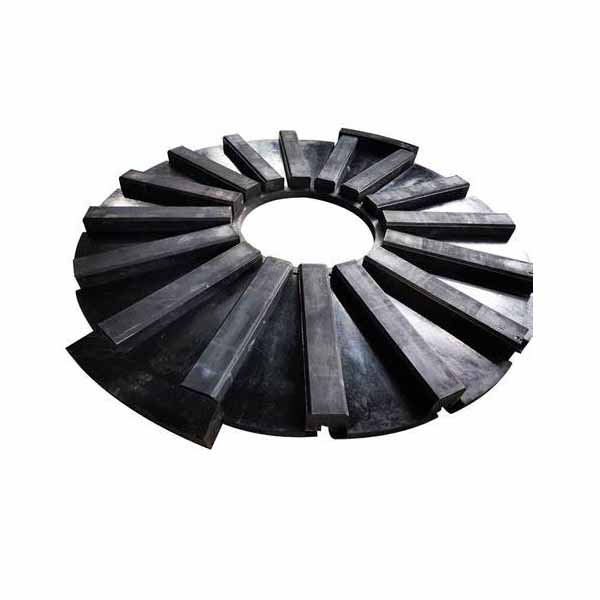
Rubber Mill Liners
High-performance rubber mill liners for ball mills and SAG mills. Lightweight, noise-reducing alternative to steel liners with excellent impact absorption and wear resistance. Ideal for secondary grinding and fine grinding applications
Rubber Mill Liners
Material Specifications & Selection Guide
| Compound | Base Polymer | Hardness (Shore A) | Max Temp | Key Feature | Application |
|---|---|---|---|---|---|
| NR-60 | Natural Rubber | 58-62 | +70 C | Excellent impact absorption, tear resistant | SAG mill liners, lifter bars with high impact |
| NR-70 | Natural Rubber | 68-72 | +70 C | Balanced wear & impact resistance | Ball mill shell liners, 1st chamber |
| SBR-65 | Styrene Butadiene | 63-67 | +80 C | Good abrasion resistance, cost-effective | Fine grinding, secondary chamber liners |
| PU-90 | Polyurethane | 88-93 | +80 C | Maximum abrasion resistance, lightweight | Wet grinding, corrosive slurry, fine grinding |
| NR/SBR-70 | NR/SBR Blend | 68-72 | +75 C | Optimized cost-performance ratio | General purpose mill liners, mixed duty |
| Compound | Tensile (MPa) | Elongation (%) | Tear Strength (kN/m) | Abrasion Index | Rebound Resilience (%) |
|---|---|---|---|---|---|
| NR-60 | 18-22 | 450-550 | 80-100 | 1.0 (reference) | 60-70 |
| NR-70 | 16-20 | 400-500 | 70-90 | 1.1-1.3x | 55-65 |
| SBR-65 | 14-18 | 350-450 | 50-70 | 1.2-1.4x | 45-55 |
| PU-90 | 35-45 | 300-400 | 120-150 | 1.5-2.0x | 30-40 |
| NR/SBR-70 | 15-18 | 380-450 | 60-80 | 1.1-1.3x | 50-60 |
| Property | Rubber Liner | Steel Liner (Mn13Cr2) | Advantage |
|---|---|---|---|
| Weight per Liner Set | 8-12 tonnes | 40-60 tonnes | Rubber: 75-85% lighter |
| Installation Time | 6-12 hours | 24-48 hours | Rubber: 50-75% faster |
| Noise Level (1m) | 85-95 dB | 100-115 dB | Rubber: 10-15 dB quieter |
| Power Consumption | Reduced 5-10% | Baseline | Rubber: Lower energy cost |
| Impact Resistance | Good (medium impact) | Excellent (high impact) | Steel: For heavy impact |
| Max Temp Limit | +80 C | +400 C | Steel: For hot environments |
| Wet Grinding Life | 12-24 months | 10-14 months | Rubber: Better in wet |
Selection Quick Reference
- SAG mills (large ball impact, 100-125 mm balls): NR-60 rubber liners — highest resilience (60-70% rebound) absorbs impact energy without damage. Use NR-70 lifter bars for higher wear zones
- Ball mills — secondary grinding (wet process): SBR-65 or NR/SBR-70 blend — balanced wear and cost. Rubber outperforms steel in wet grinding due to corrosion protection
- Fine grinding / cement finish mills (20-30 mm balls): PU-90 — maximum abrasion resistance for fine-grinding applications. 1.5-2.0x longer life than natural rubber in low-impact conditions
- Do NOT use rubber where: Ball size >80 mm with direct impact on liners, mill temperature >80 C, or where tramp iron/steel scrap is present (cuts rubber). Steel liners remain superior for these conditions
- All rubber liners are steel-reinforced with embedded steel backing plates for bolt retention and structural integrity. Custom profiles and lifter bar heights engineered to match your grinding circuit
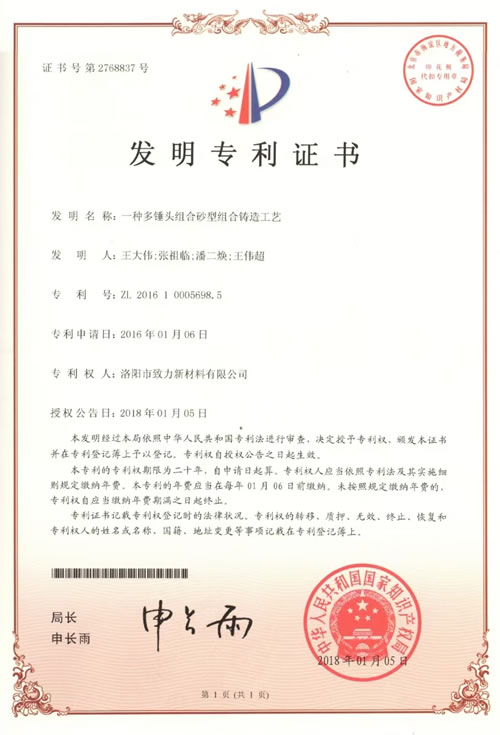
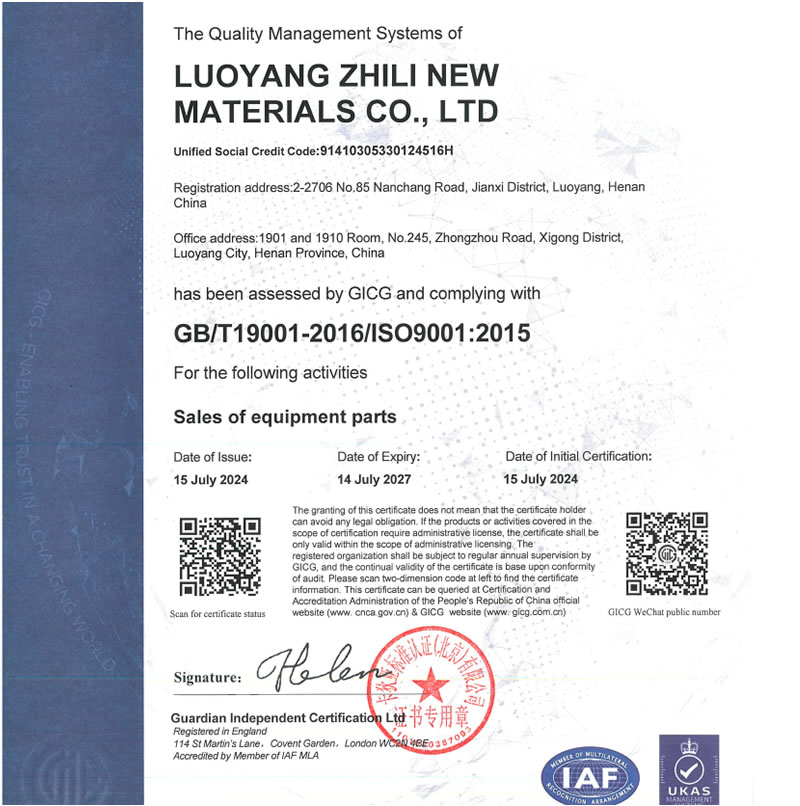
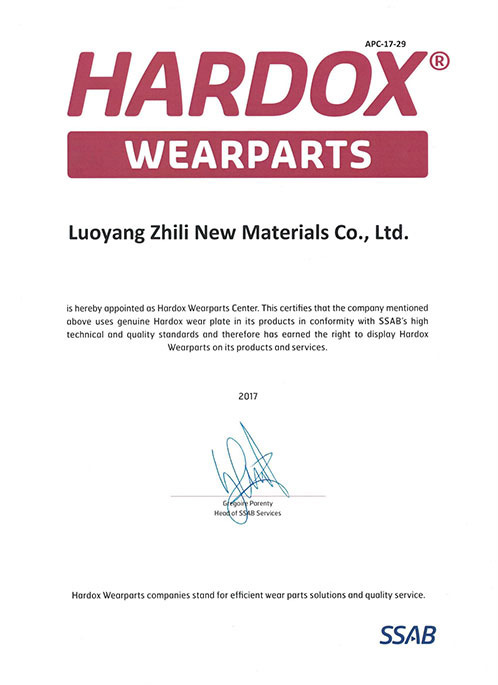
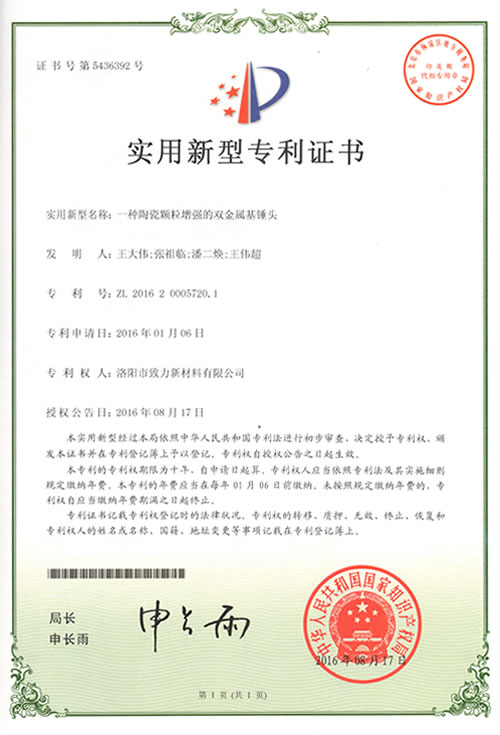
Certifications & Authorizations
Quality you can verify. Partners you can trust.
Custom OEM / ODM
From drawing to delivery — one-stop customization, no minimum order
Send Drawing
Upload your technical drawing (PDF, DWG, STEP, IGES) or share sample photos with dimensions
Engineering Review
Material recommendation, casting process design, DFM analysis — free quotation within 24 hours
Sampling & Test
Prototype production with full inspection: hardness test, spectrometer, dimensional check
Production & Ship
ISO 9001 certified. 15-25 days standard lead time. Global shipping with full documentation
Frequently Asked Questions
Rubber liners offer significant operational advantages but are not a universal replacement for steel. The decision depends on your grinding conditions, ball size, and process temperature:
Use rubber liners when:
- Ball size <80 mm (2nd chamber, fine grinding): Smaller balls do not generate sufficient impact energy to damage rubber. Rubber liners typically last 20-40% longer than steel in these conditions, especially in wet grinding.
- Wet grinding process: Rubber is immune to the corrosive effects of slurry. Steel liners in wet grinding suffer from both abrasion and corrosion — rubber addresses both mechanisms simultaneously.
- Noise-sensitive environments: Rubber reduces mill noise by 10-15 dB, often eliminating the need for acoustic enclosures. This is a regulatory requirement benefit in many countries.
Do NOT use rubber when:
- Ball size >80 mm with direct liner impact: Large balls in SAG mills can cut or tear rubber. Steel liners are required for primary grinding with 100-125 mm balls.
- Mill temperature >80 C: Rubber degrades rapidly above 80 C. Cement clinker entering the mill at >100 C will destroy rubber liners within weeks.
- Tramp iron or sharp scrap present: Rubber is cut-resistant but not cut-proof. If your feed contains scrap steel, drill bits, or broken grinding media, steel liners are safer.
- Dry grinding with hot material: The combination of heat and abrasion degrades rubber 3-5x faster than steel.
Hybrid approach: Many mills use steel liners in the 1st chamber (coarse grinding, hot feed) and rubber liners in the 2nd chamber (fine grinding, cooler). This captures the benefits of both materials.
Rubber liner installation is fundamentally different from steel. The key advantage is that rubber liners use fewer, lighter segments that can be handled without heavy lifting equipment:
Installation process differences:
- Lightweight handling: Each rubber segment weighs 15-40 kg (vs 50-150 kg for steel). Two workers can handle segments without a crane. This is the primary reason installation is 50-75% faster.
- T-segment system: Rubber liners use interlocking T-bar profiles. Segments slide together and compress against each other when bolted. The compression creates a tight seal that prevents slurry penetration behind the liner — a common problem with steel liners.
- Torque sequence is critical: Tighten all bolts to 50% torque first, then make a second pass to 100%. After 24 hours of operation, re-torque all bolts. Rubber compresses slightly under load and bolt tension drops by 10-15% during the first day.
- No grouting required: Unlike steel liners which require cement grout or rubber backing to fill the gap between liner and shell, rubber liners conform to the shell curvature naturally due to their elasticity.
Rubber liners wear differently from steel. Instead of thinning evenly, rubber liners wear in a characteristic pattern where high-impact zones erode first. Measuring wear requires different techniques:
Wear measurement protocol:
- Lifter bar height measurement (every 500 hours): Use a depth gauge or profile template to measure the remaining height of lifter bars at 4-6 positions across the mill width. Record values and track the wear rate in mm/1,000 hours.
- Replacement trigger: Replace lifter bars when height drops to 30-40% of the original profile. At this point, the grinding media can slide over the bars instead of being lifted, reducing grinding efficiency by 15-20%.
- Liner plate replacement: Shell plates wear more slowly than lifter bars. Replace when the rubber thickness over the steel backing plate reaches 5-8 mm remaining. Running below this exposes the steel backing to wear and potential bolt pull-through.
- Visual inspection: Look for cuts, tears, or delamination (separation of rubber from steel backing). Any cut deeper than 50% of remaining rubber thickness, or any area of delamination, requires immediate replacement of that segment.
Performance monitoring tip: Track mill power draw vs throughput. When lifter bar height falls below the critical threshold, you’ll see power draw decrease by 5-8% at constant feed rate — this is because the mill can no longer lift the charge effectively. This is your signal to schedule a reline.
Related Products
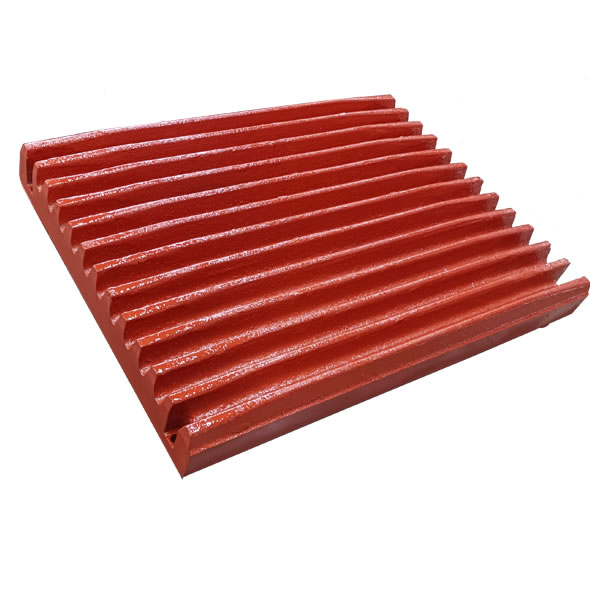
Jaw Plate
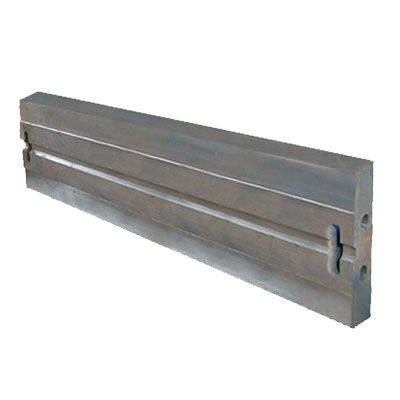
Blow Bar
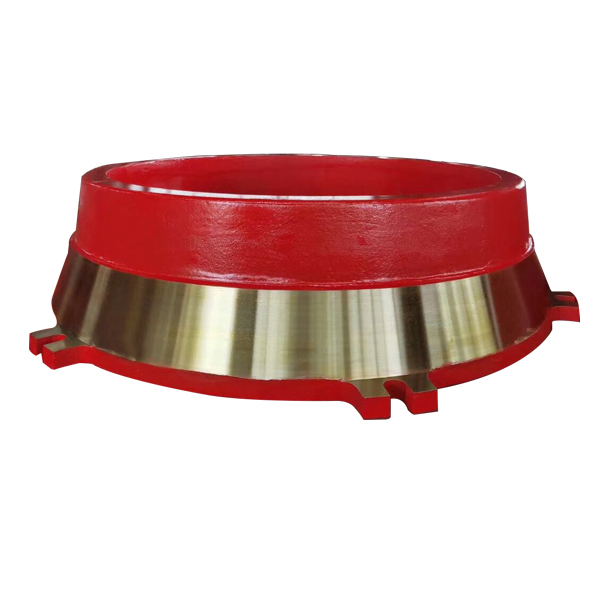
Mantle & Concave
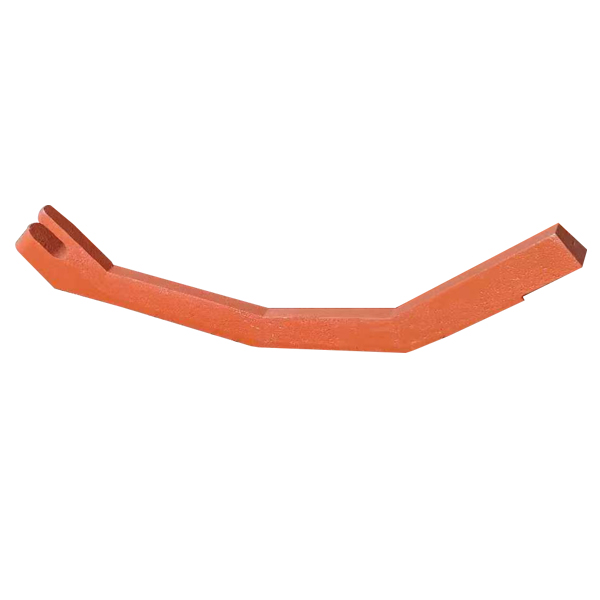
Grate Bar
Contact Us
Get a quote within 24 hours. Send us your inquiry today.

+86 199 8785 7268
Mon-Sat 8AM-10PM CST Scan to chat — English, Spanish, Chinese Send photos of worn parts for instant quote

+86 199 8785 7268
Scan to follow — factory updates and quotes Chat in Chinese or English