

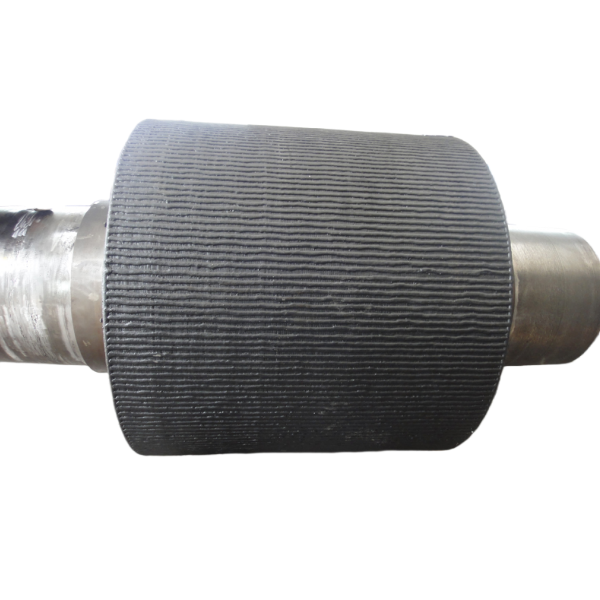
Vertical Mill / Roller Press Surfacing Roller
Hardfaced Overlay Welding Rollers for VRM & HPGR — Fe-Based / Ni-Based / Co-Based Alloy Hardfacing — For Vertical Roller Mill / Roller Press / Coal Mill
Vertical Mill / Roller Press Surfacing Roller
Material Specifications & Selection Guide
| Welding Grade | Material | Hardness | Carbide | Deposits | Application |
|---|---|---|---|---|---|
| ZD-307 | Cr15-18% + Ni | 55-60 HRC | Primary | 2-3 layers | VRM standard rebuild |
| ZD-414 | Cr22-26% + Mo | 58-62 HRC | High | 2 layers max | Coal / abrasive ore |
| ZD-517 | Cr26-30% + Mo | 60-65 HRC | Max | 2 layers max | High temp zones (500C) |
| ZD-628 | Cr28-32% + W | 62-66 HRC | Ultra | 2 layers only | Severe abrasion mining |
| ZD-718 | Ni-Based + WC | 20-25 + WC | Tungsten | Unlimited | Impact + corrosion |
| Component | Material | Hardness | Process | Feature |
|---|---|---|---|---|
| Hardfacing Layer | High Cr Alloy | 55-66 HRC | GMAW / SAW | Max wear resistance |
| Buffer Layer | Cr-Ni-Mo | 40-48 HRC | Submerged arc | Stress transition |
| Roller Core | ZG35CrMo | 220-260 HB | Cast + normalize | Structural base |
| Shaft | 42CrMo | 28-35 HRC | Forged + Q+T | Torque transmission |
| Bearing Seat | 42CrMo / 40Cr | 30-36 HRC | Machined + HT | Precision fit |
| Roller Model | Dia. (mm) | Width (mm) | VRM Type | Roller Press | Studs Option |
|---|---|---|---|---|---|
| LM 32.4 | 1,600 | 800 | Loesche | — | Available |
| MPS 4750 | 2,800 | 750 | Gebr. Pfeiffer | — | Available |
| RM 1700 | 1,700 | 1,100 | FLSmidth OK | — | Available |
| ATOX 50 | 3,600 | 900 | FLSmidth | — | Available |
| RP 120-80 | 1,200 | 800 | — | KHD / FLSmidth | Standard |
| HPGR 1400 | 1,400 | 600-1,000 | — | Metso / Weir | Standard |
Selection Quick Reference
- Loesche / Pfeiffer VRM rebuild (standard cement grinding): ZD-307 (Cr-Ni, 55-60 HRC) — excellent crack resistance for 2-3 layer build-up on worn rollers, balances cost and wear life for raw meal and cement grinding
- Coal VRM / high-silica materials (abrasive, thermal cycling): ZD-414 (High Cr-C, 58-62 HRC) — higher carbide content resists coal ash and abrasive silica, limit to 2 layers to prevent cracking
- Cement kiln inlet / hot zones (elevated temperature): ZD-517 (Cr-C-Mo, 60-65 HRC) — molybdenum provides secondary hardening and maintains wear resistance above 500 C, ideal for kiln feed rollers
- Iron ore / hard rock HPGR (maximum abrasion): ZD-628 (Ultra-high Cr, 62-66 HRC) — maximum carbide density for severe mining applications, requires precise preheat and interpass control
- Wet grinding / corrosive slurry (impact + corrosion): ZD-718 (Ni-based + WC, 20-25 HRC matrix) — nickel matrix with tungsten carbides provides corrosion resistance and moderate impact toughness for wet grinding circuits
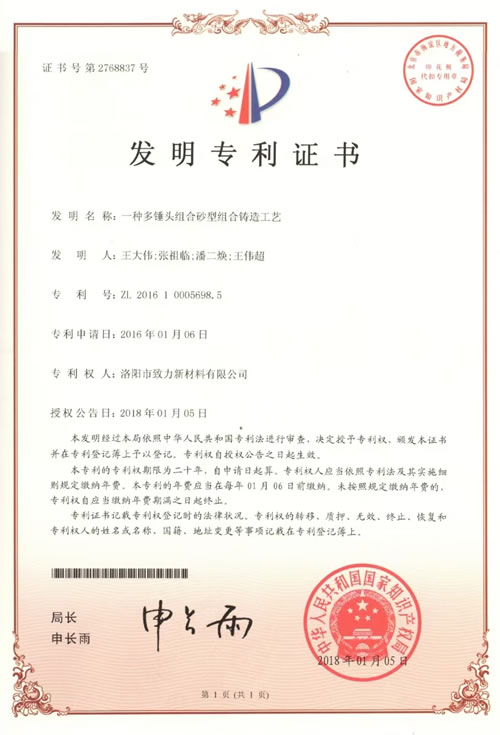
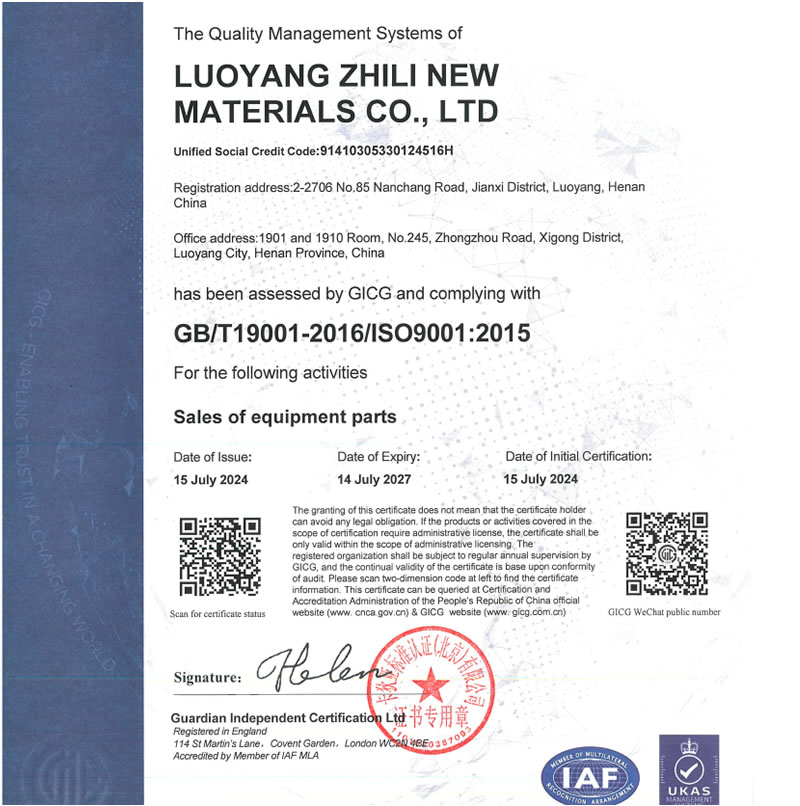
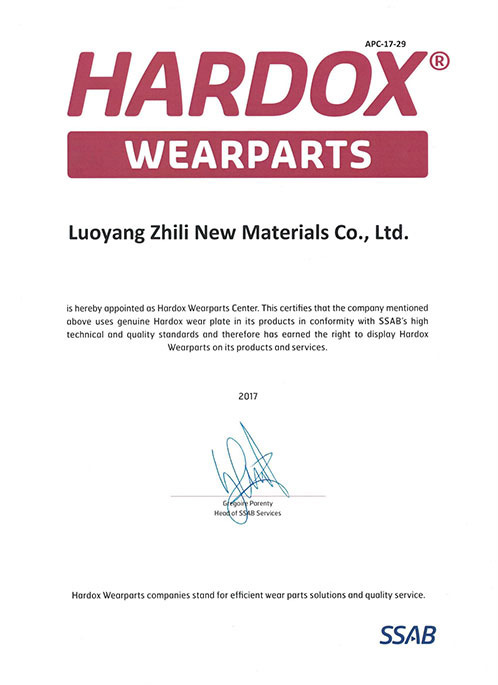
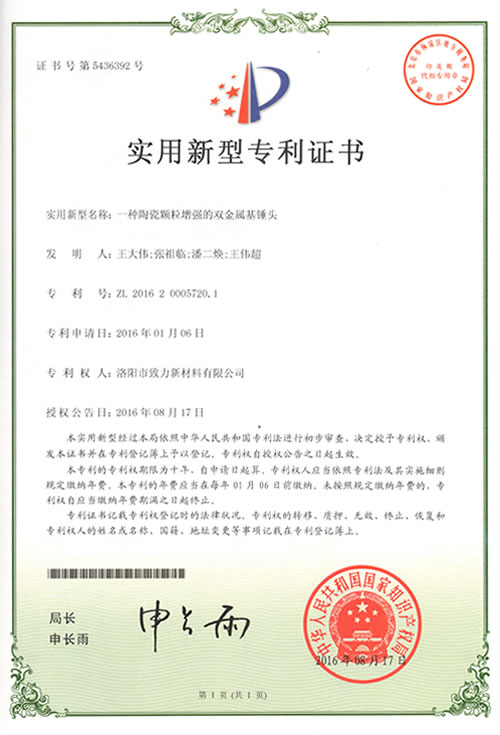
Certifications & Authorizations
Quality you can verify. Partners you can trust.
Custom OEM / ODM
From drawing to delivery — one-stop customization, no minimum order
Send Drawing
Upload your technical drawing (PDF, DWG, STEP, IGES) or share sample photos with dimensions
Engineering Review
Material recommendation, casting process design, DFM analysis — free quotation within 24 hours
Sampling & Test
Prototype production with full inspection: hardness test, spectrometer, dimensional check
Production & Ship
ISO 9001 certified. 15-25 days standard lead time. Global shipping with full documentation
Frequently Asked Questions
Vertical Mill / Roller Press Surfacing Roller
The hardfacing pattern is the single most critical design decision for a surfacing roller. The wrong pattern causes uneven wear, material bypass, or rapid overlay failure.
Spiral Pattern
Continuous helical bead
40-50% overlap, 2-3 layers
Uniform cylindrical wear
Axial flow only
Best for: VRM Raw Mill, VRM Cement
Life: 8,000-14,000 h
Herringbone Pattern
V-shaped zigzag bead
30-40% overlap, 2-4 layers
Directional edge pressure
Centers material to gap
Best for: HPGR, high-pressure VRM
Life: 4,000-8,000 h
Three additional patterns for special conditions:
- Dot / Chessboard: Isolated weld deposits for wet grinding and slag VRM. Creates an autogenous wear layer — material trapped between dots protects the base metal. Life: 5,000-9,000 h.
- Cross-Hatch: Multi-pass at 60-90° angles for quartz-rich feed (SiO2 >60%). Multi-directional crack arrest for fatigue resistance. Life: 4,000-7,000 h.
- Circumferential: Single or double layer rings for coal mill. Lowest cost, fastest welding, sufficient for low-abrasion coal grinding.
Warning signs of wrong pattern: Uneven roller diameter across width (>3mm taper), shiny metal stripes on roller surface (weld beads worn flat), throughput decline without feed change, vibration increase on HPGR frame.
Three alloy families serve three fundamentally different operating environments. Cost difference is significant — choosing wrong wastes money or causes premature failure.
Fe-Cr-C (Standard)
HRC 55-58
Max temp: 450°C
Corrosion: Poor
Cost index: 1.0x
Use for: Limestone VRM, SiO2 <8%
Fe-Cr-C-Mo-W (Premium)
HRC 60-65
Max temp: 550°C
Corrosion: Low
Cost index: 2.5x
Use for: HPGR, SiO2 8-15%
Ni-Based (Ni-Cr-B-Si): Cost 3.0-4.5x. Switch when operating temp consistently >400°C (coal mill outlet, hot gas VRM), wet slurry with pH <7, or high sulfur feed. Ni matrix is chemically inert where Fe reacts. Max temp: 700°C.
Co-Based (Stellite): Cost 6.0-7.5x. Only when application combines high temperature (>600°C) + corrosion + impact. Never default to Stellite — at HRC 40-46, it is softer than standard Fe-Cr-C (HRC 55-58). For pure abrasion, premium Fe-based (HRC 60-65) outperforms Stellite at one-third the cost.
A surfacing roller is a wear component by design — the hardfacing overlay is consumed over time. The key is to rebuild BEFORE the overlay wears through to base roller metal.
VRM Raw Mill
Overlay life: 8,000-14,000 h
Rebuild: Every 12-18 months
Pattern: Spiral standard
Cost: 30-50% of new roller
HPGR
Overlay life: 4,000-8,000 h
Rebuild: Every 6-12 months
Pattern: Herringbone required
Cost: 40-60% of new roller
Inspection Protocol (every 2,000 operating hours):
- Ultrasonic thickness gauge: Measure overlay at 6-8 points across roller width. Track wear rate (mm/1,000 h). Sudden increase signals feed change or contamination.
- Visual inspection: Look for shiny metal stripes (weld crown worn flat), cracking parallel to weld direction, spalling at bead edges.
- Diameter profile: Measure at 3 positions. Taper >3mm across width = uneven wear = pattern issue or feed distribution problem.
Rebuild Decision Matrix:
- >70% overlay remaining: Continue monitoring
- 50-70% remaining: Plan rebuild at next scheduled shutdown
- 30-50% remaining: Rebuild now (3-5 days downtime)
- <30% remaining: Emergency rebuild (5-10 days, possible base metal damage)
Pro tip: Keep a spare rebuilt roller on site. Swap during scheduled shutdown (1-2 days), then rebuild removed roller at workshop pace. Reduces downtime 60-70% and eliminates “rebuild under pressure” quality risk.
Related Products
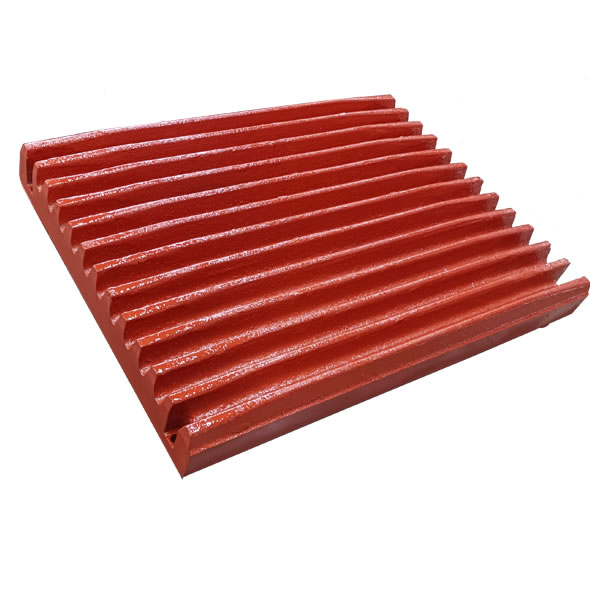
Jaw Plate
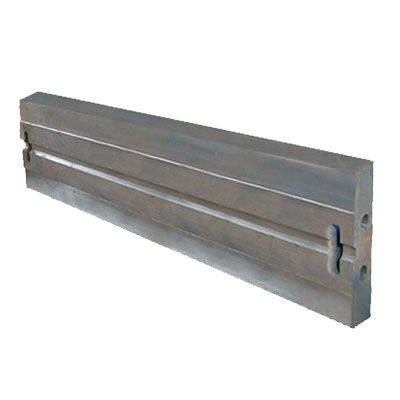
Blow Bar
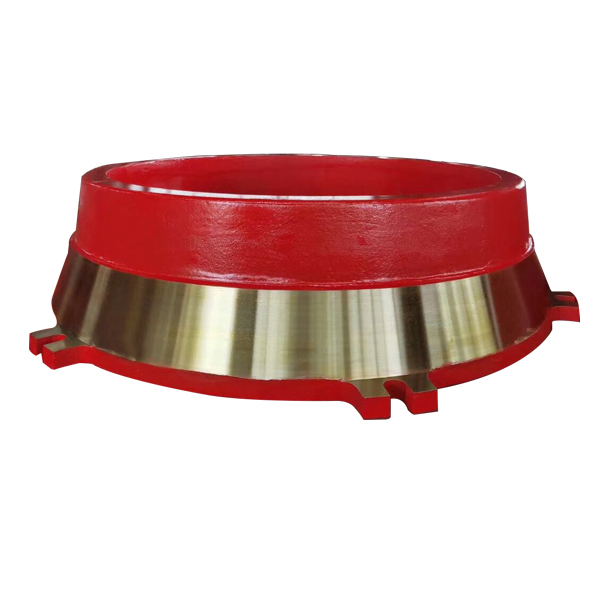
Mantle & Concave
Grate Bar
Contact Us
Get a quote within 24 hours. Send us your inquiry today.

+86 178 4242 1247
Mon-Sat 8AM-10PM CST Scan to chat — English, Spanish, Chinese Send photos of worn parts for instant quote

+86 178 4242 1247
Scan to follow — factory updates and quotes Chat in Chinese or English