

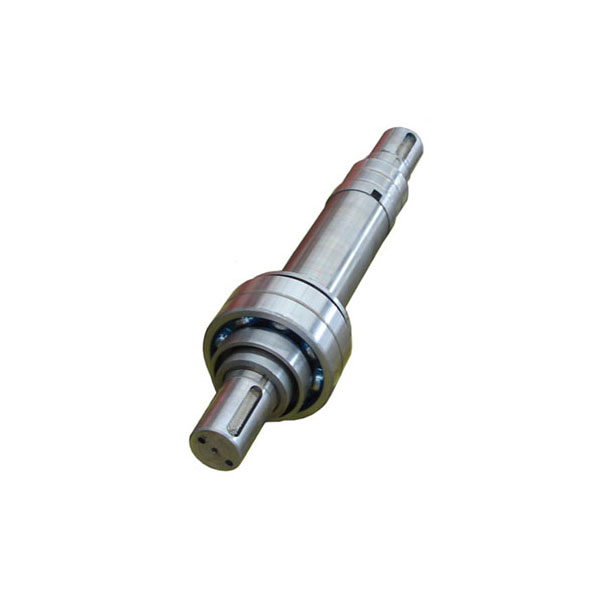
Jaw Crusher Eccentric Shaft
Eccentric Drive Shaft for Jaw Crushers — Drives Pitman Toggle Plate Motion — 42CrMo / 40CrNiMo / 45# Steel — Forged Alloy Steel / Hot Rolled Steel
Jaw Crusher Eccentric Shaft
Material Specifications & Selection Guide
| Grade | Material | Yield (MPa) | Tensile (MPa) | Hardness | Application |
|---|---|---|---|---|---|
| 40Cr | Cr0.8-1.1% + C0.37-0.44% | 785 | 980 | 28-32 HRC | PE150x250 to PE400x600 |
| 42CrMo | Cr0.9-1.2% + Mo0.15-0.25% | 930 | 1080 | 30-35 HRC | PE500x750 to PE900x1200 |
| 35CrMo | Cr0.8-1.1% + Mo0.15-0.25% | 835 | 980 | 28-32 HRC | Medium duty, fatigue resist |
| 40CrNiMo | Cr-Ni-Mo Alloy | 890 | 1050 | 30-35 HRC | Heavy duty, impact load |
| 34CrNiMo6 | Ni-Cr-Mo Alloy | 900 | 1100 | 32-36 HRC | Extreme duty, large jaw |
| 18CrNiMo7-6 | Case Hardening Steel | 850 | 1150 | 58-64 HRC (Surface) | High wear bearing seats |
| Process | Parameter | Result | Feature |
|---|---|---|---|
| Forging | Open die, 3:1 ratio | Fiber flow aligned | Max fatigue resistance |
| Normalizing | 850-880 C, air cool | 220-250 HB | Refine grain structure |
| Quenching | 840-860 C, oil/polymer | 50-55 HRC | Through-hardened core |
| Tempering | 550-650 C, 2-4 hrs | 28-35 HRC | Toughness + strength |
| Induction HF | Bearing seats only | 55-60 HRC local | Wear resistance |
| Finish Grind | Ra 0.8-1.6 | Precision fit | Bearing life +200% |
| Jaw Model | Shaft Dia. (mm) | Length (mm) | Eccentric (mm) | Weight (kg) | Material |
|---|---|---|---|---|---|
| PE150x250 | 90 | 450 | 12 | 25 | 40Cr |
| PE250x400 | 120 | 600 | 15 | 55 | 40Cr |
| PE400x600 | 170 | 850 | 20 | 140 | 40Cr / 42CrMo |
| PE500x750 | 200 | 1,000 | 25 | 220 | 42CrMo |
| PE600x900 | 230 | 1,150 | 30 | 340 | 42CrMo |
| PE750x1060 | 260 | 1,300 | 35 | 480 | 42CrMo |
| PE900x1200 | 300 | 1,500 | 40 | 720 | 42CrMo / 40CrNiMo |
| PE1200x1500 | 360 | 1,800 | 50 | 1,250 | 40CrNiMo / 34CrNiMo6 |
| PE1500x1800 | 420 | 2,100 | 60 | 1,950 | 34CrNiMo6 |
Selection Quick Reference
- Small jaw crushers (PE150x250 to PE400x600, feed <400 mm): 40Cr forged eccentric shaft — sufficient strength for small crushing forces (<150 kN toggle load), cost-effective standard material, 28-32 HRC tempered for balanced toughness
- Medium jaw crushers (PE500x750 to PE900x1200, feed 500-800 mm): 42CrMo forged shaft — Cr-Mo alloying provides fatigue resistance for cyclic loading (500-1,200 crushing strokes/min), critical for continuous duty quarry operations
- Large jaw crushers (PE1200x1500+, feed >1,000 mm): 40CrNiMo or 34CrNiMo6 — Ni-Cr-Mo alloy mandatory for massive crushing forces (toggle load >3,000 kN), impact resistance from large boulder feed, 32-36 HRC for maximum load capacity
- Critical surface finish: Bearing journal surfaces ground to Ra 0.8-1.6 micrometers — rougher surfaces reduce bearing life 40-60%. Induction hardening of bearing seats to 55-60 HRC extends bearing service life 200%+ in dusty environments
- Quality assurance: 100% ultrasonic testing (UT) for internal defects, magnetic particle inspection (MT) for surface cracks. Bending tolerance <0.05 mm/m -- any bend causes vibration and bearing failure within 500 operating hours
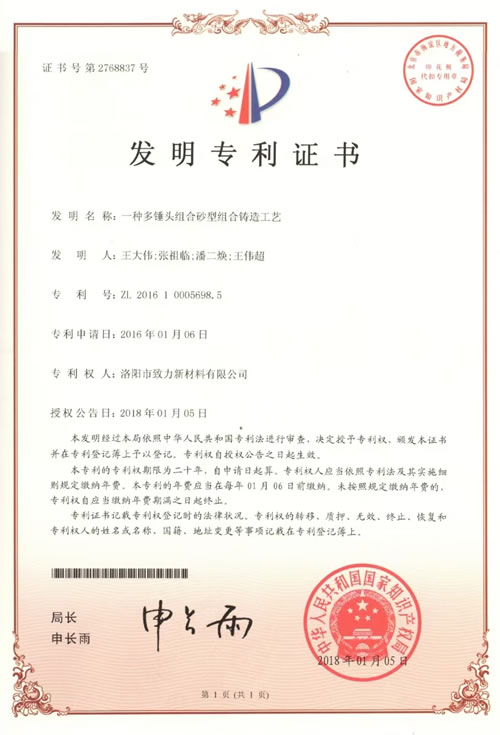
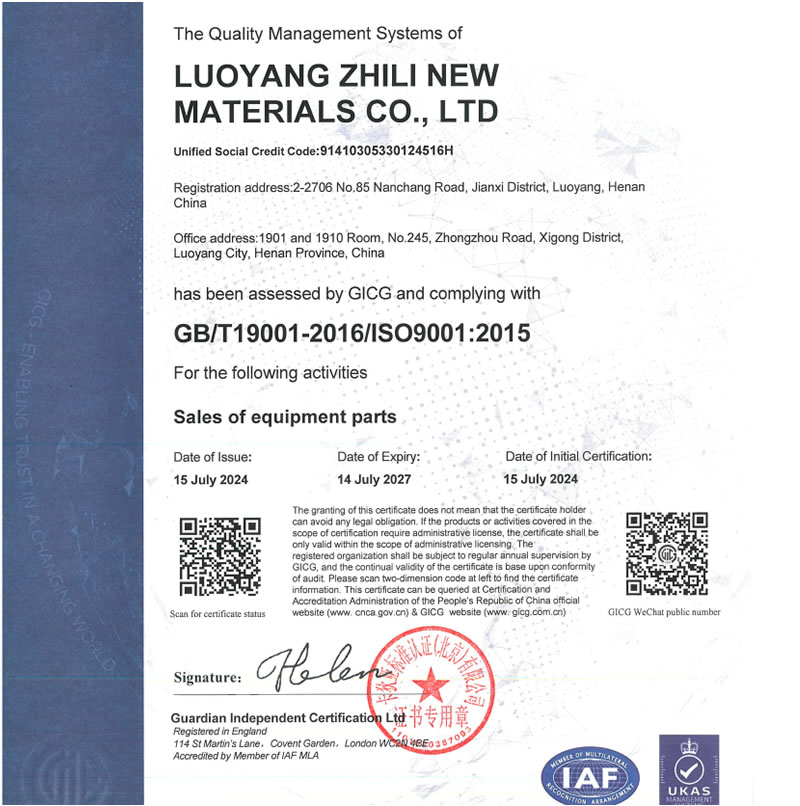
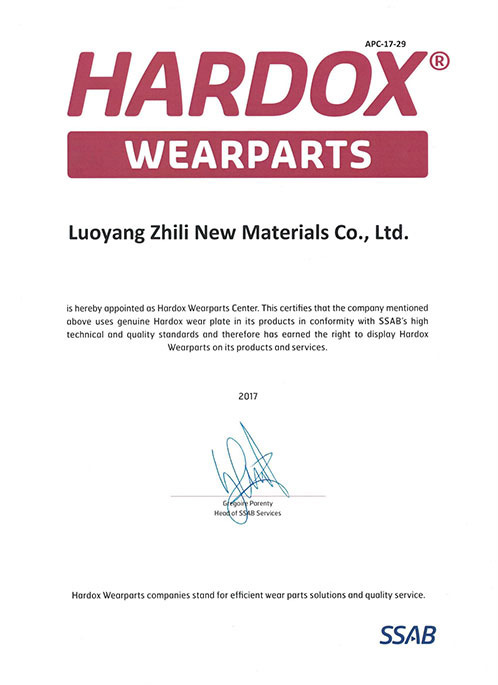
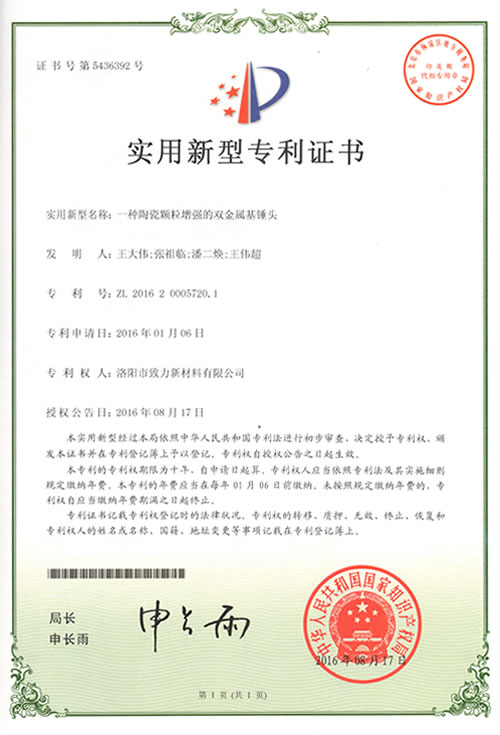
Certifications & Authorizations
Quality you can verify. Partners you can trust.
Custom OEM / ODM
From drawing to delivery — one-stop customization, no minimum order
Send Drawing
Upload your technical drawing (PDF, DWG, STEP, IGES) or share sample photos with dimensions
Engineering Review
Material recommendation, casting process design, DFM analysis — free quotation within 24 hours
Sampling & Test
Prototype production with full inspection: hardness test, spectrometer, dimensional check
Production & Ship
ISO 9001 certified. 15-25 days standard lead time. Global shipping with full documentation
Frequently Asked Questions
Quick answers to common questions about our jaw crusher eccentric shafts
Eccentric shaft failure begins with warning signs detectable weeks before catastrophic breakage. Ignoring early indicators leads to bearing seizure and frame damage:
- Stage 1 — Early (bearing temperature rise): Normal operating temp 55-70 C. Sustained temperature above 85 C indicates shaft deflection or misalignment. Check bearing lubrication first, but if temperature remains high after relubrication, the shaft is likely developing micro-cracks at the eccentric journal transition radius.
- Stage 2 — Moderate (audible noise + vibration): A rhythmic thumping sound at each crank revolution indicates eccentricity change — a fatigue crack is growing. Vibration readings >7 mm/s RMS require immediate scheduled inspection. Operating beyond 15 mm/s risks bearing cage collapse.
- Stage 3 — Critical (visible crack): A hairline crack at the eccentric journal radius (transition from main shaft body to offset) is the most common failure point. Replace immediately — do not attempt weld repair. Welding creates heat-affected zones that fail within 50-200 operating hours.
Inspection rule: Perform magnetic particle inspection (MT) on the journal radius and keyway root every 2,000 operating hours. The keyway is a stress concentrator — 60% of shaft failures initiate at the keyway corner. Replace the shaft at the first sign of any surface crack — fatigue crack propagation in 42CrMo steel accelerates from 0.01 mm/cycle to 0.1 mm/cycle within 500,000 cycles.
The bearing journal radius is the highest stress concentration point on the shaft. Failure is almost always due to incorrect installation or operation:
- Bearing misalignment (40% of failures): Bearing inner ring must sit flush against the shaft shoulder. Even 0.05 mm of angular misalignment concentrates bending stress at the radius. Use induction heating or oil bath to expand bearings to 110-120 C for hot mounting — never hammer bearings onto a cold shaft.
- Over-tightening the bearing lock nut (25% of failures): The lock nut creates axial preload. Excessive torque compresses the bearing inner ring onto the shaft, reducing the bearing’s internal radial clearance. The shaft then transmits bending loads directly to the bearing, concentrating stress at the journal radius. Use the manufacturer’s torque specification — typically 250-400 Nm for M100-M120 nuts.
- Undersized journal fillet radius (20% of failures): The transition between journal and shaft body must have a minimum fillet radius of 4-6 mm. A sharp corner (R<2 mm) reduces fatigue life by 60-80%. Inspect the radius with a radius gauge during installation — do not accept a shaft with a tool mark or machining groove at this critical point.
- Material selection matters: For jaw crushers above PE600x900, specify 42CrMo minimum. 40Cr shafts in medium-duty crushers show a 3x higher failure rate when processing hard rock with intermittent tramp metal.
Installation sequence: (1) Heat bearing to 110-120 C, (2) Slide onto shaft until flush against shoulder — no gap allowed, (3) Allow to cool to ambient before torquing lock nut, (4) Torque to spec using calibrated wrench, (5) Check runout with dial indicator — must be <0.03 mm TIR at both bearing journals. Any deviation above 0.05 mm requires disassembly and recheck.
Forged shafts are mandatory for jaw crushers. Cast eccentric shafts are not recommended due to fatigue vulnerability:
- Forged shaft advantages: The forging process aligns the steel grain (fiber) flow along the shaft’s longitudinal axis and around the eccentric offset. This continuous grain structure provides 3-5x the fatigue life of a cast shaft with equivalent chemistry. All ZHILI eccentric shafts are 100% forged — we never supply cast shafts.
- Cast shaft disadvantages: Even with advanced NDT (UT, radiographic), cast shafts contain micro-porosity that acts as crack initiation sites under cyclic loading. A jaw crusher at 275 RPM experiences ~144 million fully-reversed bending cycles per year. A single 0.5mm casting defect can propagate to failure within 2-3 months of operation.
- How to verify forged vs. cast: Check for a forging reduction ratio stamp (typically 3:1 minimum). Inspect the machined surface for dendritic grain patterns (cast) vs. smooth uniform appearance (forged). Request the material certificate (EN 10204 3.1) — forging origin is documented in the production route.
- The only exception: Very small laboratory jaw crushers (
Related Products
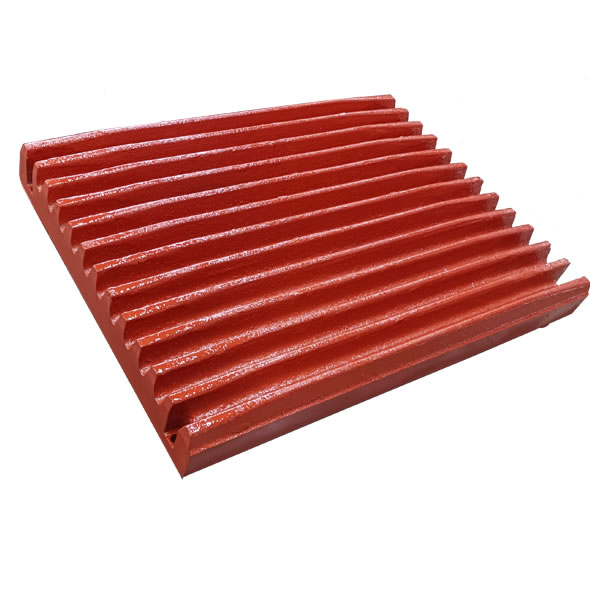
Jaw Plate
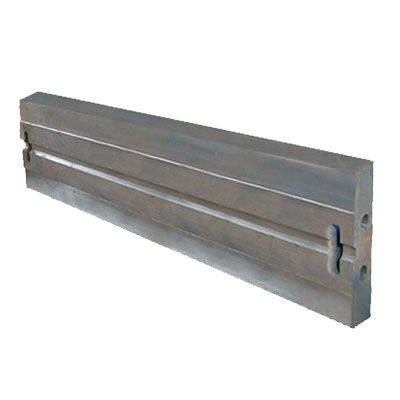
Blow Bar
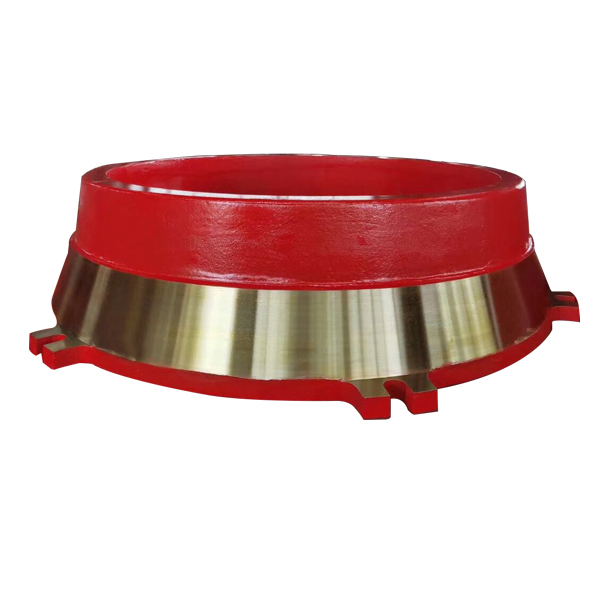
Mantle & Concave
Grate Bar
Contact Us
Get a quote within 24 hours. Send us your inquiry today.

+86 199 8785 7268
Mon-Sat 8AM-10PM CST Scan to chat — English, Spanish, Chinese Send photos of worn parts for instant quote

+86 199 8785 7268
Scan to follow — factory updates and quotes Chat in Chinese or English