

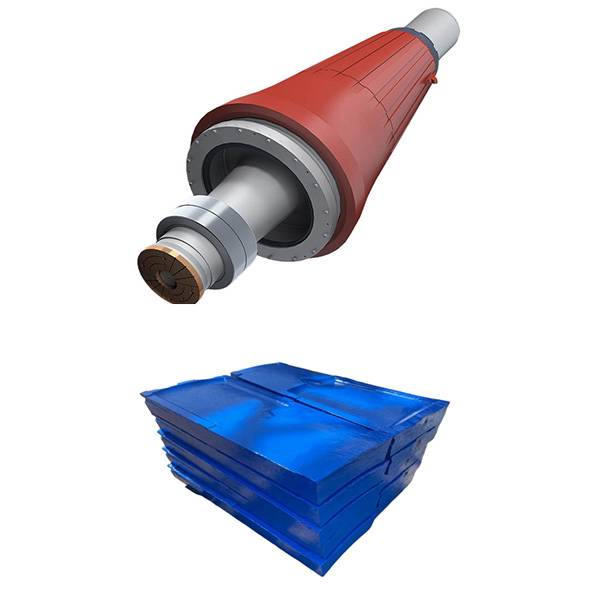
Gyratory Crusher Mantle & Concave
Primary Gyratory Crusher Wear Parts — Mantle / Concave / Bowl Liner / Spider Cap / Arm Liner — Mn13Cr2 / Mn18Cr2 / Mn22Cr2 / ZG-Mn13CrMo
Gyratory Crusher Mantle / Concave / Liner
Material Specifications & Selection Guide
| Grade | Material | Hardness (HB) | Work-Hardened (HB) | Impact | Application |
|---|---|---|---|---|---|
| Mn14Cr2 | Mn13-15% + Cr1.5-2.5% | 210-230 | 500-580 | Excellent | Standard duty, medium-hard rock |
| Mn18Cr2 | Mn17-19% + Cr2.0-3.0% | 220-240 | 550-650 | Superior | Hard rock, large gyratory 42-65 |
| Mn22Cr2 | Mn20-22% + Cr2.0-3.0% | 230-250 | 600-700 | Superior | Extreme impact, 54-75 to 60-110 |
| Mn18Cr2Mo | Mn17-19% + Cr2% + Mo1% | 225-245 | 580-680 | Superior | High throughput, deep cavity |
| Mn22Cr2Mo | Mn20-22% + Cr2% + Mo1.5% | 240-260 | 620-720 | Superior | Max. wear life, 2,000+ t/h operations |
| Gyratory Size | Feed Opening (mm) | Mantle Dia. (mm) | Concave Height (mm) | Mantle Weight (kg) | Concave Set Weight (kg) |
|---|---|---|---|---|---|
| 42-65 | 1065×1650 | 1650 | 1200-1400 | 1500-2500 | 3000-5000 |
| 48-74 | 1220×1880 | 1880 | 1400-1700 | 2500-4000 | 5000-8000 |
| 50-65 | 1270×1650 | 1650 | 1300-1500 | 2200-3500 | 4500-7000 |
| 54-75 | 1370×1900 | 1900 | 1600-1900 | 3500-5500 | 7000-11000 |
| 60-89 | 1525×2260 | 2260 | 1900-2300 | 6000-9000 | 12000-18000 |
| 60-110 | 1525×2795 | 2795 | 2300-2800 | 9000-14000 | 18000-28000 |
| Crusher Model | Capacity (t/h) | Concave Rows | Mantle Type | Rec. Material | OEM Ref. |
|---|---|---|---|---|---|
| Metso 42-65 MK-I | 1600-2300 | 2-3 rows | One-piece | Mn18Cr2 | Metso Superior |
| Metso 50-65 MK-II | 2400-3500 | 3 rows | One-piece | Mn18Cr2 | Metso Superior MK-II |
| Metso 54-75 MK-II | 3500-5500 | 3-4 rows | One-piece | Mn22Cr2 | Metso Superior MK-II |
| Metso 60-89 MK-II | 5500-8500 | 4 rows | One-piece | Mn22Cr2 / Mn22Cr2Mo | Metso Superior MK-II |
| Metso 60-110E | 7500-11000 | 4-5 rows | One-piece | Mn22Cr2Mo | Metso Superior 60-110E |
| FLSmidth Top Service | 2000-9000 | 2-4 rows | One-piece | Mn18Cr2 / Mn22Cr2 | FLSmidth TS |
| ThyssenKrupp KB | 1500-8000 | 2-4 rows | One-piece | Mn18Cr2 / Mn22Cr2 | ThyssenKrupp KB |
Selection Quick Reference
- Medium gyratory crushers (42-65, 50-65, 1,600-3,500 t/h): Mn18Cr2 mantles and concaves — the standard for Metso Superior MK-I/MK-II, FLSmidth, and ThyssenKrupp gyratory crushers in this size range. Concaves typically 2-3 rows with a one-piece mantle. Work-hardened surface reaches 550-650 HB under the extreme compressive forces of primary crushing at 25-40 RPM eccentric speed
- Large gyratory crushers (54-75, 60-89, 3,500-8,500 t/h): Mn22Cr2 — the higher manganese (22%) with chromium (2%) provides maximum work-hardening capacity for crushers processing 3,500-8,500 t/h of hard abrasive ore. Concaves in 3-4 rows, each row individually replaceable. The mantle is a single-piece casting weighing 3,500-9,000 kg — the largest wear part in mining
- Extra-large gyratory crushers (60-110E, 7,500-11,000 t/h): Mn22Cr2Mo with molybdenum — the Mo addition (1.0-1.5%) improves yield strength at elevated temperature and resists thermal softening when the mantle reaches 200-300 C from sustained high-tonnage operation. 4-5 rows of concaves, mantle weight 9,000-14,000 kg. These liners represent the pinnacle of manganese casting technology
- Concave row strategy (reduces cost by 30-40%): Gyratory concaves are arranged in stacked rows (lower, middle, upper). The lower row (closest to the discharge) wears 2-3x faster than the upper rows because the crushing force and material velocity are highest at the discharge. Replace only the lower row when worn, keeping the middle and upper rows for another full cycle. This staged replacement reduces concave cost by 30-40% compared to replacing all rows simultaneously
- Custom OEM service: Reverse-engineer mantles and concaves from your existing worn parts or OEM drawings. ZHILI reproduces exact cavity profile, spider arm clearance, and mounting lug geometry to 1:1 OEM precision. All mantles are 100% UT inspected per ASTM A609 Grade III. Concave rows are supplied as matched sets with individual weight documentation. Delivery 20-30 days for standard grades, 30-45 days for Mn22Cr2Mo large castings
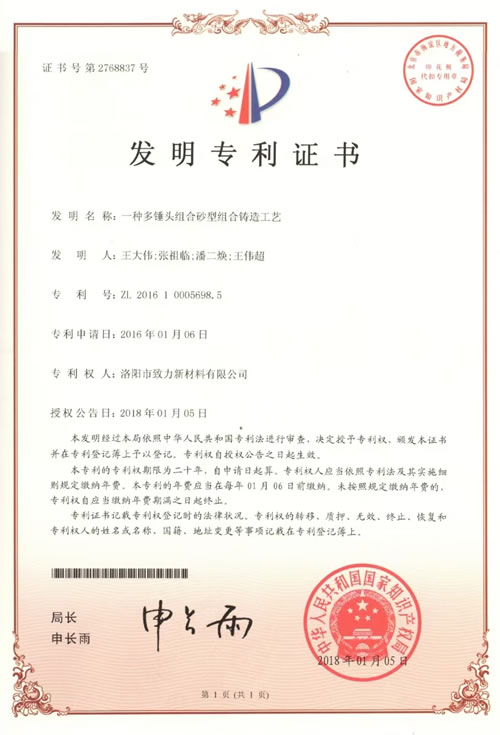
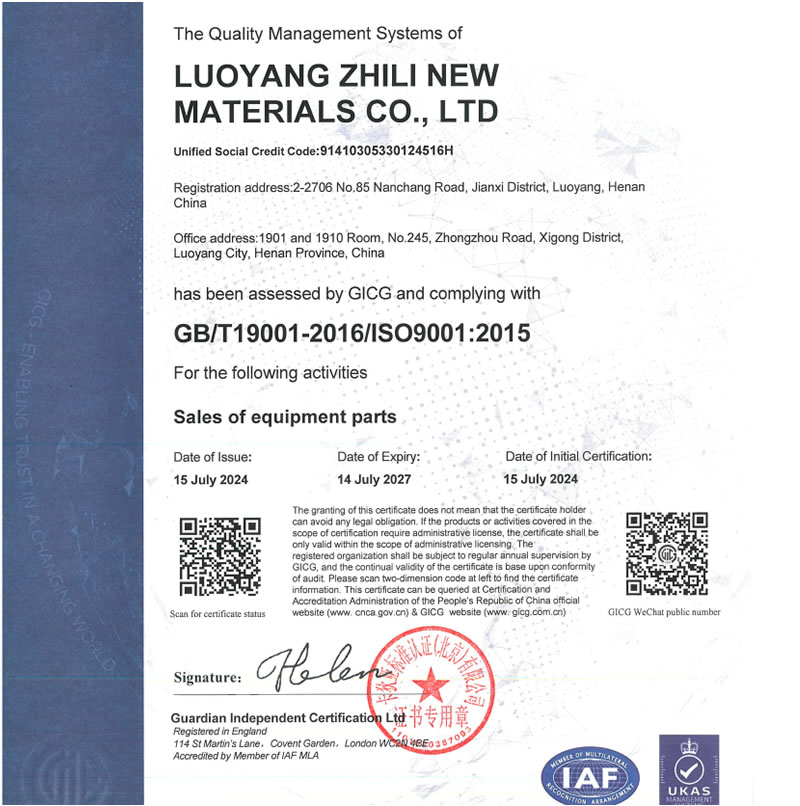
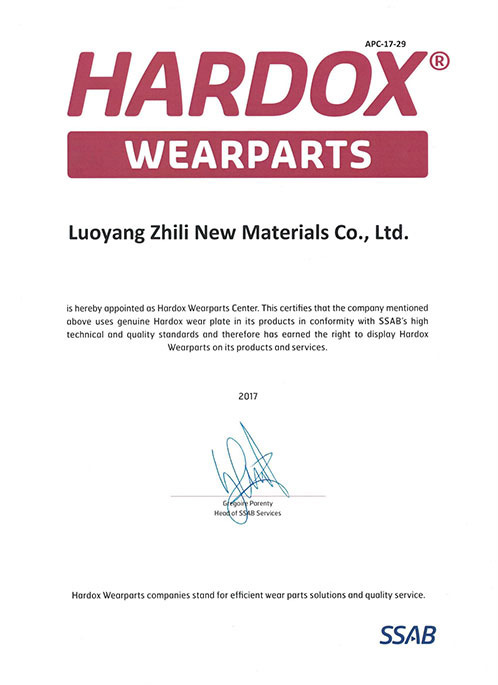
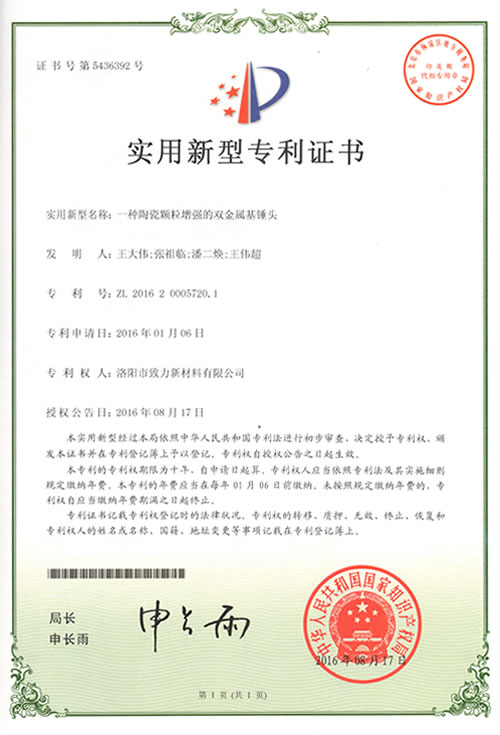
Certifications & Authorizations
Quality you can verify. Partners you can trust.
Custom OEM / ODM
From drawing to delivery — one-stop customization, no minimum order
Send Drawing
Upload your technical drawing (PDF, DWG, STEP, IGES) or share sample photos with dimensions
Engineering Review
Material recommendation, casting process design, DFM analysis — free quotation within 24 hours
Sampling & Test
Prototype production with full inspection: hardness test, spectrometer, dimensional check
Production & Ship
ISO 9001 certified. 15-25 days standard lead time. Global shipping with full documentation
Frequently Asked Questions
Quick answers to common questions about our gyratory crusher mantles & concaves
Gyratory crusher liners are the largest and most expensive wear parts in mining — a single 60-110 mantle costs $80,000-150,000. Getting material selection and replacement strategy right can save $200,000-500,000 per year in a single crusher:
- Mn18Cr2 (standard for 42-65 to 50-65, 1,600-3,500 t/h): The benchmark grade for primary gyratory liners in medium-large mining operations. At 18% manganese with 2% chromium, the work-hardened layer reaches 550-650 HB to a depth of 8-15 mm under the enormous compressive forces (1,000-3,000 kN) generated at 25-40 RPM eccentric speed. Mn18Cr2 mantles typically achieve 3-6 months service life at 2,000-3,000 t/h processing hard rock (150-250 MPa compressive strength). The Cr addition improves work-hardening kinetics — the surface hardens faster and deeper than plain Mn18, providing better wear protection during the critical first 500 hours.
- Mn22Cr2 (for 54-75 to 60-89, 3,500-8,500 t/h): The higher manganese (22%) provides 15-20% greater work-hardening capacity — the surface reaches 600-700 HB with deeper hardening penetration (10-20 mm). This is critical in large gyratory crushers because: (a) the crushing forces are 3-5x higher than medium crushers; (b) the liner mass is 2-4x larger (mantle 3,500-9,000 kg vs. 1,500-3,500 kg); (c) a liner change takes 3-5 days vs. 1-2 days. The Mn22Cr2 premium (20-30% over Mn18Cr2) extends liner life from 3-5 months to 4-7 months — each extra month of operation saves a $150,000-300,000 shutdown.
- Mn22Cr2Mo (for 60-110E and hot rock applications): Molybdenum (1.0-1.5%) added to Mn22Cr2 provides three critical benefits for the highest-tonnage crushers: (a) improved hot hardness — mantles in 60-110E crushers running 7,500-11,000 t/h reach 200-300 C at the crushing surface; plain Mn22Cr2 softens 5-8% at these temperatures, Mo retains the hardness; (b) higher yield strength at elevated temperature — Mo suppresses thermal recovery of work-hardened dislocations; (c) improved resistance to thermal fatigue cracking from the repeated heating-cooling cycle. The Mo premium is 35-50% over Mn18Cr2, but in a 60-110E where a liner change costs $500,000+ in lost production, extending life from 4 months to 5 months pays back 10-20x the material premium.
- Staged concave row replacement (biggest cost savings opportunity): Gyratory concaves are stacked in 2-5 rows (bottom, middle, upper). The bottom row experiences 3-5x the wear rate of the top row because crushing forces and material velocity increase exponentially towards the discharge. Replace only the bottom row when it reaches the wear limit (typically at 50-60% of the full set life span). Run the middle and upper rows for a second bottom-row cycle. Replace middle row when it reaches limit (at approximately 80% of full set life). Only replace all rows together every 2-3 bottom-row cycles. This staged approach reduces annual concave cost by 30-40% — a $300,000 concave set becomes $180,000-210,000 per year through selective row replacement. Critical: each row must have individual lifting lugs and bolt-hole patterns to allow independent replacement — ZHILI concaves are designed for this from casting stage.
Decision matrix: 42-65 / 50-65 → Mn18Cr2 (best cost-value). 54-75 / 60-89 → Mn22Cr2 (production-critical downtime savings). 60-110E, hot rock (>200 C), or any crusher where liner change >4 days → Mn22Cr2Mo (maximum uptime). Always implement staged row replacement regardless of material grade — it is the single highest-ROI maintenance strategy in gyratory crushing, paying back 5-10x its implementation cost.
Gyratory liner wear measurement requires specialised techniques because the liners are too large for simple bore gauges and the cost of premature or late replacement is measured in hundreds of thousands of dollars:
- Mantle wear pattern — “bathtub curve” in the lower third: The mantle wears most aggressively in the lower 20-30% of its height — the zone where material exits the crushing chamber at maximum velocity and pressure. A characteristic concave wear profile develops (hence the name “concave” for the stationary liner). This zone wears 5-8x faster than the upper mantle, which primarily guides material into the crushing zone. The danger: when the lower mantle wears thin, the crushing gap widens (OSS — Open Side Setting — increases), and product size grows. A 10 mm increase in OSS reduces product quality from P80 150 mm to P80 180 mm — causing problems for downstream SAG mills. Detection: laser profile scanning of the mantle every 500 hours — the scanner maps the entire surface profile in 3D and compares to the original CAD model. Replace when the thinnest point in the lower third reaches 25% of original casting thickness.
- Concave wear pattern — asymmetric and row-dependent: Lower concave rows wear 3-5x faster than upper rows. Additionally, wear is rarely symmetric around the circumference — the side receiving the bulk of feed from the dump pocket or feed conveyor wears 1.5-2x faster. This creates an oval crushing chamber where CSS varies 10-20 mm around the circumference. Detection: (a) laser scan concave rows individually every 500 hours; (b) measure the radial gap between mantle and concaves at 8 positions (every 45 degrees) around the crusher — maximum CSS variation should be <15% of mean CSS; (c) monitor mainshaft position sensor — a trend toward lower mainshaft position with the same hydraulic pressure indicates concaves are wearing and the shaft must descend further to maintain CSS. Replace any concave row when minimum thickness reaches 20-25% of original.
- Mantle-to-concave interaction wear — the “wedging effect”: When the mantle wears thinner in the lower zone while upper concaves remain thick, the crushing chamber shape changes — the narrowest point shifts upward from the discharge. This creates a wedging effect where material packs rather than flows, increasing power draw 10-15% and reducing throughput. The crusher “boggs” — it struggles to accept feed because the effective feed opening has reduced. Detection: throughput drops >10% with no change in feed characteristics, while power draw remains high or increases. This indicates the mantle and concaves are worn in a mismatched pattern — replace the mantle first (lower zone wear is usually the cause). After mantle replacement, if throughput recovers, the concaves were acceptable; if not, replace the lower concave row next.
- Economic replacement threshold — the $/ton optimisation: Gyratory liners have a distinct economic life different from their physical life. Liners should be replaced when the cost of lost production from an unscheduled shutdown (liner punch-through) exceeds the cost of remaining liner life. At $50,000-100,000 per hour of crusher downtime for a 60-110, a liner with 10% remaining life (worth $15,000 in liner value) that risks a punch-through (costing $500,000+ in downtime + damage) should be replaced early. The economic replacement threshold is typically when liners reach 20-25% of original thickness — not because they cannot physically run thinner, but because the risk-reward ratio of running thinner flips sharply negative.
Laser scan protocol (best practice): Contract a 3D laser scanning service every 1,000 hours (or invest in an in-house scanner for high-tonnage operations). The scan produces a colour-coded thickness map overlay on the CAD model — red zones (<25% thickness) require immediate replacement, yellow (25-40%) plan replacement at next scheduled shutdown, green (>40%) acceptable. This data-driven approach eliminates the guesswork of “the mantle looks worn” vs. “the mantle has 500 more hours of safe life.” A $5,000 scan that prevents one unnecessary early liner change saves $500,000+. ZHILI can provide the original CAD profile for any OEM liner to enable accurate wear comparison.
Gyratory liner installation is a major industrial lifting operation. A single 60-110 mantle weighs more than a fully loaded city bus. Installation errors at this scale are measured in millions of dollars of damage:
- Lifting and handling (safety-critical, step 1): Every gyratory mantle and concave casting has cast-in lifting lugs designed for the specific centre of gravity. Never use improvised lifting points — a 14,000 kg mantle that rotates 5 degrees during a lift becomes uncontrollable. Use a crane with minimum 2x the part weight capacity and a 4-point lifting beam that distributes load evenly across all lifting lugs. Lift 10 cm first and hold for 30 seconds to verify stability before continuing. The lifting area must be cleared of all personnel — a dropped 14,000 kg mantle is unsurvivable within 15 metres due to the crater-and-spall effect. Concave rows are lifted individually using a special concave-handling beam that grips the concave at 3-4 points around its circumference — never use chain slings that can mark or dent the machined seating surface.
- Mantle installation (step 2 — precision seating): The mantle seats on the mainshaft head — a machined spherical or conical surface with an interference or tight-clearance fit. Procedure: (a) Clean the mainshaft head to bare metal — any rust, scale, or old epoxy prevents proper seating. A 0.5 mm particle under a 14,000 kg mantle creates a 2-3 mm misalignment at the crushing surface due to the 2:1 leverage of the mantle height. (b) Apply epoxy backing compound evenly to both the shaft head and mantle inner surface — 200-500 litres for a 60-110 mantle. The compound must be mixed in small batches (20-30 kg each) to prevent premature curing before all compound is placed. (c) Lower the mantle using the crane, guide it onto the shaft head, and immediately tighten the mantle nut to 50,000-80,000 Nm using a hydraulic torque wrench. The nut must be tightened within 20-30 minutes of epoxy placement at ambient temperature — faster in hot conditions. (d) Allow the epoxy to cure for 12-24 hours (follow manufacturer’s temperature-time chart). Do not rush curing with external heat — uneven curing creates hard skin over uncured core, which will collapse under load.
- Concave installation (step 3 — row-by-row stacking): Concaves are installed row by row, starting from the bottom row. Procedure: (a) Clean each concave seat in the top shell to bare metal. (b) Apply a thin, even layer of epoxy to the seat. (c) Lower the concave row using the concave-handling beam, position it, and tighten all bolts to 50% torque in a cross pattern, then 100% torque. (d) Verify the concave is centred by measuring the radial gap between the concave inner surface and a centred plumb line from the spider — gap must be within ±2 mm around the circumference. (e) Install the next row upward, repeating the procedure. Critical: concave rows must be installed in the correct order (bottom upward) and each row must be fully tightened and verified centred before the next row is placed — a misaligned row cannot be corrected once the row above is installed. (f) After all rows are installed, run a laser scan of the complete concave assembly to verify concentricity with the mainshaft centreline — maximum radial deviation <3 mm.
- First-hour operation (step 4 — verification): (a) Run the crusher empty at minimum speed for 30 minutes — listen for knocking, scraping, or unusual vibration. (b) Run at full speed empty for 30 minutes — monitor bearing temperatures (must stay <70 C), mainshaft position sensor, and vibration levels (<7 mm/s RMS). (c) Feed material at 25% design rate for 1 hour, then 50% for 1 hour, then 75% for 1 hour, then 100%. (d) After 8 hours at full load, stop and re-check mantle nut torque — expect 5-10% relaxation as the epoxy fully beds in. (e) Run a laser scan of both mantle and concaves — this becomes the baseline for future wear measurements. The baseline scan after 8 hours of operation (after bedding-in wear) is the true zero-hour reference — not the as-installed scan.
ZHILI installation support: For 54-75 and larger crushers, ZHILI offers an optional installation supervision service — our engineer is on-site for the full liner change (3-5 days) with a calibrated hydraulic torque wrench, laser alignment equipment, and epoxy mixing/curing protocol specific to your ambient conditions. Every ZHILI gyratory liner set includes: (1) pre-measured epoxy backing compound in factory-sealed batches; (2) installation shims and centring jigs; (3) a step-by-step checklist with torque values and curing times; (4) CAD profile files (STEP/IGES format) for your laser scanning system reference. This eliminates the three most common installation errors at this scale — misalignment, uneven epoxy curing, and incorrect torque sequence.
Related Products
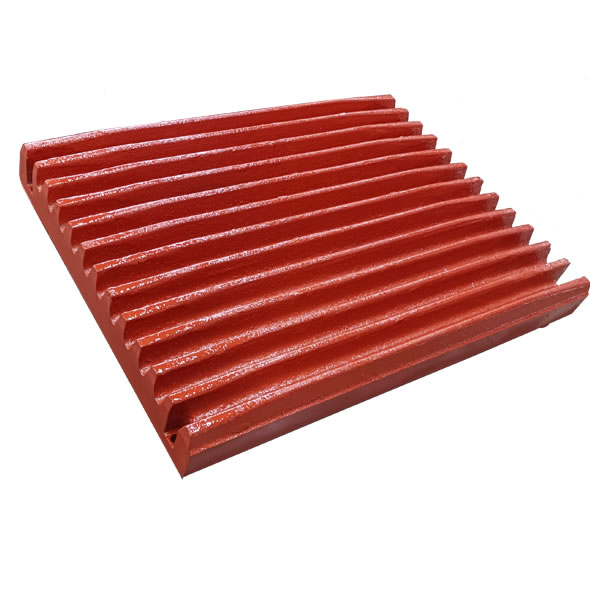
Jaw Plate
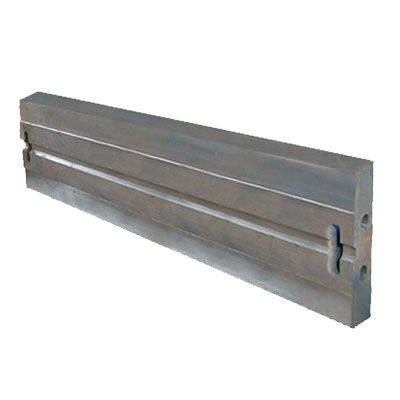
Blow Bar
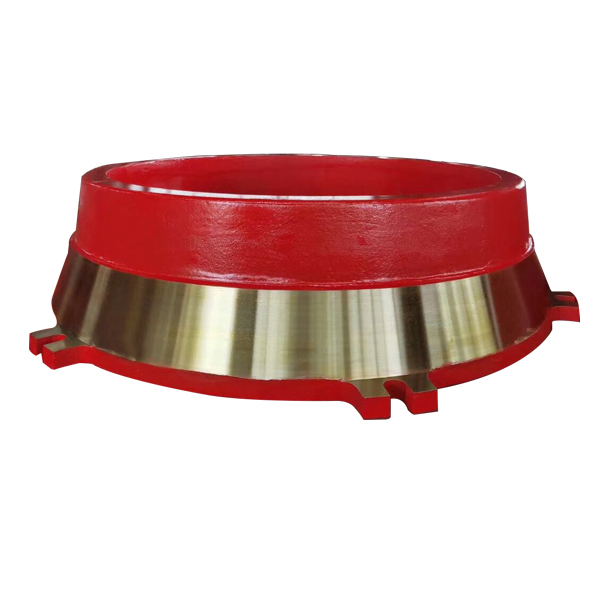
Mantle & Concave
Grate Bar
Contact Us
Get a quote within 24 hours. Send us your inquiry today.

+86 199 8785 7268
Mon-Sat 8AM-10PM CST Scan to chat — English, Spanish, Chinese Send photos of worn parts for instant quote

+86 199 8785 7268
Scan to follow — factory updates and quotes Chat in Chinese or English