

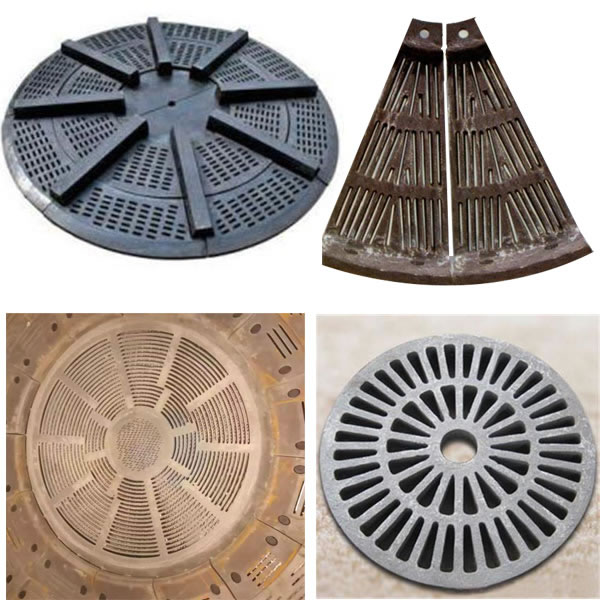
Diaphragm For Mill / Separating Warehouse Plate
Ball Mill Diaphragm Plates & Separating Compartment Liners — High Manganese Steel (Mn13Cr2 / Mn18Cr2) / Medium Carbon Steel / Chrome-Moly Alloy — For Single-Compartment & Multi-Compartment Ball Mills
Diaphragm For Mill/Separating Wearhouse Plate
Material Specifications & Selection Guide
| Grade | Material | Hardness | Impact | Life Factor | Application |
|---|---|---|---|---|---|
| Mn13 | Hadfield Steel (Mn12-14%) | 200 HB / 550 HB work-hardened | Excellent | 1.0x | Heavy impact, moderate wear |
| Mn13Cr2 | High Mn + Cr2% | 220 HB / 550 HB work-hardened | Excellent | 1.2-1.4x | High impact + improved wear |
| Cr15 | Medium Cr White Iron | 56-60 HRC | Low | 2.0-2.5x | Abrasion dominated, low impact |
| Cr20 | High Cr White Iron | 58-62 HRC | Low | 2.5-3.0x | High abrasion, fine grinding |
| Mn13+Cr Overlay | Mn base + Cr hardfacing | 220 HB / 58-62 HRC HF | Excellent | 2.0-2.8x | Balanced impact + wear |
| Diaphragm Type | Slot Width | Slot Pattern | Open Area | Flow Rate | Application |
|---|---|---|---|---|---|
| First Compartment | 8-12 mm | Radial / Concentric | 8-12% | High | Coarse grinding, max throughput |
| Intermediate | 5-8 mm | Radial / Herringbone | 6-10% | Medium | Mid-fine grinding, sizing |
| Fine Grinding | 3-5 mm | Concentric / Spiral | 4-8% | Low-Med | Fine cement, product control |
| Separating Plate | 1-3 mm | Screen mesh / Slotted | 3-6% | Low | Final separation, classification |
| Airflow Control | 6-15 mm | Adjustable louvers | 10-18% | Variable | Ventilation, drying mills |
| Mill Type | Mill Dia. (m) | Diaphragm Dia. | Segments | Material | Rec. Grade |
|---|---|---|---|---|---|
| Ball Mill (Cement) | 2.4-3.2 | 1.8-2.6 m | 6-8 | High Mn / High Cr | Mn13Cr2 / Cr20 |
| Ball Mill (Cement) | 3.5-4.6 | 2.8-3.8 m | 8-12 | High Mn / High Cr | Mn13Cr2 / Cr20 |
| Ball Mill (Raw) | 3.8-5.0 | 3.0-4.2 m | 10-14 | High Mn Steel | Mn13 / Mn13Cr2 |
| Coal Mill | 2.2-3.8 | 1.6-3.0 m | 6-10 | High Cr White Iron | Cr15 / Cr20 |
| SAG Mill | 7.0-12.2 | 5.5-10.0 m | 16-24 | High Mn Steel | Mn13Cr2 / Mn18Cr2 |
| Overflow Ball Mill | 1.5-3.0 | 1.2-2.4 m | 4-6 | High Cr White Iron | Cr15 / Cr20 |
| Grate Ball Mill | 2.4-4.5 | 1.8-3.6 m | 6-12 | High Mn + HF | Mn13+Cr Overlay |
| Rod Mill | 2.0-3.2 | 1.5-2.6 m | 6-8 | High Mn Steel | Mn13 / Mn13Cr2 |
Selection Quick Reference
- First compartment diaphragm (coarse grinding, max impact): Mn13 or Mn13Cr2 — high manganese work-hardens to 550 HB under impact, excellent toughness for large grinding media (60-100 mm balls), slot width 8-12 mm for maximum throughput
- Intermediate diaphragm (sizing, medium impact): Mn13Cr2 or Mn13+Cr hardfacing overlay — balances impact resistance with enhanced wear resistance, slot width 5-8 mm for controlled material flow between compartments
- Fine grinding / separating plate (product control): Cr20 high chrome white iron — maximum abrasion resistance for fine cement grinding (0-5 mm media), slot width 3-5 mm for precise particle sizing, low impact environment
- Air-swept coal mill diaphragm (ventilation + wear): Cr15 or Cr20 — handles both abrasive coal fines and high airflow, open area 10-18% for drying gas passage, resistant to thermal cycling 150-250 C
- SAG mill discharge grate (severe impact + abrasion): Mn13Cr2 or Mn18Cr2 — withstands 100-150 mm feed ore impact while providing abrasion resistance, large open area for high tonnage throughput
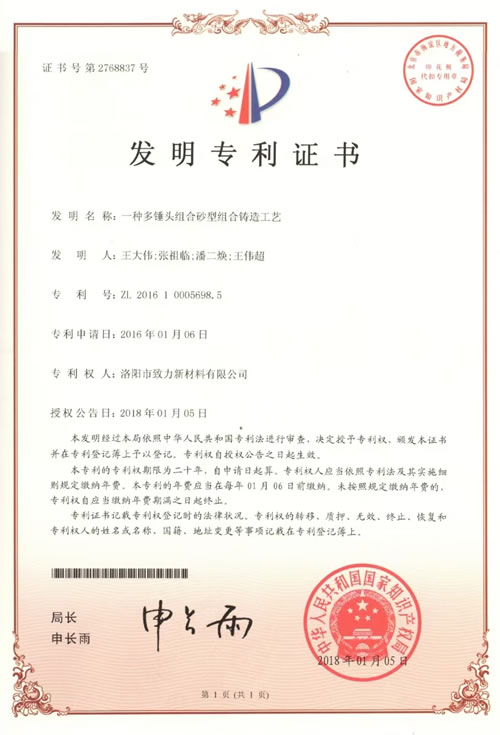
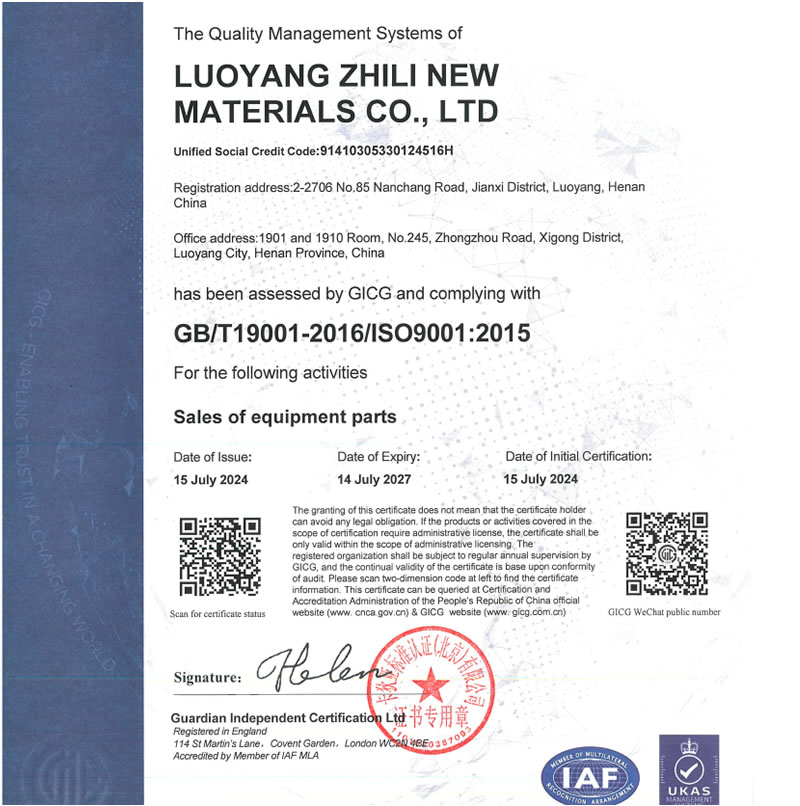
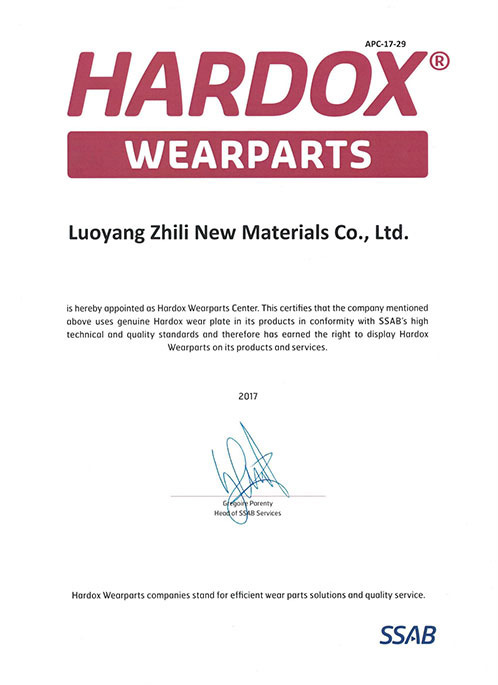
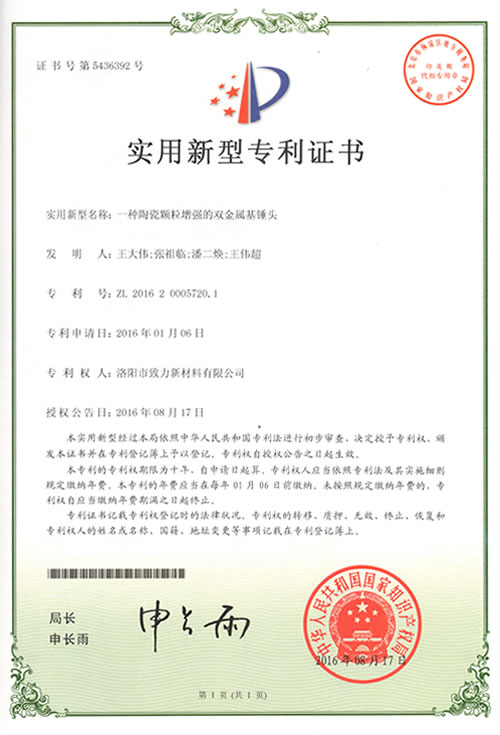
Certifications & Authorizations
Quality you can verify. Partners you can trust.
Custom OEM / ODM
From drawing to delivery — one-stop customization, no minimum order
Send Drawing
Upload your technical drawing (PDF, DWG, STEP, IGES) or share sample photos with dimensions
Engineering Review
Material recommendation, casting process design, DFM analysis — free quotation within 24 hours
Sampling & Test
Prototype production with full inspection: hardness test, spectrometer, dimensional check
Production & Ship
ISO 9001 certified. 15-25 days standard lead time. Global shipping with full documentation
Frequently Asked Questions
While both are cast components inside a ball mill, diaphragms and liners serve fundamentally different functions:
- Mill Liner: A wear protection component bolted to the mill shell. Its only job is to protect the steel shell from abrasive wear and lift the grinding media. It can gradually wear down and still function — thickness is the only critical dimension.
- Mill Diaphragm: A multi-functional structural component that (1) separates grinding compartments, (2) retains grinding media within each compartment, (3) controls material flow rate between chambers, and (4) classifies particles by size via precision slots. The diaphragm is a process control device, not a wear liner.
Why liner material doesn’t work for diaphragms:
- Slot precision requirement: Diaphragm slots control which particles pass through. If the slot edge wears even 1mm oversize, oversized particles enter the fine grinding chamber, compromising cement fineness (Blaine). Liners have no such precision requirement.
- Structural load: The diaphragm supports the entire ball charge pressure in front of it. A worn diaphragm collapses under ball load — this is a catastrophic failure that can destroy the mill internals. Liners don’t bear this structural load.
- Material flow control: The open area ratio and slot pattern directly determine mill throughput. A cracked or broken slot changes the flow dynamics. For this reason, Cr-Mo alloy steel (HRC 45-55 as-heat-treated) is preferred for 2nd compartment diaphragms — it maintains slot geometry without work-hardening deformation.
The choice depends on which compartment the diaphragm serves — the wear mechanism is completely different in each:
1st compartment — Manganese Steel (Mn18Cr2 / Mn22Cr2):
- Large grinding balls (60-90mm) impact the diaphragm face 24/7. Mn steel’s high impact toughness (80-180 J/cm2) absorbs these blows without cracking. The work-hardening property continuously renews the slot edge surface as it wears.
- Mn22Cr2 (Mn 20-24%) has the highest work-hardening rate and is recommended for high-throughput mills (3,000kW+) or mills grinding hard clinker.
2nd/3rd compartment — Alloy/Cr-Mo Steel (ZG42CrMo / Cr-Mo):
- Small balls (15-30mm) create low impact but high abrasive flow. Alloy steel’s heat-treated initial hardness (HRC 40-55) resists abrasive flow wear better than as-cast Mn steel (HB 200-250). Mn steel needs impact to work-harden — in a fine grinding chamber, it never reaches peak hardness.
- CNC-machined slots (+/-0.2mm) maintain precise particle size control. Cr-Mo steel achieves this without the dimensional distortion that can occur with Mn steel cast slots.
Practical rule: If you can hear balls hitting the diaphragm (1st compartment), use Mn steel. If the wear is primarily from material flowing through the slots (2nd+ compartment), use alloy/Cr-Mo steel.
Diaphragm replacement is driven by slot condition, not plate thickness — unlike liners where thickness is the primary indicator. Here are the warning signs:
Three signs it’s time to replace:
- Slot width exceeding tolerance: When slot width increases by 1.5-2x the original specification (e.g., a 5mm slot widening to 8-10mm), oversized particles enter the next chamber. The most obvious plant-floor indicator: cement Blaine fineness drops by 200-400 cm2/g with no other process change.
- Reduced open area due to peening: Impact from balls can peen the slot edges closed, reducing the open area ratio. This causes material backing up in the preceding compartment, increased mill filling, and reduced throughput (typically 5-10% drop before operators notice).
- Structural cracks or broken plates: Any visible crack radiating from a slot or bolt hole is an immediate replacement trigger. A failed diaphragm under ball charge load can destroy the mill interior. Inspect during every shutdown.
ZHILI complete diaphragm package includes:
- Diaphragm frame (outer support ring — ZG35CrMo or ZG42CrMo, machined to mill shell diameter)
- Front slotted plates (facing 1st compartment, slotted face toward incoming material)
- Back slotted plates (facing 2nd compartment, slotted face toward outgoing material)
- Center screen (3-6mm perforated plate, prevents ball migration between compartments)
- Lifter scoops (cast Mn steel, mounted on the diaphragm to lift material through the center opening)
- Fastening bolts (Grade 12.9 high-tensile, with Nord-Lock washers for vibration resistance)
- Gaskets and seals (between frame and shell, between plate segments)
Average replacement interval: 15,000-35,000 operating hours depending on material grade, clinker hardness, and mill duty. For mills running 7,200+ hours/year, we recommend inspection during annual shutdown and budgeting for replacement every 2-3 years. ZHILI reverse-engineers your existing diaphragm from a worn sample or OEM drawing, with delivery in 4-6 weeks.
Related Products
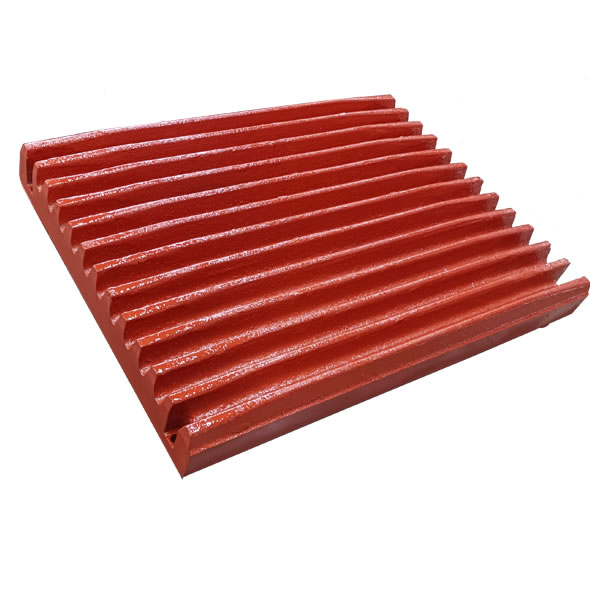
Jaw Plate
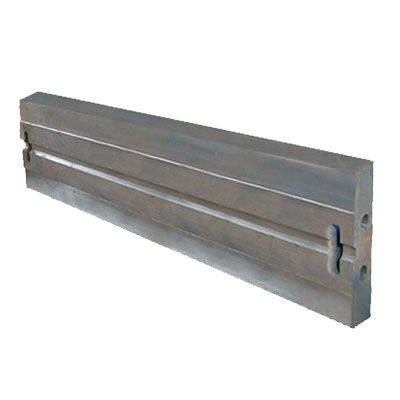
Blow Bar
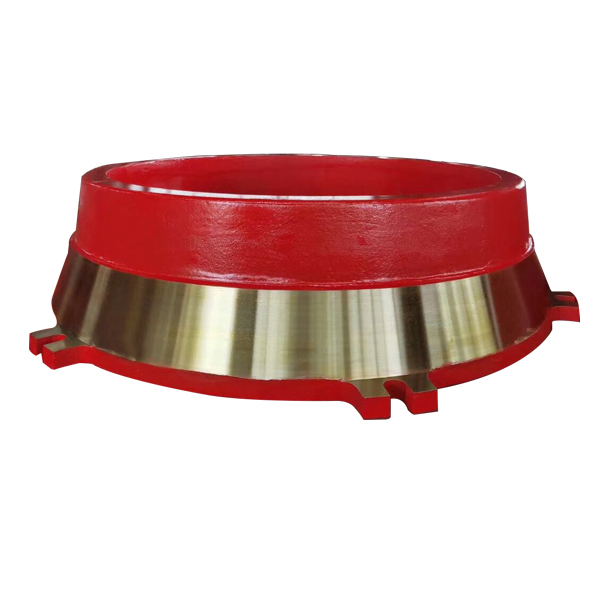
Mantle & Concave
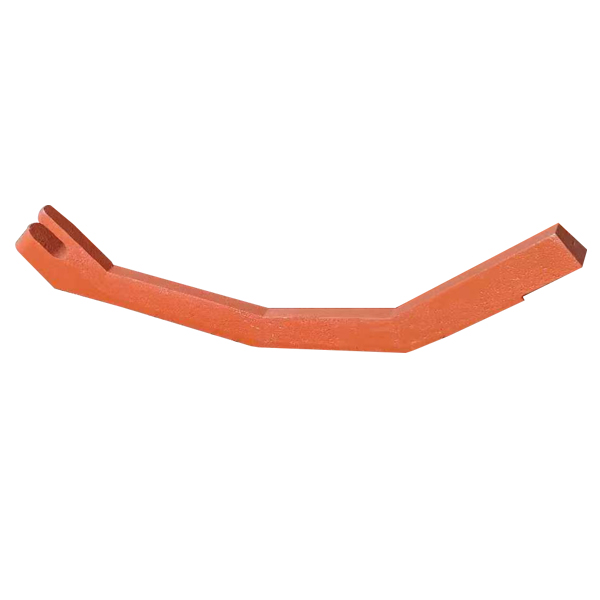
Grate Bar
Contact Us
Get a quote within 24 hours. Send us your inquiry today.

+86 199 8785 7268
Mon-Sat 8AM-10PM CST Scan to chat — English, Spanish, Chinese Send photos of worn parts for instant quote

+86 199 8785 7268
Scan to follow — factory updates and quotes Chat in Chinese or English