

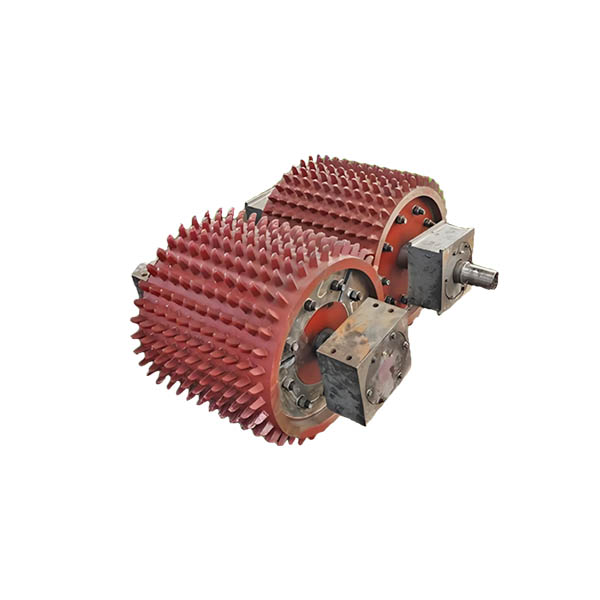
Crusher Toothed Roller
Double Roll / Sizer / Double Toothed Roll Crusher Roller — Toothed Ring / Roller Shaft Assembly — ZG40Cr / ZG42CrMo / 35CrMo / Alloy Cast Steel / Forged Alloy Steel
Crusher Toothed Roller / Double Toothed Roll Crusher Roller
Material Specifications & Selection Guide
| Grade | Material | Hardness | Tooth Life Factor | Wear Mechanism | Application |
|---|---|---|---|---|---|
| 40Cr | Alloy Steel (Cr-Mo) | 280-340 HB / 50-55 HRC QT | 1.0x | Gouging + Low-stress | Soft rock / coal, low abrasion |
| 42CrMo | Alloy Steel (Cr-Mo-V) | 300-360 HB / 52-58 HRC QT | 1.3-1.6x | Gouging + Moderate | Medium-hard ore, moderate abrasion |
| Mn13Cr2 | High Manganese Steel | 210-230 HB / 500-600 HB WH | 1.5-2.0x | Work-hardening | Hard rock, heavy impact loading |
| Cr20-SiC | High Chrome + Ceramic | 58-62 HRC (Matrix) | 2.5-3.5x | Abrasion-dominant | Quartz, granite, max abrasion |
| Martensitic Steel | ZGMn13Mo + HT | 400-500 HB (Through) | 1.8-2.2x | Impact + Abrasion | Limestone, mixed duty |
| Crusher Size | Roller Dia. (mm) | Roller Length (mm) | Tooth Height (mm) | Tooth Pitch (mm) | Tooth Profile |
|---|---|---|---|---|---|
| 2PG400x250 | 400 | 250 | 30-40 | 50-70 | Single wedge tooth |
| 2PG610x400 | 610 | 400 | 40-55 | 70-90 | Double wedge / pick tooth |
| 2PG800x600 | 800 | 600 | 55-70 | 90-120 | Double wedge / blade tooth |
| 2PG1000x800 | 1000 | 800 | 70-90 | 120-150 | Blade tooth / helical |
| 2PG1200x1000 | 1200 | 1000 | 90-110 | 140-170 | Segmental replaceable tooth |
| 2PG1500x1200 | 1500 | 1200 | 110-140 | 160-200 | Segmental / bolt-on cap |
| 2DSK800x600 | 800 | 600 | 55-65 | 80-110 | Spiral tooth |
| Crusher Model | Roller Dia. x Length | Feed Size (mm) | Capacity (t/h) | Rec. Roller Material | OEM Ref. |
|---|---|---|---|---|---|
| 2PG400x250 | 400×250 | <30 | 5-15 | 40Cr / 42CrMo | Sandvik / ThyssenKrupp |
| 2PG610x400 | 610×400 | <65 | 20-40 | 42CrMo / Mn13Cr2 | FLSmidth / McLanahan |
| 2PG800x600 | 800×600 | <100 | 40-80 | Mn13Cr2 / Martensitic | Sandvik CR610 / CR810 |
| 2PG1000x800 | 1000×800 | <150 | 80-150 | Mn13Cr2 / Cr20-SiC | FLSmidth ABON / MMD |
| 2PG1200x1000 | 1200×1000 | <200 | 120-250 | Segmental Mn13Cr2 | MMD 625 / 750 Series |
| 2PG1500x1200 | 1500×1200 | <300 | 250-500 | Segmental + Ceramic | MMD 850 / 1000 Series |
| 2DSK800x600 | 800×600 | <80 | 30-60 | 42CrMo / Mn13Cr2 | Komatsu / Joy |
Selection Quick Reference
- Soft material (coal, gypsum, <50 MPa): 40Cr or 42CrMo quench-tempered alloy steel — cost-effective for low-abrasion material with tooth hardness 50-55 HRC. Wedge tooth profile optimal for coal sizing with <5% fines generation
- Medium-hard material (limestone, dolomite, 50-120 MPa): Mn13Cr2 work-hardening teeth or martensitic through-hardened teeth (ZGMn13Mo). Work-hardened surface reaches 500-600 HB under impact. Double-wedge tooth profile for balanced grip and release
- Hard material (granite, quartz, basalt, >120 MPa): Cr20-SiC ceramic composite teeth — ceramic particles in high chrome matrix provide 2.5-3.5x tooth life vs Mn steel. Helical tooth arrangement reduces peak crushing force and dampens vibration
- Large crushers (2PG1200+, MMD equivalent): Segmental replaceable tooth design with bolt-on caps — individual teeth can be replaced without removing the entire roller. Use Mn13Cr2 caps for general duty, Cr20-SiC caps in the high-wear centre zone, and 42CrMo caps at roller edges
- Custom OEM service: Reverse-engineer from your worn toothed roller or OEM drawing. ZHILI reproduces exact tooth profile, pitch, and roller diameter to match original crushing gap and product size. Segmental tooth design available for all sizes with 15-20 day delivery
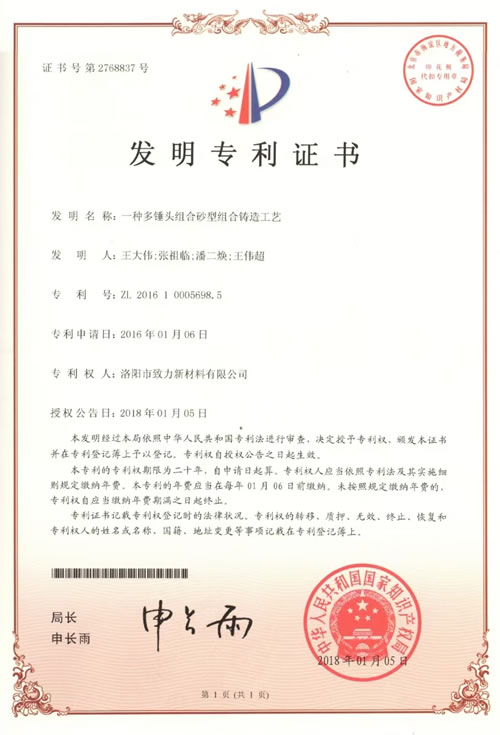
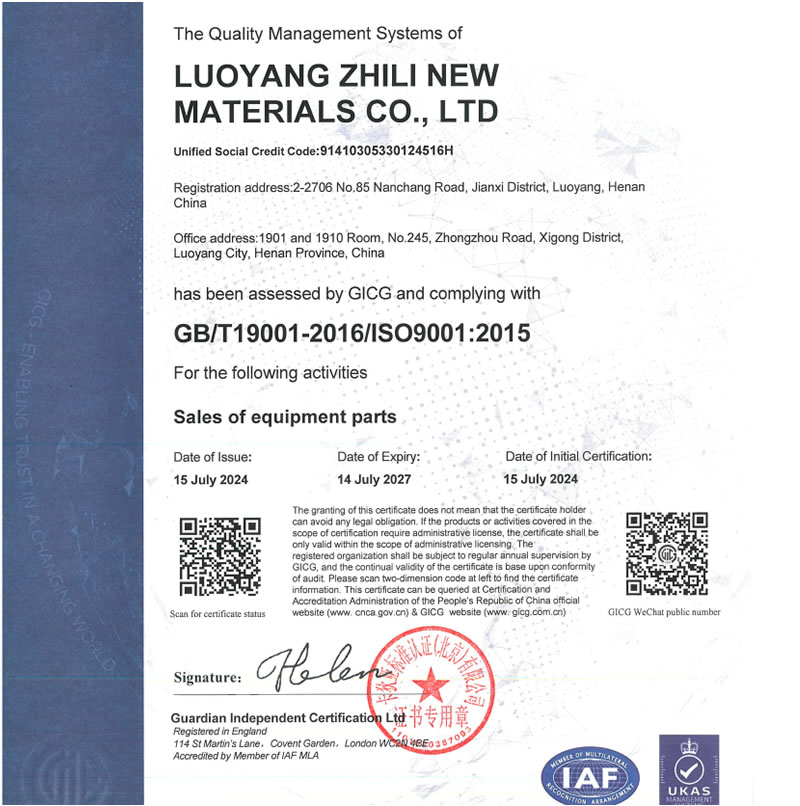
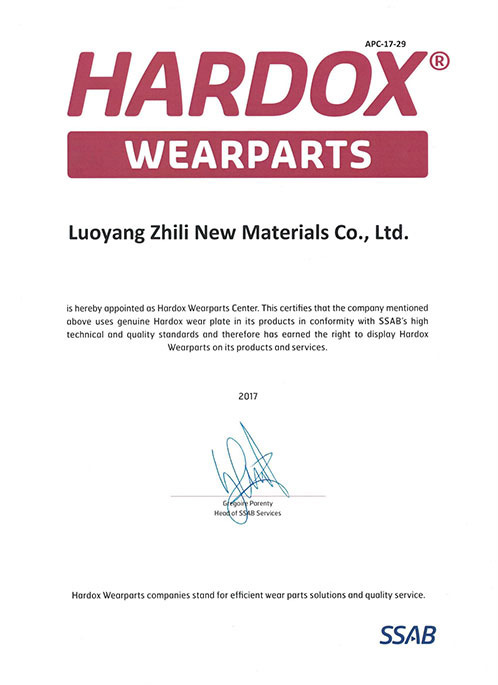
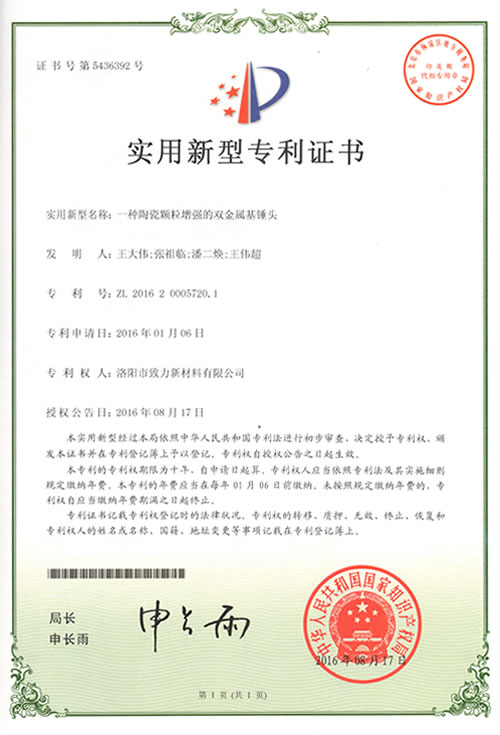
Certifications & Authorizations
Quality you can verify. Partners you can trust.
Custom OEM / ODM
From drawing to delivery — one-stop customization, no minimum order
Send Drawing
Upload your technical drawing (PDF, DWG, STEP, IGES) or share sample photos with dimensions
Engineering Review
Material recommendation, casting process design, DFM analysis — free quotation within 24 hours
Sampling & Test
Prototype production with full inspection: hardness test, spectrometer, dimensional check
Production & Ship
ISO 9001 certified. 15-25 days standard lead time. Global shipping with full documentation
Frequently Asked Questions
Quick answers to common questions about our toothed rollers for double roll crushers
Tooth material selection is driven by material hardness and abrasiveness. Unlike hammer or liner wear, toothed roller wear involves gouging — the teeth literally dig into and tear the feed material:
- 40Cr / 42CrMo quench-tempered alloy steel — for soft, friable material: Most cost-effective for coal, gypsum, oil shale, and clay with compressive strength below 50 MPa and SiO2 content below 5%. Teeth are through-hardened to 50-58 HRC and maintain sharp edges through simple abrasive wear. This is the standard material for 70-80% of toothed roll crushers globally. Tooth life: 2,000-4,000 hours in clean coal, dropping to 800-1,500 hours in coal with 10-15% ash.
- Mn13Cr2 high manganese — for impact gouging in medium-hard rock: When crushing limestone, dolomite, or phosphate rock at 50-120 MPa, the teeth experience repeated impact gouging as they grip and break each lump. Mn13Cr2 work-hardens from 210 HB to 500-600 HB at the tooth surface — the harder it works, the harder it gets. This self-renewing hardness layer is ideal because tooth tips are constantly work-hardened by each crushing cycle. Tooth life: 1.5-2.0x longer than 42CrMo in limestone.
- Cr20-SiC ceramic composite — for extreme abrasion: When crushing quartz, granite, or high-silica ore (SiO2 >15%), steel teeth wear by micro-ploughing from hard mineral particles. Embedding silicon carbide ceramic particles in a high-chrome matrix eliminates this wear mode — the ceramic particles resist scratching while the chrome matrix holds them in place. Tooth life is 2.5-3.5x longer than Mn13Cr2. The cost premium is 60-80%, but justified when standard teeth last less than 1,200 hours.
- Segmental hybrid strategy: On large rollers (2PG1200+), teeth are individual bolt-on segments. Install ceramic composite teeth in the centre 60% of the roller (highest wear zone from gravity-fed material) and Mn13Cr2 teeth at the edges (lower wear). This hybrid approach captures 80% of the ceramic benefit at 40% of the cost. Replace worn centre teeth in 2-3 hours without removing the roller from the crusher.
Quick selection rule: Can you scratch the feed material with a pocket knife? No (Mohs >5.5) → use ceramic composite. Yes (Mohs <5.5) → if the material breaks with a sharp crack (brittle, like coal) use 42CrMo; if it's dusty and abrasive (like silty limestone) use Mn13Cr2. Need a definitive answer? Send us a 5 kg sample and we will run an abrasion index test and recommend the optimal material within 5 working days.
Uneven tooth wear is the #1 cause of premature roller replacement. When teeth wear non-uniformly, the crushing gap widens in worn zones, oversized material bypasses, and product quality collapses:
- Centre-biased wear (most common pattern): The centre 50-60% of the roller wears 1.5-2.0x faster than the edges because gravity-fed material concentrates at the roller centre. This creates an hourglass profile — the gap at the centre becomes 15-30 mm larger than at the edges. Oversized material streams through the centre gap, defeating the purpose of the crusher. Fix: install a feed spreader chute that distributes material evenly across the full roller width. Even a simple splitter plate improves distribution by 60% and extends tooth life by 30-40%.
- Tooth profile selection matters: Wedge teeth (sharp triangular profile) grip and break material efficiently but wear faster at the tip. Blade teeth (rectangular with a sharp edge) distribute wear across a larger area and last 1.3-1.5x longer with only a 5-10% reduction in grip. For abrasive material, use blade teeth with a 2-3 mm radius on the tip edge — this eliminates micro-chipping at the tip without significantly reducing crushing efficiency.
- Roller speed optimization: Running too fast (>60 RPM for 1000 mm rollers) increases tooth impact velocity and accelerates wear exponentially — wear rate is approximately proportional to speed^1.8. Running too slow (<20 RPM) reduces throughput and increases torque demand, potentially overloading the drive. The optimal peripheral speed is 1.5-2.5 m/s — for a 1000 mm roller, this corresponds to 29-48 RPM. Fixed-speed crushers: check your actual RPM with a tachometer — worn V-belts or incorrect pulley sizing can shift speed by 10-15% without notice.
- Wear measurement protocol: Measure tooth height at 5 evenly spaced positions across each roller every 250 hours using a go/no-go gauge. Record the data and plot wear vs. throughput (mm/1,000 tons). When the wear rate accelerates (gradient steepens), the tooth profile has degraded to a point where the effective crushing angle has changed — replace or reverse the roller before product quality is affected. Replace when tooth height reaches 40% of original — continuing beyond this produces 3-5x more fines because teeth can no longer grip and shear cleanly.
Reversing strategy (for symmetrical tooth rollers): Many double-roll crushers allow reversing the rotation direction to use both tooth flanks. Reverse every 800-1,200 hours — this alone doubles tooth life by distributing wear to both sides of each tooth. After reversal, re-set the crushing gap because the non-worn flank sits slightly higher. A $0 reversing operation delivers 100% more tooth life.
Segmental tooth design is the maintenance-friendly alternative to monolithic rollers. Understanding the replacement decision tree saves thousands in unnecessary roller rebuilds:
- Replace individual teeth (2-3 hours, minimal downtime): When 30% or fewer teeth are worn below the allowable limit, replace only those segments. Remove the worn tooth cap bolts (typically M20-M24 grade 12.9), clean the mounting surface with a wire wheel, and install the new tooth cap. Always replace bolts as a set — used bolts have reduced preload and are prone to loosening. Apply high-temperature anti-seize (nickel-based, not copper) to bolt threads. Torque in a cross pattern to 400-500 Nm (M20) or 600-750 Nm (M24). Re-torque after 8 hours of operation.
- Rebuild entire roller (2-3 days, major shutdown): When >50% of teeth are worn, or when the roller base body shows signs of cracking, gouging, or bore elongation, rebuild the entire roller. Process: (1) strip all tooth segments; (2) machine the roller body surface to remove fatigue cracks and prepare for new segments; (3) install a complete set of new tooth segments with matched-batch bolts; (4) static-balance the assembled roller to G6.3. A properly rebuilt roller should match new-roller performance within 2%.
- Hardfacing repair (shop only, not field): For non-segmental rollers, tooth tips can be rebuilt by hardfacing with Cr27Mo2 flux-cored wire (3.2 mm, 28-32V, 250-350A). Deposit 3-4 layers to build up 8-12 mm. Pre-heat the roller to 200-250 C (cast steel body) or 150-200 C (Mn steel body). Maintain interpass temperature below 300 C. Post-weld slow cool under insulation blanket. Machine the rebuilt teeth to original profile. Hardfacing restores 70-80% of original tooth life at 30-40% of the cost of a new roller.
- Decision checklist: Replace individual teeth if: (a) <30% teeth worn; (b) roller body is undamaged; (c) bolt holes are not elongated; (d) you have spare teeth on hand. Rebuild roller if: (a) >50% teeth worn; (b) roller body has cracks or bore damage; (c) bolt holes are distorted; (d) a major shutdown is already scheduled. Hardface-repair roller if: (a) roller is non-segmental (monolithic); (b) only tooth tips are worn; (c) you have in-house welding capability with qualified welders.
ZHILI segmental tooth advantage: All our 2PG1000+ toothed rollers are delivered with a complete spare set of bolt-on tooth caps. Standard delivery includes 100% spare caps for centre-zone teeth and 50% spare caps for edge teeth — matching the wear pattern outlined in FAQ #2. Tooth cap replacement requires only a torque wrench and 2-3 hours — no welding, no machining, no roller removal. This is the difference between a 3-hour maintenance window and a 3-day rebuild.
Related Products
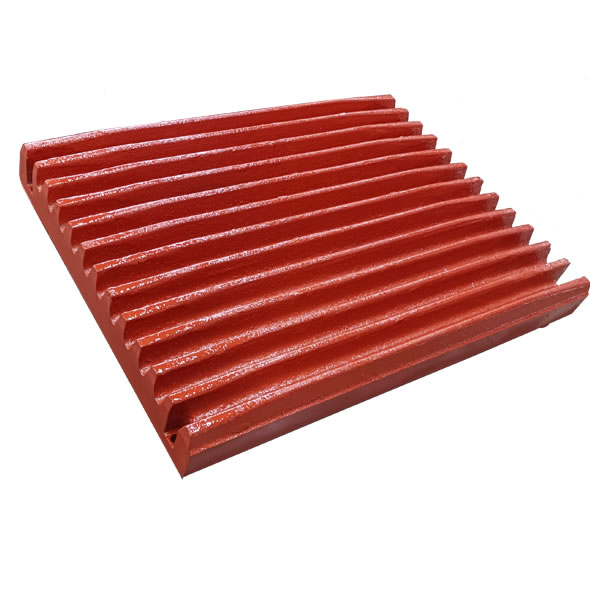
Jaw Plate
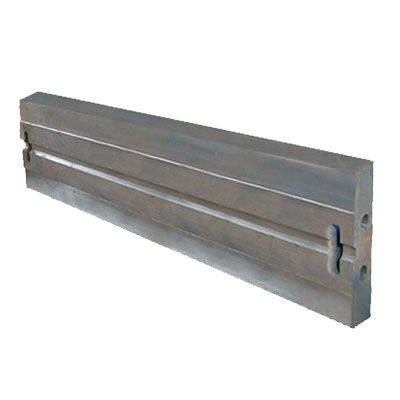
Blow Bar
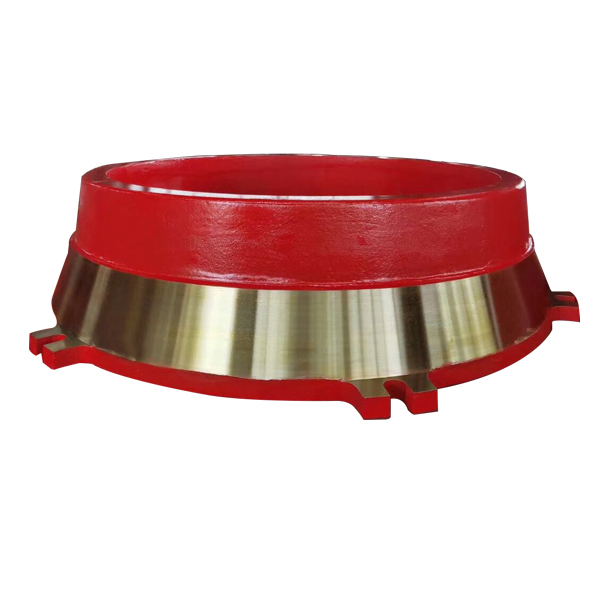
Mantle & Concave
Grate Bar
Contact Us
Get a quote within 24 hours. Send us your inquiry today.

+86 199 8785 7268
Mon-Sat 8AM-10PM CST Scan to chat — English, Spanish, Chinese Send photos of worn parts for instant quote

+86 199 8785 7268
Scan to follow — factory updates and quotes Chat in Chinese or English