

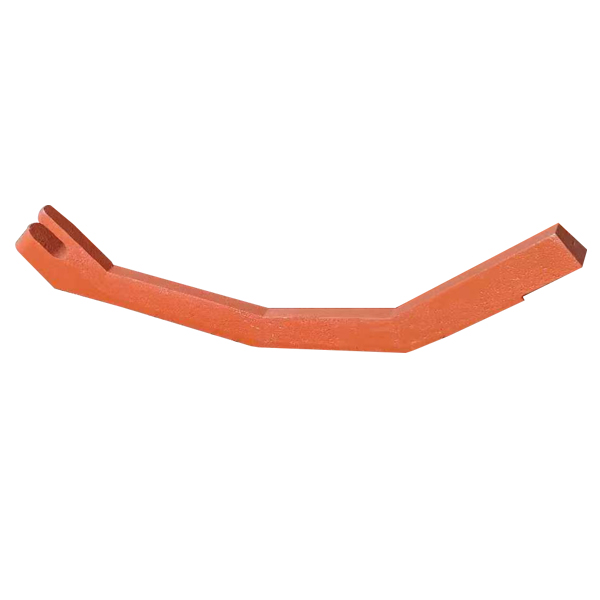
Crusher Grate Bar
Single Grate Bar / Grid Bar / Sizing Bar for Hammer Mill & Impact Crusher — Mn13Cr2 / Mn18Cr2 / High Chrome Alloy — Individual Replaceable Bar Design
Crusher Grate Bar
Material Specifications & Selection Guide
| Grade | Material | Hardness | Impact | Life Factor | Application |
|---|---|---|---|---|---|
| Mn13 | Mn12-14% + C1.0-1.4% | 200-220 HB / 450-550 HB WH | Excellent | 1.0x | Limestone, soft rock |
| Mn13Cr2 | Mn12-14% + Cr2% | 210-230 HB / 500-600 HB WH | Excellent | 1.2-1.5x | Standard duty |
| Mn18Cr2 | Mn17-19% + Cr2% | 220-240 HB / 550-650 HB WH | Superior | 1.6-2.0x | Hard rock, high impact |
| Cr15 | Cr14-17% + C2.4-3.2% | 56-60 HRC | Low | 2.0-2.5x | Abrasive, low impact |
| Cr20 | Cr18-22% + C2.4-3.2% | 58-62 HRC | Low | 2.5-3.0x | High abrasion zones |
| Parameter | Range | Tolerance | Feature |
|---|---|---|---|
| Length | 300-1,500 mm | +3/-0 mm | Matches chamber width |
| Width | 40-120 mm | +2/-0 mm | Cross-section width |
| Thickness | 30-80 mm | +2/-0 mm | Wear allowance |
| Slot Opening | 10-50 mm | +1/-0 mm | Product size control |
| Bolt Hole Dia. | M16-M30 | H11 | Mounting holes |
| Hole Spacing | 100-300 mm | +1/-0 mm | Even load distribution |
| Weight (per bar) | 15-180 kg | +5/-0% | Varies by size |
| Crusher Type | Model | Bar Length (mm) | Slot (mm) | Material |
|---|---|---|---|---|
| Hammer Crusher | PC400x300 | 350 | 10-15 | Mn13 / Mn13Cr2 |
| Hammer Crusher | PC600x400 | 500 | 15-20 | Mn13Cr2 |
| Hammer Crusher | PC800x600 | 700 | 20-25 | Mn13Cr2 / Mn18Cr2 |
| Hammer Crusher | PC1000x800 | 900 | 25-35 | Mn18Cr2 |
| Hammer Crusher | PC1200x1000 | 1,100 | 30-40 | Mn18Cr2 / Cr15 |
| Reversible Crusher | PCK1010 | 950 | 25-30 | Mn18Cr2 |
| Reversible Crusher | PCK1416 | 1,350 | 35-45 | Mn18Cr2 / Cr20 |
| Ring Hammer | PCH series | 600-900 | 20-30 | Mn13Cr2 |
| Single Stage | DPC series | 1,000-1,400 | 30-50 | Mn18Cr2 / Cr15 |
Selection Quick Reference
- Small hammer crushers (PC400-PC800, limestone): Mn13 or Mn13Cr2 grate bars — work-hardening to 500-600 HB under hammer impact, slot opening 10-25 mm for controlled product size
- Medium hammer crushers (PC1000-PC1200): Mn13Cr2 or Mn18Cr2 — higher Mn content provides superior impact resistance for larger feed (200-400 mm) and higher throughput
- Reversible / single stage crushers: Mn18Cr2 or Cr15 — withstands continuous high-energy impact from abrasive materials like coal gangue, slag, or shale
- High abrasion discharge zone: Cr15 or Cr20 high chrome bars — maximum wear resistance where material is already reduced and particle velocity is highest, 2.5-3.0x life vs Mn steel
- Slot opening guideline: Slot size = 1.5-2.0x desired product P80. Too small slots cause packing and reduced throughput; too large slots allow oversize bypass. Check slot wear every 200 hours — worn slots (>120% of original) reduce product quality
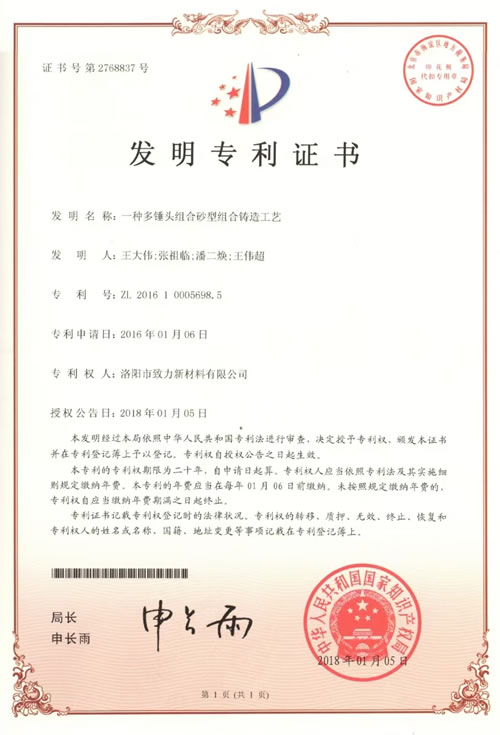
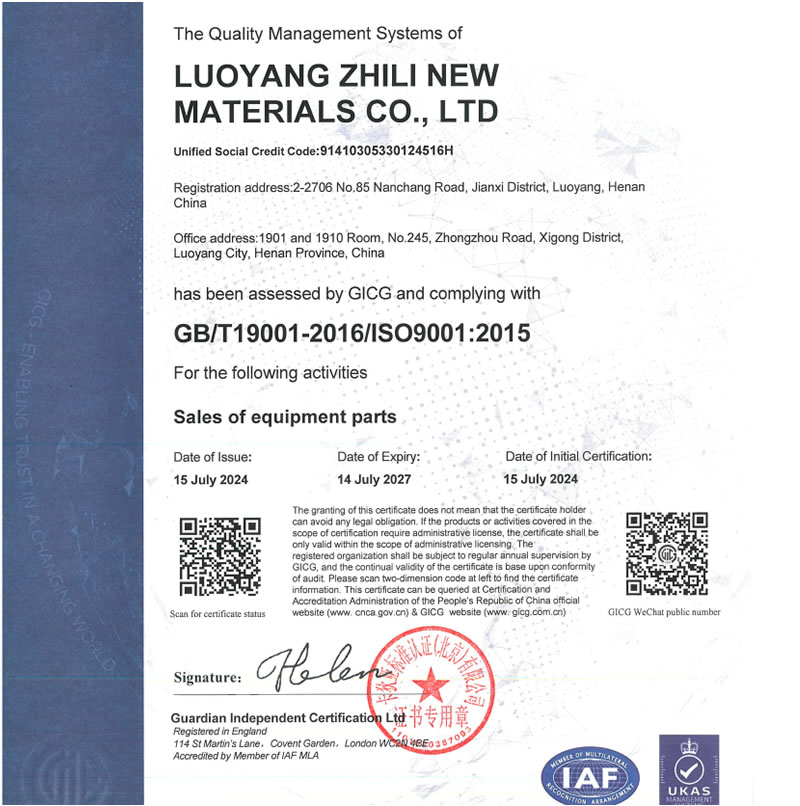
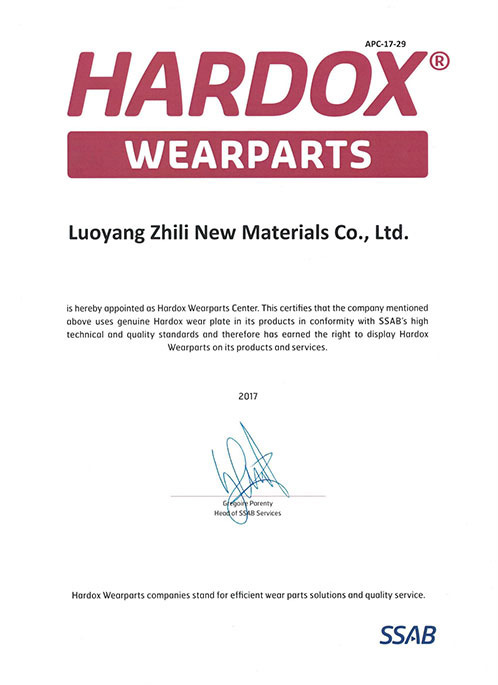
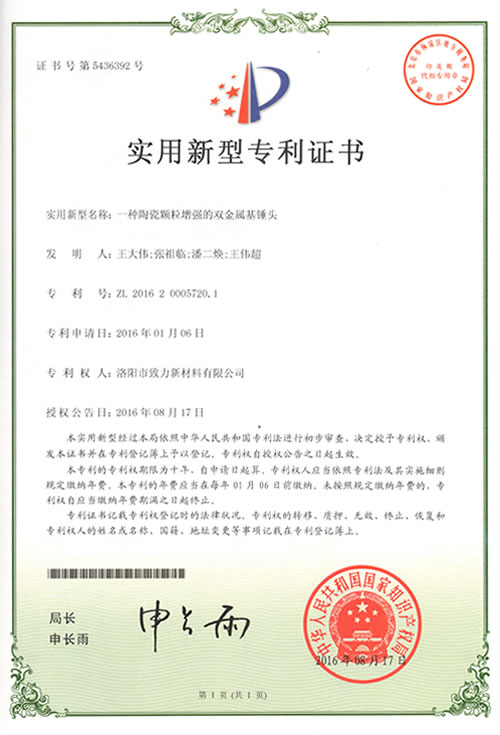
Certifications & Authorizations
Quality you can verify. Partners you can trust.
Custom OEM / ODM
From drawing to delivery — one-stop customization, no minimum order
Send Drawing
Upload your technical drawing (PDF, DWG, STEP, IGES) or share sample photos with dimensions
Engineering Review
Material recommendation, casting process design, DFM analysis — free quotation within 24 hours
Sampling & Test
Prototype production with full inspection: hardness test, spectrometer, dimensional check
Production & Ship
ISO 9001 certified. 15-25 days standard lead time. Global shipping with full documentation
Frequently Asked Questions
Quick answers to common questions about our crusher grate bars
Grate bar slot opening is the primary product size control mechanism in hammer crushers. Slot size directly determines the maximum particle leaving the crusher:
- Undersized slots (too narrow): When slot width is less than 1.5x target P80, material accumulates above the grate — packing occurs. This reduces throughput 30-50% and increases hammer wear because the packed bed absorbs impact energy without breaking. Motor current spikes are the first warning sign. Increase slot width immediately if amperage exceeds nominal by 15%+.
- Oversized slots (too wide): When slot width exceeds 2.0x target P80, particles larger than specification pass through without secondary crushing. This increases recirculation load (screen oversize returns to crusher) and reduces crushing efficiency. Product size consistency degrades — the P90/P10 ratio widens beyond acceptable limits.
- Slot wear progression: Slots widen as both the grate bar edges and hammer tips wear. A 25 mm slot delivered new can become 35 mm within 1,000-2,000 operating hours. Re-measure slot width every 200 hours at 5 evenly spaced positions across the grate. Replace bars when slot width exceeds 120% of original specification.
- Product size rule: Desired product P80 (mm) x 1.5-2.0 = initial slot opening (mm). Example: for ball mill feed at P80 15 mm, grate slots should be 22-30 mm. Coarse crushing favours the upper end (2.0x), fine crushing the lower end (1.5x).
Field check method: Drop a calibrated steel ball (diameter = desired P80) through the grate slots at 5 positions. If the ball passes through >3 positions, slots are too wide. If it passes through 0-1 positions, slots are too narrow. Target: ball passes through exactly 2-3 positions — this indicates the slot is producing correct product size.
Material choice balances impact toughness vs. abrasion resistance. Grate bars experience both — hammer impact from above and abrasive sliding from below:
- High manganese (Mn13, Mn13Cr2, Mn18Cr2): Standard for most applications where feed contains >80 mm particles that strike the grate directly. The impact energy work-hardens the surface to 500-650 HB. Mn bars also deform plastically under overload — they bend before breaking, giving warning. Mn18Cr2 recommended for crushers above PC800 size.
- High chrome (Cr15, Cr20): Cost 25-40% more than Mn steel but justifies the premium when material SiO2 exceeds 15%. In abrasive limestone applications, Cr20 bars achieve 2.5-3.0x longer life, reducing replacement frequency and downtime. The break-even point is approximately 6 months of operation — if Mn bars last <6 months, Cr bars are more economical after accounting for labour and downtime.
- Cr chrome limitation: Never use chrome bars in crushers that process feed containing tramp metal (rebar, drill bits, bucket teeth). Chrome is brittle under impact — a single tramp metal strike can shatter multiple bars. Use Mn steel in demolition recycling and other contaminated feed applications.
- Mixed configuration (practical solution): Install Cr15/Cr20 bars in the centre zone where material is already fine and impact is lowest, and Mn18Cr2 bars at the edges where large fragments may still impact. This hybrid setup captures the benefits of both materials at minimal cost premium.
Grate bar replacement speed directly impacts crusher availability. A systematic approach reduces 4-hour bar changes to under 90 minutes:
- Pre-assembled cassette method (fastest): Remove the entire grate bar assembly as a cassette (bars + mounting frame). Bench-assemble the replacement set with new bars and spacers in the workshop during scheduled downtime. Swap cassettes in 20-30 minutes on-site. This is standard practice for high-tonnage operations where crusher availability is critical.
- Individual bar replacement (spot repair): Replace only damaged or excessively worn bars. Use a slot-setting jig or spacer template — a piece of flat bar ground to the exact slot width. Place the jig between adjacent bars as you tighten each bolt. This guarantees consistent slot spacing and eliminates time-wasting re-adjustments. Never “eyeball” slot width — 2 mm variability reduces product quality measurably.
- Spacer design matters: Use tapered spacers (wider at bolt end, narrow at discharge end) if bars are curved or tapered. This ensures parallel slots along the entire bar length. Flat spacers work only for parallel-sided bars. Weld a small tack on each spacer to prevent rotation during assembly.
- Bolt torque sequence: Tighten a star pattern (centre outward) to 50% torque first pass, then 100% second pass. This prevents bar warping. Use Nord-Lock wedge washers under every bolt head — grate bars experience 4,000-7,000 vibration cycles per minute and standard washers loosen predictably.
Related Products
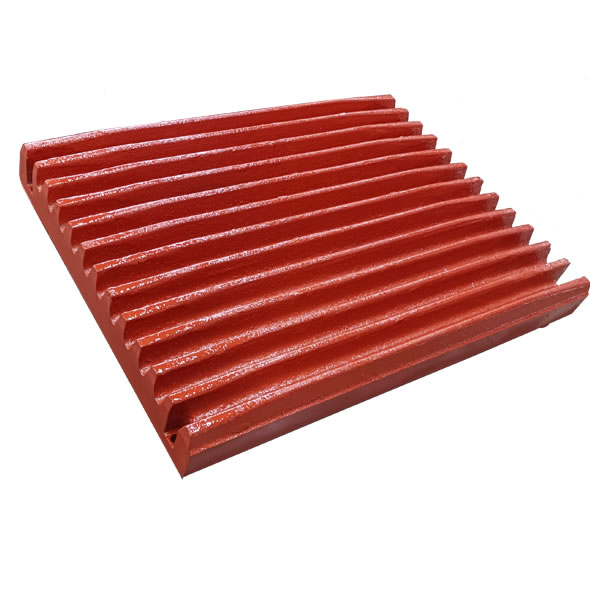
Jaw Plate
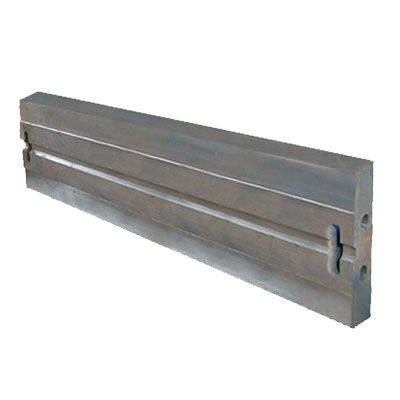
Blow Bar
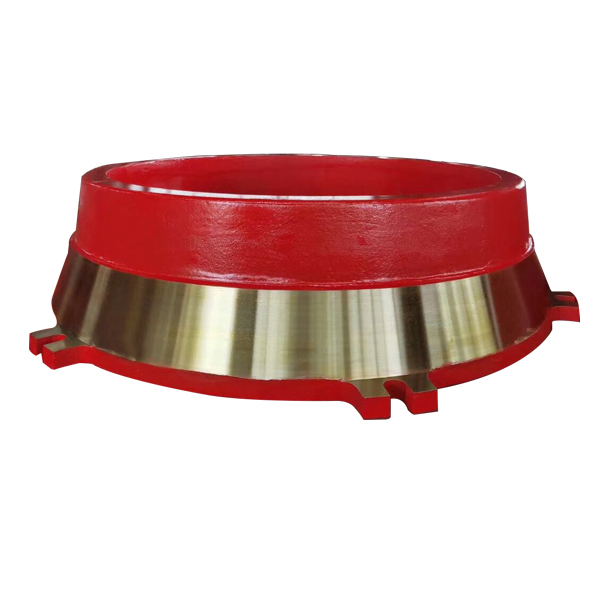
Mantle & Concave
Grate Bar
Contact Us
Get a quote within 24 hours. Send us your inquiry today.

+86 199 8785 7268
Mon-Sat 8AM-10PM CST Scan to chat — English, Spanish, Chinese Send photos of worn parts for instant quote

+86 199 8785 7268
Scan to follow — factory updates and quotes Chat in Chinese or English