

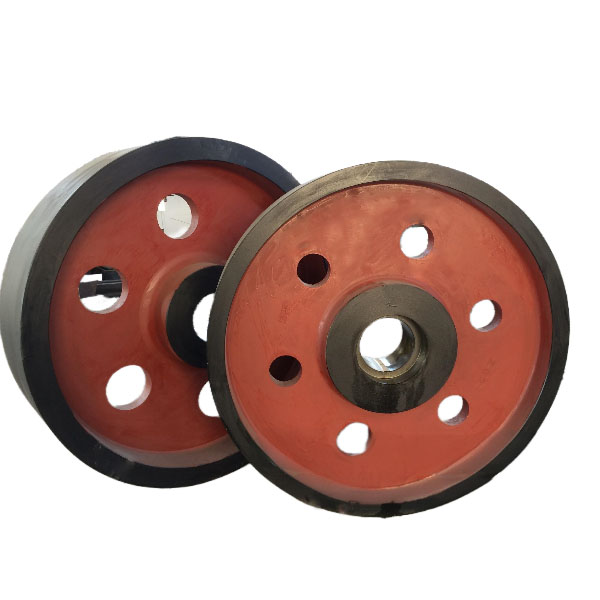
Crusher Flywheel / Pulley
Jaw Crusher / Cone Crusher / Impact Crusher Flywheel & Drive Pulley Assembly — HT200 / HT250 / QT500-7 / ZG35 / ZG45 — Cast Iron / Ductile Iron / Cast Steel
Crusher Flywheel / Pulley
Material Specifications & Selection Guide
| Grade | Material | Tensile (MPa) | Hardness (HB) | Weight Advantage | Application |
|---|---|---|---|---|---|
| HT200 | Gray Cast Iron | 200 | 160-210 | Standard | Small crushers (PE250-PE400) |
| HT250 | Gray Cast Iron | 250 | 170-220 | Standard | Medium crushers (PE500-PE750) |
| HT300 | Gray Cast Iron | 300 | 180-230 | Standard | Large crushers (PE800-PE1200) |
| QT500-7 | Ductile Iron | 500 | 170-230 | 15-20% Lighter | High-speed, reduced inertia |
| QT600-3 | Ductile Iron | 600 | 190-270 | 15-25% Lighter | Heavy shock load, PE1200+ |
| Flywheel Type | Outer Dia. (mm) | Bore Dia. (mm) | Face Width (mm) | Weight (kg) | Balance Grade |
|---|---|---|---|---|---|
| PE250x400 | 800-900 | 100-120 | 180-220 | 280-380 | G6.3 |
| PE400x600 | 1050-1150 | 140-160 | 230-280 | 600-850 | G6.3 |
| PE500x750 | 1250-1400 | 170-190 | 280-340 | 1200-1600 | G6.3 |
| PE600x900 | 1450-1600 | 200-230 | 320-380 | 1800-2500 | G6.3 |
| PE750x1060 | 1650-1850 | 240-270 | 380-450 | 3200-4200 | G6.3 |
| PE900x1200 | 1900-2150 | 280-310 | 450-520 | 5200-6800 | G6.3 |
| PE1200x1500 | 2300-2600 | 330-370 | 520-600 | 8500-11000 | G6.3 |
| Crusher Model | OEM Reference | Flywheel OD (mm) | Bore (mm) | Keyway (mm) | Rec. Material |
|---|---|---|---|---|---|
| PE150x250 | Metso / Sandvik CJ | 600-700 | 65-80 | 18-20 | HT200 |
| PE250x400 | Metso C63 / Sandvik CJ408 | 800-900 | 100-120 | 28-32 | HT200 |
| PE400x600 | Metso C80 / Sandvik CJ409 | 1050-1150 | 140-160 | 36-40 | HT250 |
| PE500x750 | Metso C96 / Sandvik CJ411 | 1250-1400 | 170-190 | 40-45 | HT250 |
| PE600x900 | Metso C100 / Sandvik CJ412 | 1450-1600 | 200-230 | 45-50 | HT250 |
| PE750x1060 | Metso C110 / Sandvik CJ613 | 1650-1850 | 240-270 | 50-56 | HT300 |
| PE900x1200 | Metso C125 / Sandvik CJ615 | 1900-2150 | 280-310 | 60-70 | QT500-7 |
| PE1200x1500 | Metso C150 / CJ815 | 2300-2600 | 330-370 | 70-80 | QT600-3 |
Selection Quick Reference
- Small crushers (PE150-PE400): HT200 gray cast iron — excellent vibration damping and heat dissipation, machinability for precision bore and keyway. Flywheel OD 600-900 mm with 4-6 lightening holes, balance grade G6.3 per ISO 1940-1
- Medium crushers (PE500-PE750): HT250 gray cast iron — higher tensile strength handles increased centrifugal stress at flywheel rim speeds of 25-30 m/s. OD 1250-1600 mm with 6-8 lightening holes arranged symmetrically for balance
- Large crushers (PE800-PE1200): HT300 or QT500-7 ductile iron when weight reduction is critical. Ductile iron allows 15-25% thinner web sections, reducing rotating inertia. OD 1900-2600 mm with 8-12 lightening holes
- Heavy shock applications (PE1200+, mining): QT600-3 ductile iron — 600 MPa tensile with 3% elongation absorbs shock from jamming events. Cast steel ZG270-500 available as ultimate upgrade for extreme conditions where gray iron fracture is a risk
- Custom OEM service: Reverse-engineer from your worn flywheel or OEM drawing. Match exact bore tolerance (H7/K7), keyway dimension (JS9), and bolt pattern. ZHILI delivers finished flywheels with balanced and machined hub face within 15-20 days
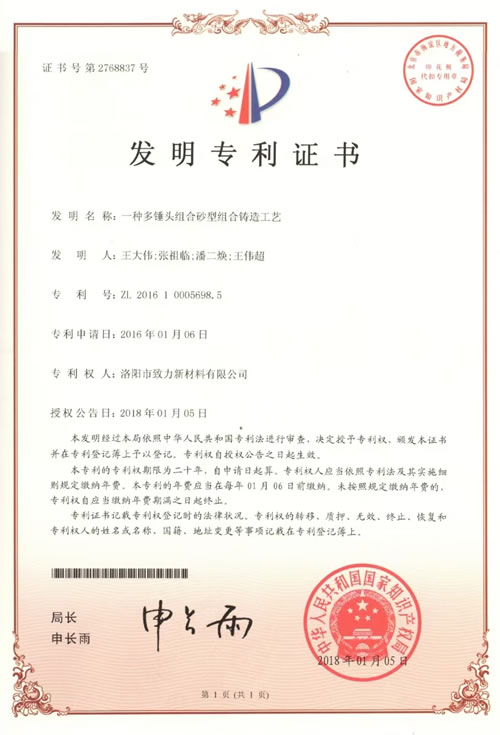
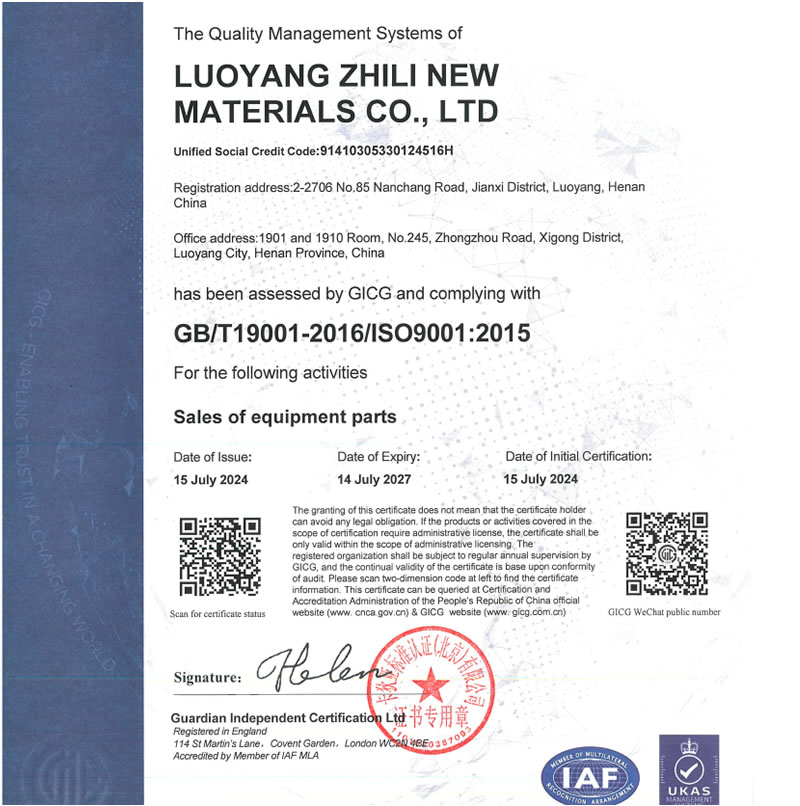
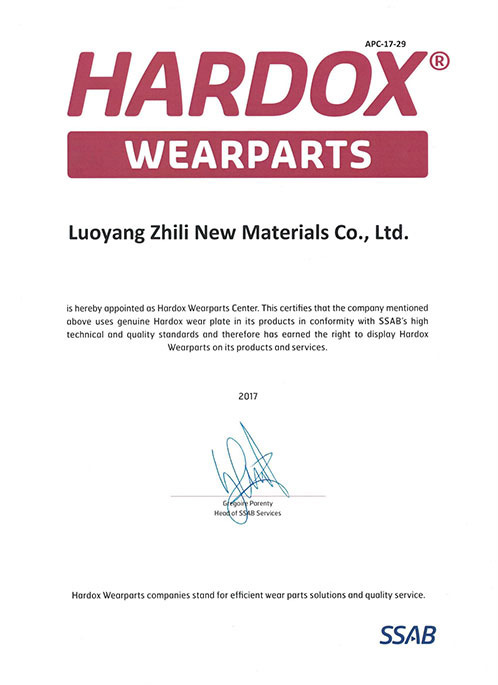
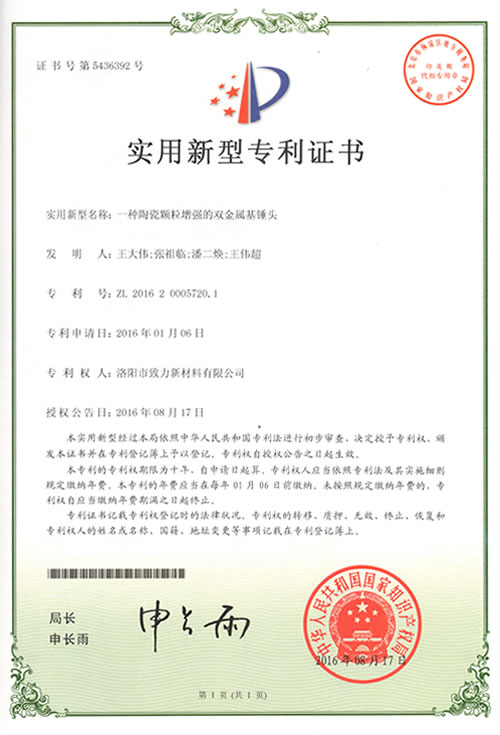
Certifications & Authorizations
Quality you can verify. Partners you can trust.
Custom OEM / ODM
From drawing to delivery — one-stop customization, no minimum order
Send Drawing
Upload your technical drawing (PDF, DWG, STEP, IGES) or share sample photos with dimensions
Engineering Review
Material recommendation, casting process design, DFM analysis — free quotation within 24 hours
Sampling & Test
Prototype production with full inspection: hardness test, spectrometer, dimensional check
Production & Ship
ISO 9001 certified. 15-25 days standard lead time. Global shipping with full documentation
Frequently Asked Questions
Quick answers to common questions about our crusher flywheels & pulleys
Material choice balances vibration damping vs. shock resistance. Flywheels serve dual roles — storing kinetic energy and smoothing the pulsating load of the eccentric shaft:
- Gray cast iron (HT200/HT250/HT300) — standard for 90% of applications: Cast iron flywheels dominate the market because graphite flakes provide natural vibration damping — the flywheel literally absorbs the pulsating torque from the eccentric shaft, reducing peak stress on the drive system. HT200-250 is sufficient for crushers up to PE750x1060. HT300 for PE900+. Gray iron costs 30-40% less than ductile iron and is easier to machine for precision bore tolerances. The graphite microstructure also provides natural lubricity at the keyway interface, reducing fretting wear.
- Ductile iron (QT500-7/QT600-3) — when gray iron is not enough: Spheroidal graphite in ductile iron delivers 500-600 MPa tensile strength with 3-7% elongation — this means the flywheel bends before it breaks. In jamming events where the crusher stops suddenly, gray iron flywheels can crack at web-to-rim junctions due to zero plastic deformation. Ductile iron absorbs the shock. The 15-25% weight reduction (achieved through thinner web sections) also reduces bearing load and motor starting current. Payback comes from avoided downtime in production-critical crushers.
- Decision framework: Use HT (gray iron) if: (a) crusher runs on consistent, sized feed without uncrushable objects; (b) crusher is protected by a shear-pin or hydraulic overload system; (c) flywheel failure would not stop the entire plant. Upgrade to QT (ductile iron) if: (a) crusher processes blasted quarry run with occasional tramp steel; (b) crusher is the single production line without redundancy; (c) weight reduction of 15-20% improves drive motor sizing or reduces structural load.
- Cast steel (ZG270-500) upgrade: For PE1200x1500 and larger in severe mining duty, cast steel flywheels provide the ultimate safety margin. Cost is 60-80% more than gray iron, but the 18-22% elongation means the flywheel will deform visibly long before failure — giving operators weeks of warning rather than catastrophic fracture.
Quick rule: If your crusher has never thrown a shear pin or tripped on overload in the last 12 months, gray iron is your most cost-effective choice. If you have had a flywheel crack or if downtime costs >$5,000/hour, ductile iron pays for itself with one prevented failure.
Flywheel failures are rarely sudden. Most follow a predictable progression with clear early-warning signs that maintenance teams can detect:
- Keyway fretting and wallowing (most common, easiest to detect): The flywheel-to-shaft key transmits the entire drive torque. Repeated torque reversals during each crushing cycle cause micro-motion at the keyway interface. Over time, this fretting enlarges the keyway — a 22 mm keyway becomes 23.5 mm, then 25 mm, then the key shears. Early warning: metallic hammering noise during crusher start/stop (the key is rocking). Use a feeler gauge at the keyway corner every 500 hours — clearance >0.10 mm means the flywheel has loosened and must be re-seated immediately.
- Bore enlargement (fretting at the shaft interface): When the flywheel bore loosens from its interference fit (typically H7/k6 or H7/m6), the entire flywheel rocks on the shaft. This accelerates keyway damage and creates an elliptical bore. Detection: apply Prussian blue to the shaft and rotate the flywheel by hand — uneven contact pattern indicates bore distortion. Use an internal micrometer to measure bore roundness at 45-degree increments — any reading >0.05 mm from nominal requires bore sleeving or replacement.
- Web and rim cracking (gray iron specific): Cracks initiate at stress concentrations — the sharp corner where the web meets the hub or rim, or at lightening hole edges. The crack propagates over 3-12 months before reaching critical size. Detection: dye penetrant inspection (DPI) at all web-to-rim and web-to-hub junctions every 1,000 hours. Any crack >5 mm long requires stop-drilling (drill a 6-8 mm hole at the crack tip to arrest propagation) and monitoring. If stop-drilling cannot arrest the crack, replace the flywheel immediately — complete failure launches a multi-ton projectile.
- Pulley groove wear (V-belt drive crushers): For crushers using the flywheel as a belt pulley, groove side-wall wear increases with each belt change. When groove bottom clearance falls below 1 mm (belt sits on the groove bottom rather than wedging on the sides), belt slip increases 40-60% and the flywheel overheats. Use a V-belt groove gauge every belt change. Worn grooves can be re-machined up to 2 mm deeper before the flywheel must be replaced.
Proactive monitoring protocol: (1) Weekly: listen for knocking at start/stop — any noise means the flywheel is loose; (2) Monthly: check keyway clearance with feeler gauge — >0.10 mm requires immediate action; (3) Every 1,000 hours: dye penetrant inspection of all web junctions — stop-drill any crack >5 mm; (4) Annually: remove flywheel, inspect bore roundness, replace key and keyway if fretted. This schedule catches 95% of failures before they cause unplanned downtime.
Flywheel mounting precision directly affects eccentric shaft bearing life. A flywheel with 0.10 mm runout at the rim creates a 10x amplified force at the bearings due to the flywheel’s mass (typically 500-11,000 kg):
- Bore and shaft preparation (step 1): Measure the shaft diameter and flywheel bore with a micrometer in three axial positions at 90-degree increments — verify the interference fit matches the design (typically 0.03-0.08 mm for H7/k6 on shafts 100-200 mm; 0.05-0.12 mm for shafts 200-370 mm). Remove burrs, rust, and old key fragments. Apply a thin, even coat of anti-seize compound (molybdenum disulfide based) to the shaft and bore — this prevents cold-welding during heat mounting and enables future removal. Never use grease in the bore — it prevents proper heat transfer and seating.
- Heat mounting procedure (step 2): Heat the flywheel hub uniformly to 120-150 C (never exceed 250 C — gray iron loses strength above 250 C; ductile iron above 300 C). Use an induction heater, gas ring burner with rotating fixture, or industrial oven. Verify temperature with a contact thermocouple or infrared thermometer at 4 hub positions. The bore expands approximately 0.012 mm per 100 mm of diameter per 100 C temperature rise — for a 200 mm bore, heating to 150 C provides 0.036 mm expansion. Slide the flywheel onto the shaft in one continuous motion — do not stop partway as the bore cools and grips within 20-30 seconds.
- Key installation: Install the key AFTER heat mounting — never use the key to guide or force the flywheel onto the shaft. The key must be a tight sliding fit (P9/h9 tolerance) in both shaft keyway and flywheel keyway. File the key edges with a 0.3-0.5 mm radius (not sharp corners) to prevent stress concentration. Tap the key into place with a brass drift. The key should NOT touch the keyway bottom radius — there must be 1-2 mm clearance to prevent the key from acting as a wedge and splitting the hub.
- Runout check and axial alignment (step 3): After the flywheel cools to ambient, mount a dial indicator on the crusher frame with the probe on the flywheel rim face (axial) and rim OD (radial). Rotate the flywheel by hand — total indicated runout (TIR) must not exceed 0.15 mm radial and 0.10 mm axial. Critical: Axial runout >0.10 mm creates a wobbling mass of 1-10 tons that generates alternating axial load on the eccentric shaft bearings. Each 0.05 mm of runout reduces bearing life by approximately 15-20%. If runout exceeds limits, remove, re-clean, and re-mount — never shim or force-align a flywheel.
- Locking and retention: Use a face-mounted retaining plate (bolted to the shaft end) to prevent axial creep. Thread-lock the retaining bolts with high-strength Loctite 277. After 8 hours of operation, re-check bolt torque and radial runout — thermal cycling and bedding-in can relax initial mounting tension. Schedule this into the start-up checklist.
Critical safety note: A 5-ton flywheel rotating at 300 RPM stores approximately 280 kJ of kinetic energy — equivalent to a small car at highway speed. Never stand in the plane of rotation during start-up or after mounting. Always use a safety cage or barrier during the first 1-hour run. If you hear any knocking or feel vibration through the floor, stop immediately and re-inspect.
Related Products
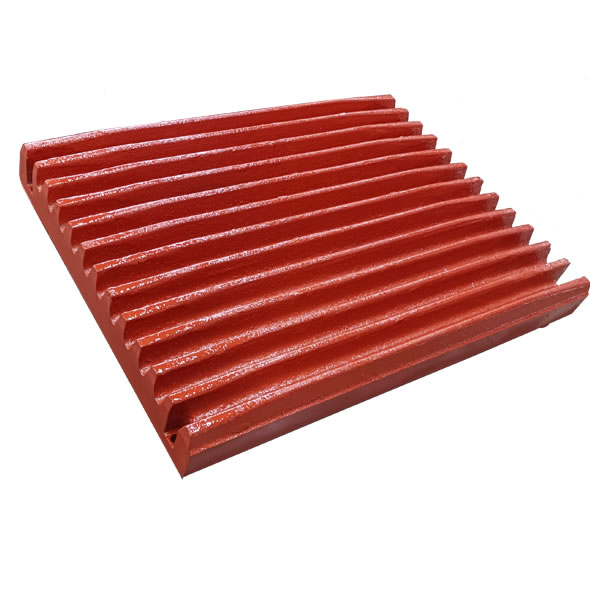
Jaw Plate
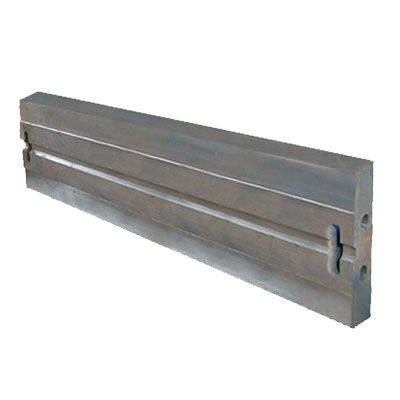
Blow Bar
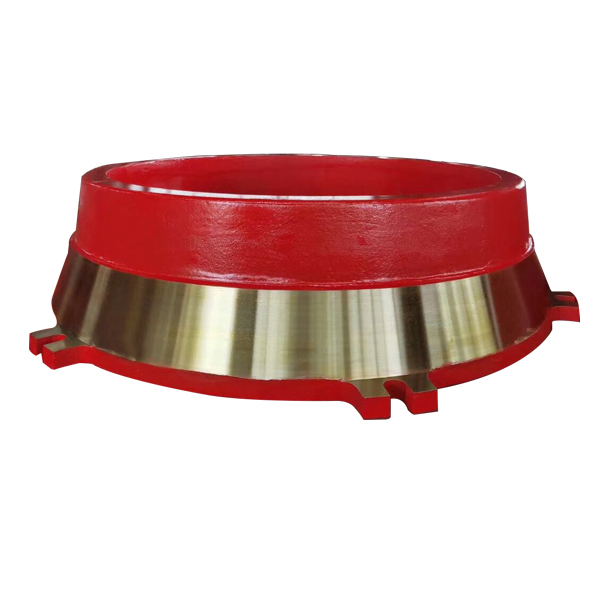
Mantle & Concave
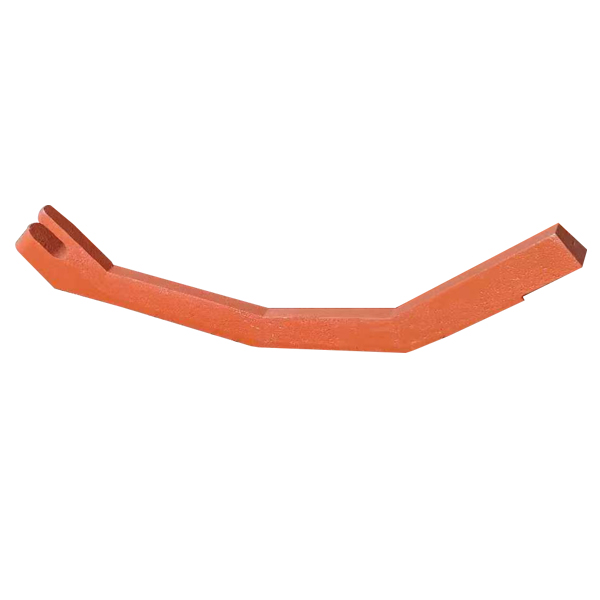
Grate Bar
Contact Us
Get a quote within 24 hours. Send us your inquiry today.

+86 199 8785 7268
Mon-Sat 8AM-10PM CST Scan to chat — English, Spanish, Chinese Send photos of worn parts for instant quote

+86 199 8785 7268
Scan to follow — factory updates and quotes Chat in Chinese or English