

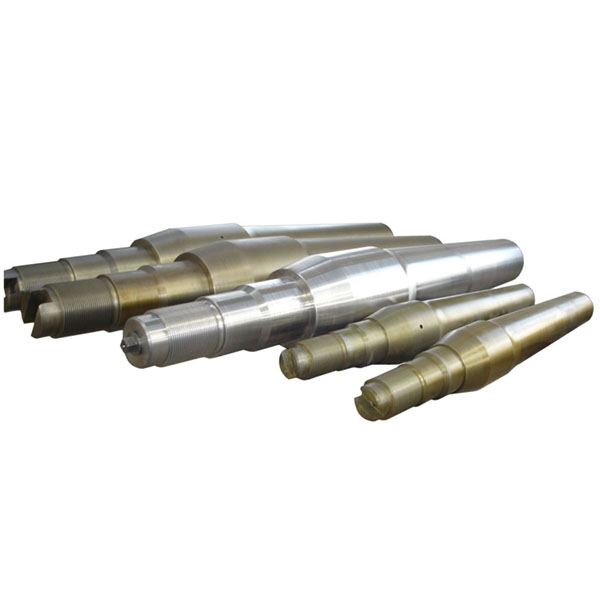
Cone Crusher Main Shaft
Primary Shaft Assembly for Cone Crushers — Main Shaft / Eccentric Sleeve / Head Nut / Step Bearing Plate — 42CrMo / 40CrNiMo / 34CrNiMo6 / Forged Alloy Steel
Cone Crusher Main Shaft
Material Specifications & Selection Guide
| Grade | Material | Yield (MPa) | Tensile (MPa) | Hardness | Application |
|---|---|---|---|---|---|
| 40Cr | Cr0.8-1.1% + C0.37-0.44% | 785 | 980 | 28-32 HRC | Symons 2ft-3ft |
| 42CrMo | Cr0.9-1.2% + Mo0.15-0.25% | 930 | 1080 | 30-35 HRC | Symons 4ft-7ft / HP200-400 |
| 35CrMo | Cr0.8-1.1% + Mo0.15-0.25% | 835 | 980 | 28-32 HRC | Medium duty cones |
| 40CrNiMo | Cr-Ni-Mo Alloy | 890 | 1050 | 30-35 HRC | HP500-800 / CH660+ |
| 34CrNiMo6 | Ni-Cr-Mo Alloy | 900 | 1100 | 32-36 HRC | MP1000-1250 / CS840i |
| 18CrNiMo7-6 | Case Hardening Steel | 850 | 1150 | 58-64 HRC (Surface) | Gear journal, high wear |
| Process | Parameter | Result | Feature |
|---|---|---|---|
| Forging | Open die, 3:1 ratio | Fiber flow aligned | Max torsional strength |
| Normalizing | 850-880 C, air cool | 220-250 HB | Grain refinement |
| Quenching | 840-860 C, oil/polymer | 50-55 HRC | Through-hardened core |
| Tempering | 550-650 C, 2-4 hrs | 28-35 HRC | Toughness + fatigue |
| Induction HF | Gear/pinion journals | 55-60 HRC local | Wear resistance |
| CNC Turning | Ra 1.6-3.2 | Precision diameters | Bearing fit H7/k6 |
| Grinding | Ra 0.8-1.6 | High precision | Bearing life +300% |
| Cone Crusher | Shaft Dia. (mm) | Length (mm) | Weight (kg) | Material |
|---|---|---|---|---|
| Symons 2ft (S36) | 120 | 650 | 85 | 40Cr |
| Symons 3ft (S51) | 150 | 800 | 140 | 40Cr / 42CrMo |
| Symons 4ft (S66) | 200 | 1,050 | 280 | 42CrMo |
| Symons 5-1/2ft | 250 | 1,300 | 480 | 42CrMo |
| Symons 7ft | 300 | 1,600 | 820 | 42CrMo / 40CrNiMo |
| HP200 / HP300 | 180-220 | 950-1,100 | 220-350 | 42CrMo |
| HP400 / HP500 | 240-280 | 1,200-1,400 | 420-680 | 42CrMo / 40CrNiMo |
| HP800 / MP1000 | 320-380 | 1,600-1,900 | 920-1,500 | 40CrNiMo / 34CrNiMo6 |
| CH420 / CH430 | 160-180 | 850-950 | 180-260 | 42CrMo |
| CH660 / CH860 | 220-260 | 1,150-1,350 | 380-580 | 42CrMo / 40CrNiMo |
| CS840i | 340 | 1,750 | 1,280 | 34CrNiMo6 |
Selection Quick Reference
- Small cone crushers (Symons 2ft-3ft, <150 kW): 40Cr forged main shaft — sufficient strength for small crushing forces (<300 kN crushing load), standard material for Symons series, cost-effective replacement for secondary/tertiary crushing
- Medium cone crushers (Symons 4ft-7ft, HP200-500, 150-400 kW): 42CrMo forged shaft — Cr-Mo alloying provides superior torsional fatigue resistance for high-speed cone crushing (eccentric speed 220-400 RPM). Critical for continuous duty operations processing hard rock
- Large cone crushers (HP800+, MP1000-1250, >400 kW): 40CrNiMo or 34CrNiMo6 — Ni-Cr-Mo alloy mandatory for massive crushing forces (hydraulic pressure >20 MPa, crushing load >2,000 kN). 34CrNiMo6 provides the highest torque transmission capacity with 32-36 HRC core hardness
- Gear journal surface treatment: Induction hardening of bevel gear seating surface to 55-60 HRC extends gear mesh life 300%+. The bevel gear pinion exerts 50-100 kN contact force per tooth pair — a soft shaft journal causes rapid fretting wear and gear misalignment
- Critical quality requirements: 100% UT for internal soundness, MT for surface cracks. Runout tolerance <0.03 mm TIR at all bearing journals. Straightness <0.05 mm/m. Any bend causes uneven bushing wear and crusher vibration exceeding 8 mm/s — bearing failure within 300 operating hours
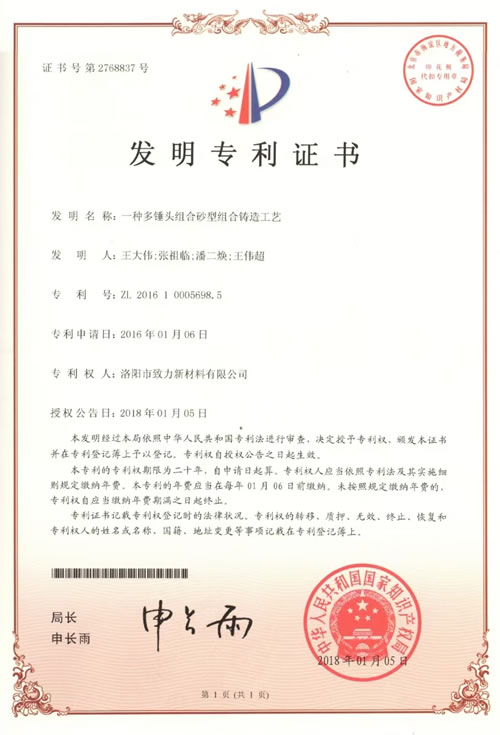
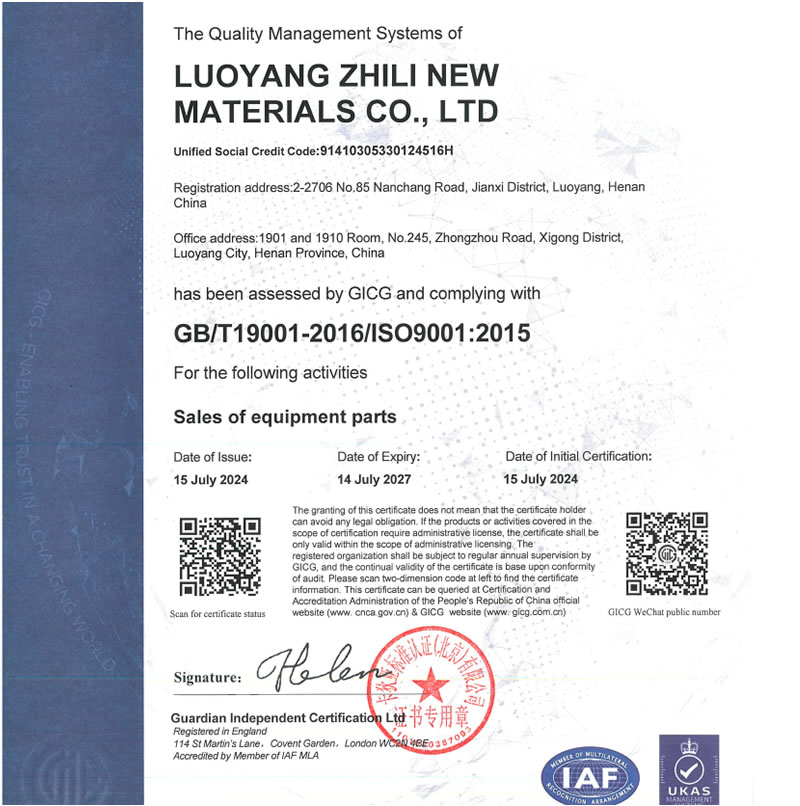
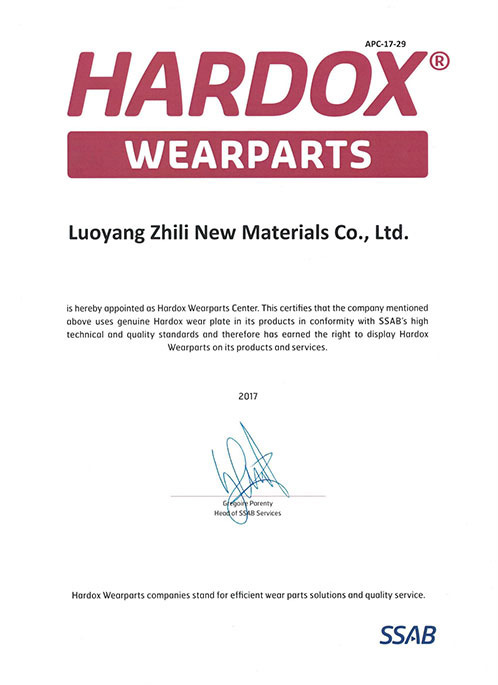
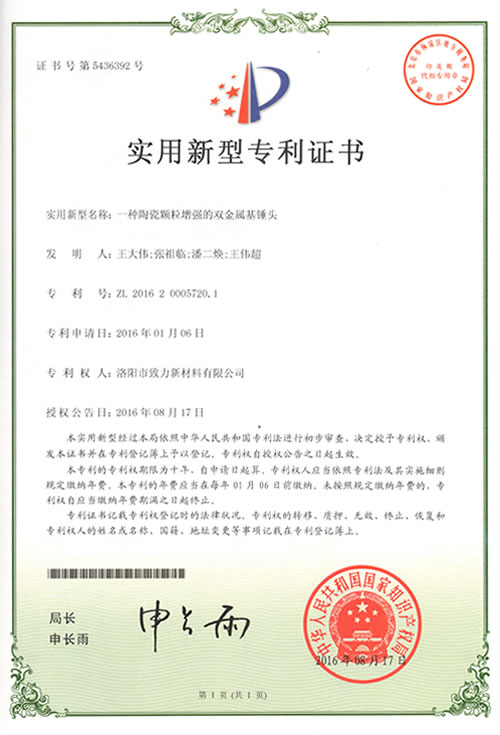
Certifications & Authorizations
Quality you can verify. Partners you can trust.
Custom OEM / ODM
From drawing to delivery — one-stop customization, no minimum order
Send Drawing
Upload your technical drawing (PDF, DWG, STEP, IGES) or share sample photos with dimensions
Engineering Review
Material recommendation, casting process design, DFM analysis — free quotation within 24 hours
Sampling & Test
Prototype production with full inspection: hardness test, spectrometer, dimensional check
Production & Ship
ISO 9001 certified. 15-25 days standard lead time. Global shipping with full documentation
Frequently Asked Questions
Quick answers to common questions about our cone crusher main shafts
Main shaft failure and eccentric bushing wear produce similar symptoms but require different repairs. Misdiagnosis wastes thousands in unnecessary parts replacement:
- Shaft fatigue crack (rhythmic knock): A distinct metallic knock at each eccentric revolution (once per 0.15-0.3 seconds at 200-400 RPM) indicates a growing fatigue crack in the shaft. The sound is sharper and more rhythmic than bushing noise. Crack propagation accelerates rapidly in 42CrMo steel after initial formation — inspecting within 50 operating hours of first detection is critical.
- Eccentric bushing wear (continuous growl/grind): A low-frequency rumbling or grinding noise that doesn’t pulse with eccentric speed indicates bushing clearance exceeding 0.2-0.5 mm. Unlike shaft cracks, bushing wear noise is constant and follows a predictable progression. This requires bushing replacement — not shaft replacement.
- Definitive diagnostic test: Remove the head assembly and lift the shaft for visual + NDT inspection. Use magnetic particle (MT) on the entire shaft, focusing on three critical zones: (1) the journal radius at the lower bearing seat, (2) the step transition near the bevel gear seat, (3) the upper threaded section. If no crack is found, measure the bushing clearance with a feeler gauge — replace the bushing if clearance exceeds 150% of original specification.
Field tip: Use a mechanic’s stethoscope ($30) placed on the crusher frame near the eccentric housing while running. A rhythmic chirp at RPM speed = shaft crack. A continuous metallic grinding = bushing wear. Record and compare the sound pattern month-to-month to detect changes before failure occurs.
The bevel gear journal is the highest combined stress point — it experiences simultaneous torsional load (gear mesh), bending moment (crushing force), and stress concentration (step geometry):
- Gear mesh misalignment (35% of failures): The bevel gear and pinion must maintain 0.15-0.25 mm backlash with full tooth contact pattern visible on Prussian blue check. Even 0.1 mm of misalignment concentrates torque on 1-2 teeth instead of 3-4, generating local bending moments exceeding the shaft fatigue limit. Check gear mesh before every shaft replacement.
- Undersized shaft diameter (25% of failures): The bevel gear journal must match the gear bore with H7/m6 interference fit (0.01-0.05 mm interference). A worn journal with >0.1 mm undersize allows the gear to micro-fret during torque reversals, wearing a groove that becomes the fatigue crack origin. Measure journal diameter with a micrometer in 4 positions — replace shaft if >0.05 mm undersize from nominal.
- Journal fillet radius too small (20% of failures): The step transition at the gear journal must have a minimum 4-6 mm fillet radius. A sharp 2 mm corner reduces fatigue life by 60%. This is a manufacturing defect — reject any shaft with a visible tool step or machining groove at this radius. Inspect with a radius gauge before accepting the shaft.
- Material choice critical: For HP400/500 and above, specify 40CrNiMo minimum. The Ni addition doubles the impact toughness (Charpy value 42→78 J at 20 C) vs standard 42CrMo — essential for high-speed cones (350+ RPM) processing hard rock.
Gear mesh check: (1) Apply Prussian blue to pinion teeth, (2) Roll 3 revolutions, (3) Check 70-80% tooth face coverage, (4) Adjust if heel/toe-heavy, (5) Set backlash 0.15-0.25 mm. Re-check after first 50 hrs.
Main shaft reclamation is for surface wear only — not fatigue cracks:
- When to rebuild: Journal surface wear up to 0.5 mm, minor scoring, or keyway wear only. Process: machine undersize → HVOF chrome spray → re-grind to OEM diameter. Restores specification at 40-60% of new shaft cost.
- When to replace: Any crack detected by MT/UT — no exceptions. Welding creates a heat-affected zone embrittling Cr-Mo steel. A welded shaft has 5-15% of original fatigue life. Snap failure costs $30,000-80,000 in crusher damage vs. $2,000-15,000 shaft replacement.
- Maximum 2 reclimations: Each thermal spray removes ~1 mm from journal. Third occurrence requires new shaft due to compromised fatigue strength.
- Ceramic coating option: HVOF WC-CoCr on journals for abrasive ore — 3-5x life vs chrome, +30% cost. Resists embedded abrasive particles that accelerate bushing wear.
Related Products
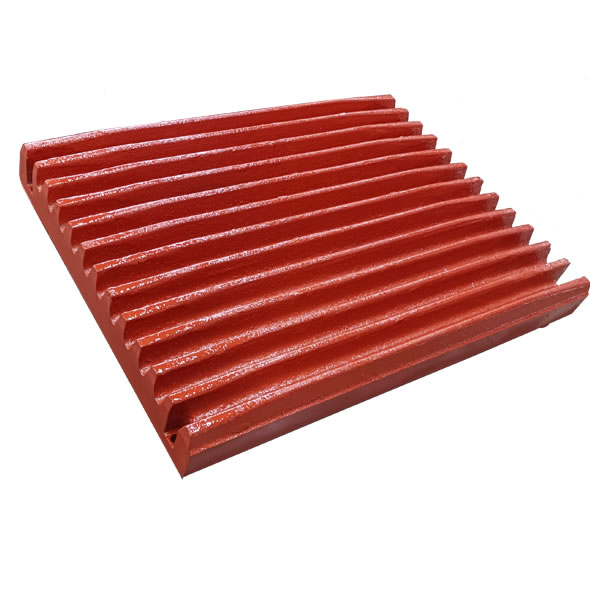
Jaw Plate
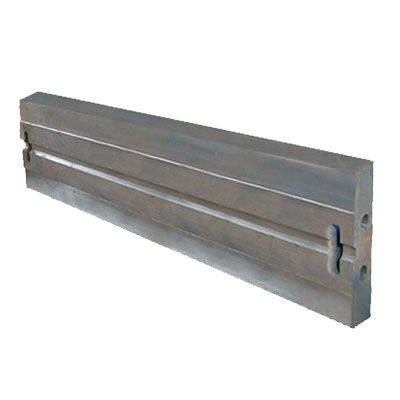
Blow Bar
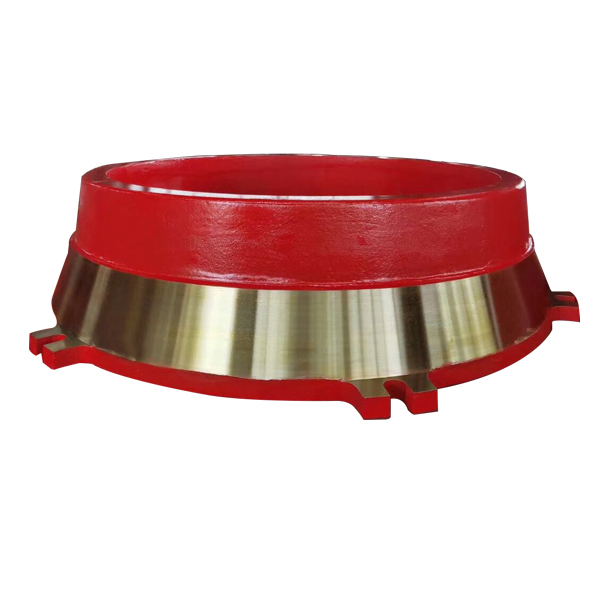
Mantle & Concave
Grate Bar
Contact Us
Get a quote within 24 hours. Send us your inquiry today.

+86 199 8785 7268
Mon-Sat 8AM-10PM CST Scan to chat — English, Spanish, Chinese Send photos of worn parts for instant quote

+86 199 8785 7268
Scan to follow — factory updates and quotes Chat in Chinese or English