

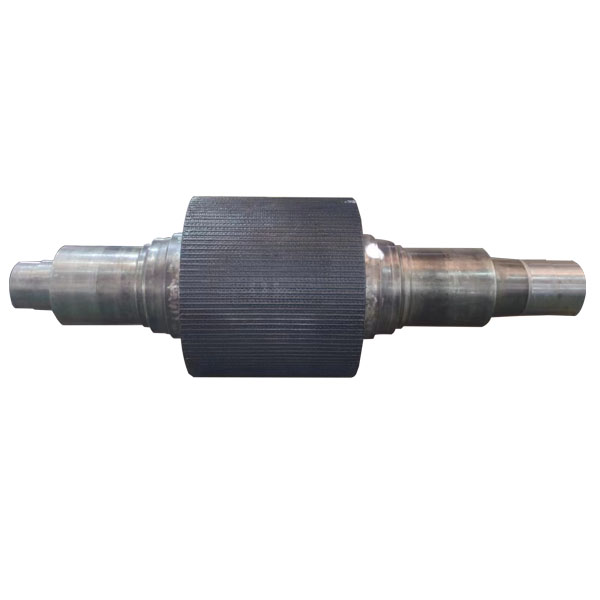
Alloy Stud Surfacing Welding Roller
Studded & Hardfaced Welding Rollers — Alloy Steel Base (42CrMo / 34CrNiMo6 / 35CrMo) + WC-Cr Alloy Stud Overlay — For Roller Press / HPGR / Crusher / Briquetting Press
Alloy Stud Surfacing Welding Roller
Material Specifications & Selection Guide
| Stud Grade | Material | Hardness | Diameter | Pattern | Application |
|---|---|---|---|---|---|
| Cr-Mo Alloy | Cr12-15% + Mo | 55-62 HRC | 10-16 mm | Helix / Straight | Standard VRM rollers |
| High Cr-Ni | Cr20-26% + Ni | 58-65 HRC | 12-20 mm | Helix / Herringbone | Cement / coal grinding |
| Cr-Ni-Mo-V | Cr22-28% + Mo+V | 60-68 HRC | 14-22 mm | Interlock | High-wear silica ore |
| Cr-Ni-Nb | Cr18-24% + Nb | 56-62 HRC | 12-18 mm | Helix | High-temp zones (300C+) |
| WC Insert | WC-Co Matrix | HRA 86-89 | 8-14 mm | Dot / Helix | Extreme abrasion mining |
| Component | Material | Hardness | Process | Feature |
|---|---|---|---|---|
| Studs | High Cr Cast / WC | 58-68 HRC | Pre-cast + welded | Wear-resistant surface |
| Weld Deposit | Cr-Ni Flux Cored | 50-58 HRC | CO2 / Ar+CO2 | Locks studs, fills gaps |
| Buffer Layer | Cr-Ni-Mo Alloy | 40-48 HRC | Submerged arc | Transition to core |
| Roller Core | 35CrMo / 42CrMo | 28-35 HRC | Forged + Q+T | High toughness |
| Shaft | 40Cr / 42CrMo | 28-32 HRC | Forged + tempered | Drive transmission |
| Parameter | Cr-Mo / High Cr | WC Insert | Buffer Layer |
|---|---|---|---|
| Welding Process | GMAW (MIG) | GTAW (TIG) | SAW |
| Current (A) | 180-280 | 120-200 | 400-600 |
| Voltage (V) | 22-28 | 18-24 | 28-36 |
| Preheat (C) | 150-250 | 100-150 | 200-300 |
| Interpass (C) | <250 | <150 | <300 |
| Post-Weld Heat | 200 C / 4h | None | Stress relief 600 C |
| Inspection | UT + MT | PT + Visual | UT + Hardness |
Selection Quick Reference
- VRM grinding rollers (cement raw meal, moderate wear): Cr-Mo Alloy studs (55-62 HRC) with helix pattern — cost-effective solution for standard cement grinding, easy to repair in field
- Coal mill rollers (high abrasion, thermal cycling): High Cr-Ni studs (58-65 HRC) with herringbone pattern — higher chromium content resists coal ash abrasion, interlocking pattern prevents shelling
- Silica-rich ores (iron ore, copper ore): Cr-Ni-Mo-V studs (60-68 HRC) with interlock pattern — vanadium addition provides secondary hardening, handles high-silica abrasion with minimal spalling
- High-temperature zones (kiln feed, hot clinker): Cr-Ni-Nb studs (56-62 HRC) — niobium stabilizes carbides at elevated temperatures, maintains hardness above 300 C
- Extreme mining applications (hard rock, maximum wear): WC Insert studs (HRA 86-89) — tungsten carbide provides 4-6x wear life in the most demanding HPGR and mining roller applications
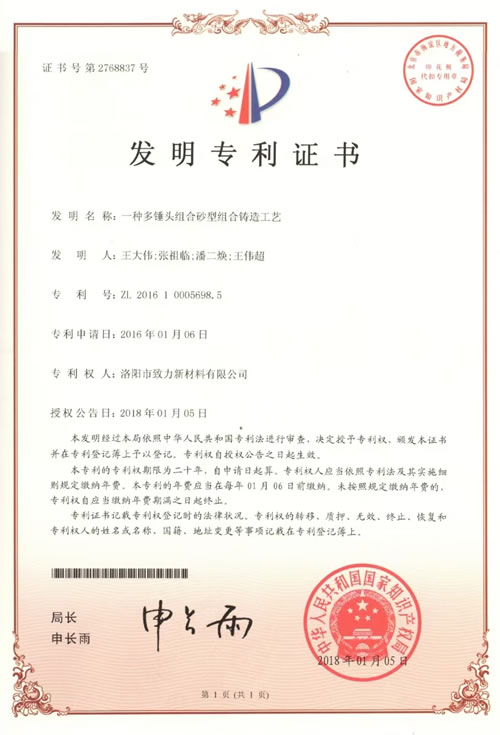
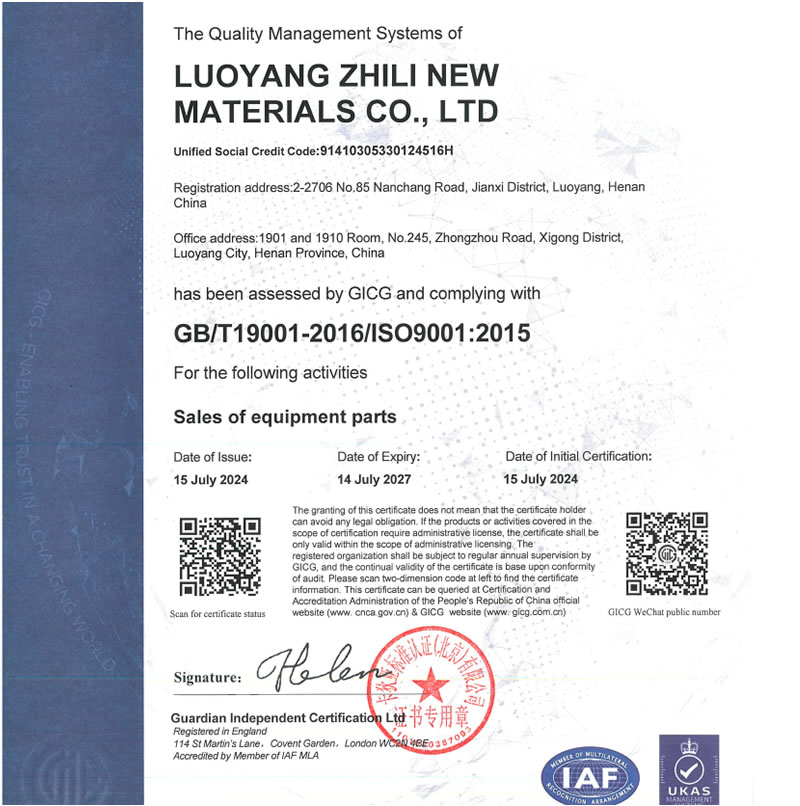
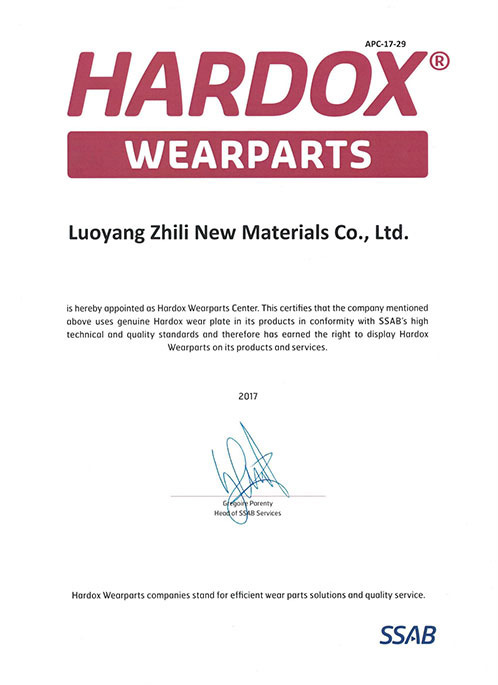
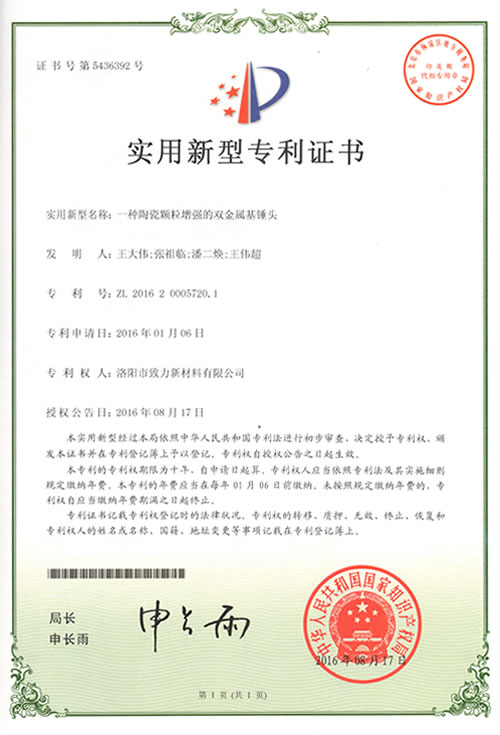
Certifications & Authorizations
Quality you can verify. Partners you can trust.
Custom OEM / ODM
From drawing to delivery — one-stop customization, no minimum order
Send Drawing
Upload your technical drawing (PDF, DWG, STEP, IGES) or share sample photos with dimensions
Engineering Review
Material recommendation, casting process design, DFM analysis — free quotation within 24 hours
Sampling & Test
Prototype production with full inspection: hardness test, spectrometer, dimensional check
Production & Ship
ISO 9001 certified. 15-25 days standard lead time. Global shipping with full documentation
Frequently Asked Questions
The autogenous wear layer is the fundamental principle that makes alloy stud rollers work. It’s the difference between wearing out studs in 3,000 hours vs 20,000 hours:
How it works:
- Step 1 — Material trapping (first 50-400 hrs): As the roller operates, fine-ground material becomes compacted and trapped in the spaces between the raised studs. The pressure between the two rollers (100-300 MPa) compresses this trapped material into a dense, hard layer.
- Step 2 — Autogenous grinding: Once the layer forms, incoming material grinds against the trapped material, not against the studs themselves. The studs act as anchors that hold the protective material layer in place. Ore grinds against ore.
- Step 3 — Self-renewal: As the autogenous layer slowly wears, fresh material is continuously compacted into the gaps, renewing the protective layer. The studs experience virtually zero direct wear as long as the layer is maintained.
The stud pattern is everything:
- Too dense (studs too close): The interstitial spaces are too small. Material cannot be compacted between them — it stays loose powder that blows away. The studs wear directly against the feed material. Stud life drops to 3,000-5,000 hours.
- Too sparse (studs too far apart): Each stud has too much area to protect. The autogenous layer forms thin and unstable, collapsing under pressure. Studs become exposed and wear rapidly on the edges.
- Correct (optimized by FEA): ZHILI simulates your specific feed PSD to determine the optimal stud spacing. The gap must be 1.5-2x the diameter of the largest feed particle to allow trapping but not escape. Result: stable autogenous layer, 15,000-25,000 hour stud life.
Warning sign of failing autogenous layer: If you see shiny wear on the stud tips (instead of dull gray), the autogenous layer has been lost and the studs are wearing directly against ore. Stop and rebuild immediately — you’re losing stud life at 3-5x the normal rate.
The difference is in the metallic binder that holds the tungsten carbide grains together — it determines toughness, corrosion resistance, and high-temperature performance:
WC-Cr (Chromium binder) — industry standard:
- Binder chemistry: 8-12% Cr in the form of Cr-CrC complex carbides. The Cr provides good corrosion resistance (important for wet grinding) and adequate binder toughness at moderate temperatures.
- Strength: Transverse rupture strength (TRS) typically 1,800-2,200 MPa. Adequate for normal HPGR pressures up to 200 MPa.
- Best for: Cement clinker grinding, raw meal, standard pressure roller presses. Provides the best cost-performance ratio for 80% of applications.
WC-Co (Cobalt binder) — premium performance:
- Binder chemistry: 6-10% Co as a ductile metallic binder. Cobalt does not form carbides — it remains as a soft, tough metal that absorbs impact energy and prevents individual WC grains from being pulled out of the stud.
- Strength: TRS 2,200-3,000 MPa (20-35% higher than WC-Cr). This is critical for HPGR pressures above 200 MPa — the ductile Co binder prevents micro-cracking at the WC grain boundaries.
- Thermal stability: WC-Co retains hardness to 600 C vs 500 C for WC-Cr. Essential for HPGR grinding slag where roller surface temperature can reach 180-220 C from friction + material heat.
- Best for: HPGR grinding hard ore (Bond Wi >18), slag (high silica + high temp), high-pressure applications (>200 MPa), and any mill where a single stud failure means unplanned shutdown.
When to pay extra (+30-60%): Upgrade to WC-Co if (a) Bond Wi >18 kWh/ton, (b) operating pressure >200 MPa, (c) surface temperature >180 C, or (d) your downtime cost exceeds $500/hour — the reduced stud failure risk alone justifies the premium. ZHILI provides a free stud material recommendation based on your operating data.
Yes — studded rollers can be re-studded 1-2 times before the base roller body needs replacement. This is one of the major economic advantages of studded rollers over plain hardfaced rollers:
ZHILI re-studding workflow — workshop process:
- Step 1 — Stud removal: Worn studs are removed using a stud puller or by grinding them flush with the roller surface. The base roller is not damaged during removal if the studs were originally installed with the correct interference fit (not welded).
- Step 2 — Surface preparation: The roller surface is machined (turned on a lathe) to remove any remaining stud material, clean the interference-fit bores, and restore the roller to a uniform diameter. Typical material removal: 1-3mm from the roller surface.
- Step 3 — NDT inspection: The machined base roller undergoes MT (magnetic particle) inspection for surface cracks and UT (ultrasonic) for sub-surface defects. Any cracks in the base roller must be repaired before re-studding.
- Step 4 — New stud installation: New holes are reamed/bored in a hexagonal or spiral pattern. Studs are installed with precise interference fit (0.02-0.05mm press fit depending on stud diameter) or brazed in place. ZHILI then applies the hardfacing underlay in the valleys between studs.
- Step 5 — Quality verification: Pull-out test on sample studs (2% of total). If pull-out force exceeds specification (typically 3-5x the expected service load), the re-studding is accepted. Final surface profile scan documents stud protrusion uniformity.
How many times can you re-stud?
- 1st re-stud: Standard after 15,000-25,000 hours. Machine 1-3mm off roller surface. Stud pattern is re-optimized if feed conditions have changed.
- 2nd re-stud: Possible if the roller body diameter after 2nd machining is still above the minimum wall thickness (typically 70% of original roller diameter). After 2nd re-stud, the roller body has been machined 4-6mm total — approaching limits for structural strength.
- 3rd re-stud: Generally not recommended — the roller body has been machined 6-9mm total, wall thickness is approaching minimum, and the risk of roller body fatigue failure outweighs the re-stud cost savings. Replace the roller body.
Re-stud cost vs new roller: Re-studding costs approximately 40-60% of a new studded roller. For a standard 42CrMo base roller + WC-Cr studs (roller size 1,400mm x 1,000mm): new = $35,000-45,000; re-stud = $14,000-22,000. Re-studding twice before replacement = 200-300% life from the original roller body investment.
Related Products
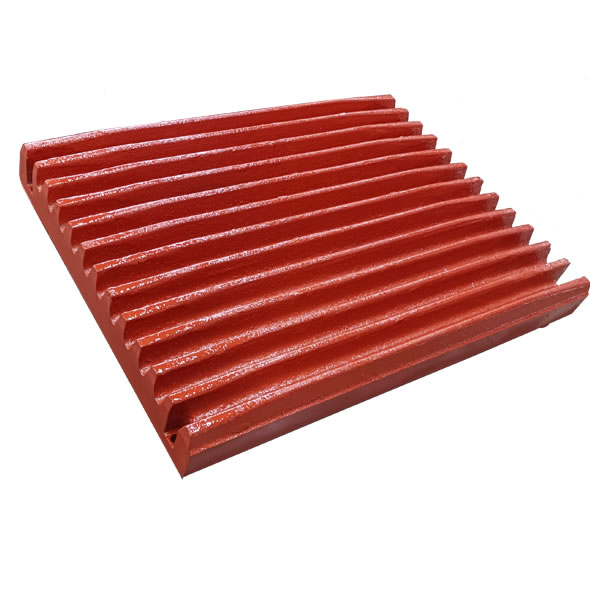
Jaw Plate
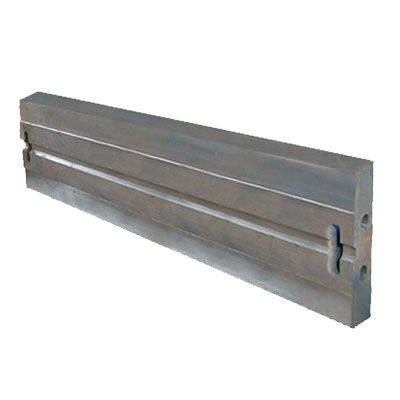
Blow Bar
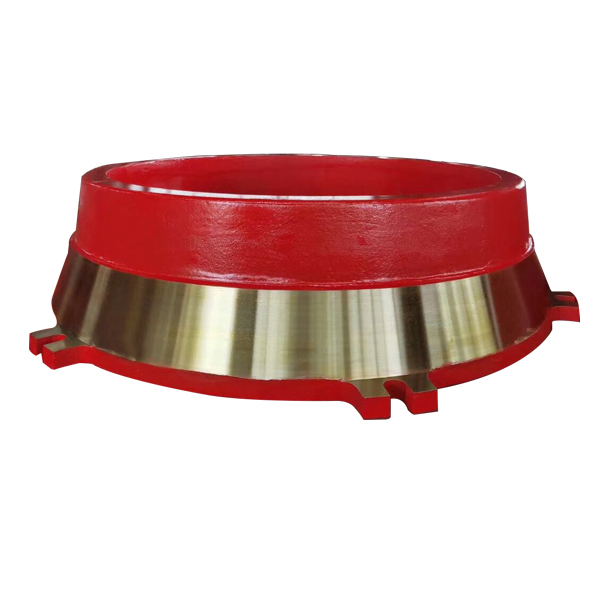
Mantle & Concave
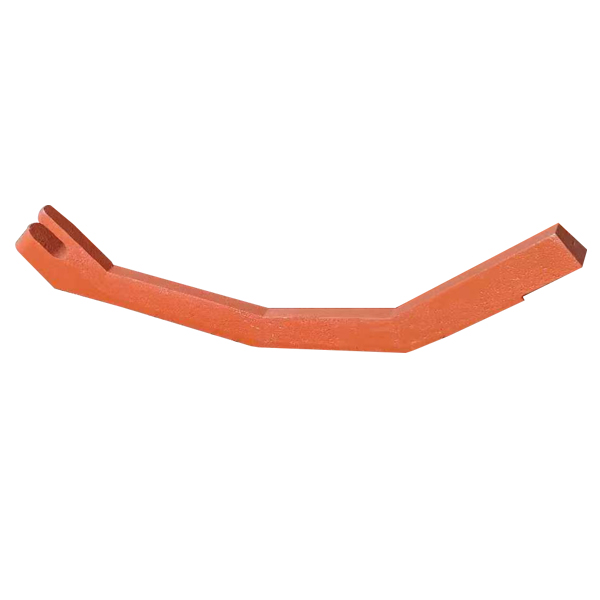
Grate Bar
Contact Us
Get a quote within 24 hours. Send us your inquiry today.

+86 178 4242 1247
Mon-Sat 8AM-10PM CST Scan to chat — English, Spanish, Chinese Send photos of worn parts for instant quote

+86 178 4242 1247
Scan to follow — factory updates and quotes Chat in Chinese or English