

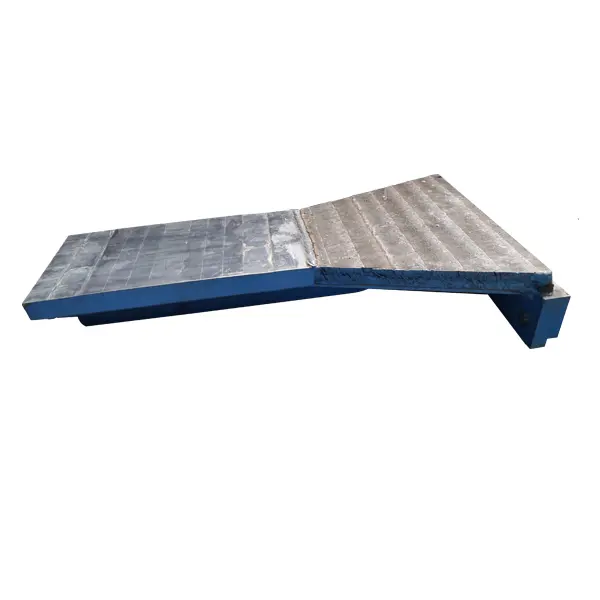
Roller Press Side Baffle / Cheek Plate
HPGR Side Seal Plates — High Chrome Cast Iron (Cr15/Cr20/Cr26) / Bi-Metallic Composite / Overlay Hardfacing — For KHD / Polysius / FLSmidth / CITIC Roller Press
Roller Press Side Baffle / Cheek Plate
Material Specifications & Selection Guide
| Material | Hardness | Impact | Temp Limit | Life Factor | Application |
|---|---|---|---|---|---|
| Mn13Cr2 | 200-250 HB (as-cast) / 450-550 HB (work-hardened) | Excellent | <250 C | 1.0x | Heavy impact, moderate abrasion |
| High Cr White Iron | 56-62 HRC | Low | <300 C | 2.5-3.5x | High abrasion, low impact |
| Cr-Mo Alloy Steel | 45-52 HRC | Moderate | <350 C | 1.5-2.0x | Balanced wear + toughness |
| Ceramic Insert | Al2O3 85-92 HRA | Very Low | <200 C | 4.0-6.0x | Extreme abrasion, no impact |
| Grade | Base Material | Hardfacing | HRC | Deposits | Application |
|---|---|---|---|---|---|
| HF-BF-01 | Q345 / 16Mn | ZD-414 Cr-C | 58-62 | 2 layers | Standard abrasive ore |
| HF-BF-02 | Mn13Cr2 | ZD-307 Cr-Ni | 55-60 | 3 layers | High impact + wear |
| HF-BF-03 | Q345 / 16Mn | ZD-517 Cr-C-Mo | 60-65 | 2 layers | High temp (500C+) |
| HF-BF-04 | Q345R | ZD-628 + WC | 62-66 | 2 layers | Severe mining abrasion |
| RP Size | Baffle W (mm) | Baffle L (mm) | Thick (mm) | Wear Layer | OEM Equiv. |
|---|---|---|---|---|---|
| RP 80-40 | 200-300 | 400-500 | 20/25 | Hardfaced / Mn13 | KHD / FLSmidth |
| RP 100-60 | 250-350 | 500-700 | 25/30 | Hardfaced / Hi-Cr | KHD / ThyssenKrupp |
| RP 120-80 | 300-400 | 700-900 | 30/40 | Hardfaced / Ceramic | FLSmidth / Polysius |
| HPGR 1200 | 350-500 | 800-1,100 | 30/50 | Ceramic + Hi-Cr | Metso / Weir |
| HPGR 1600+ | 400-600 | 1,000-1,500 | 40/60 | Ceramic + Hi-Cr | Metso / Weir / TK |
Selection Quick Reference
- Heavy impact with moderate abrasion (limestone boulders, gypsum): Mn13Cr2 side baffle — work-hardens to 450-550 HB under impact, excellent toughness for primary crusher discharge and large lump applications
- High abrasion with low impact (clinker, fine ore, cement raw meal): High Cr White Iron cheek plate — maximum abrasion resistance with 2.5-3.5x life factor, ideal for clinker transfer and fine material handling
- Balanced wear and toughness (mixed duty, medium lumps): Hardfaced composite (Q345 base + ZD-414/307 overlay) — combines structural steel toughness with hardfacing wear resistance, 2-3 layer deposits for extended service
- Extreme abrasion with no impact (fine powder, dust extraction): Ceramic insert baffle — alumina ceramic tiles bonded to steel base, 4-6x life in the most abrasive fine material applications
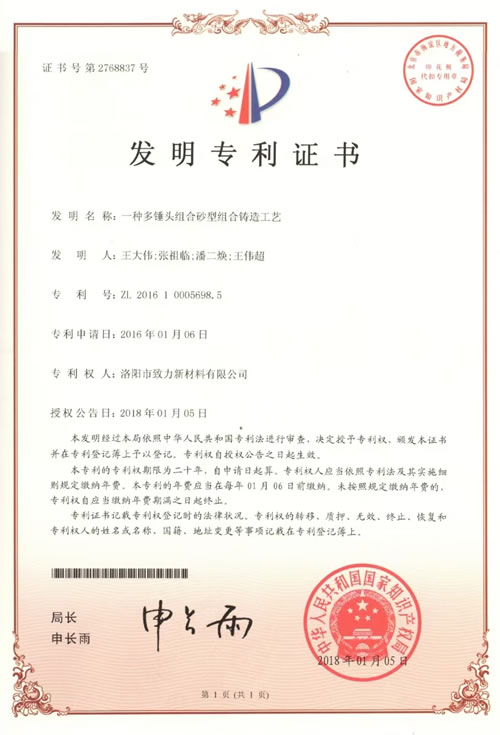
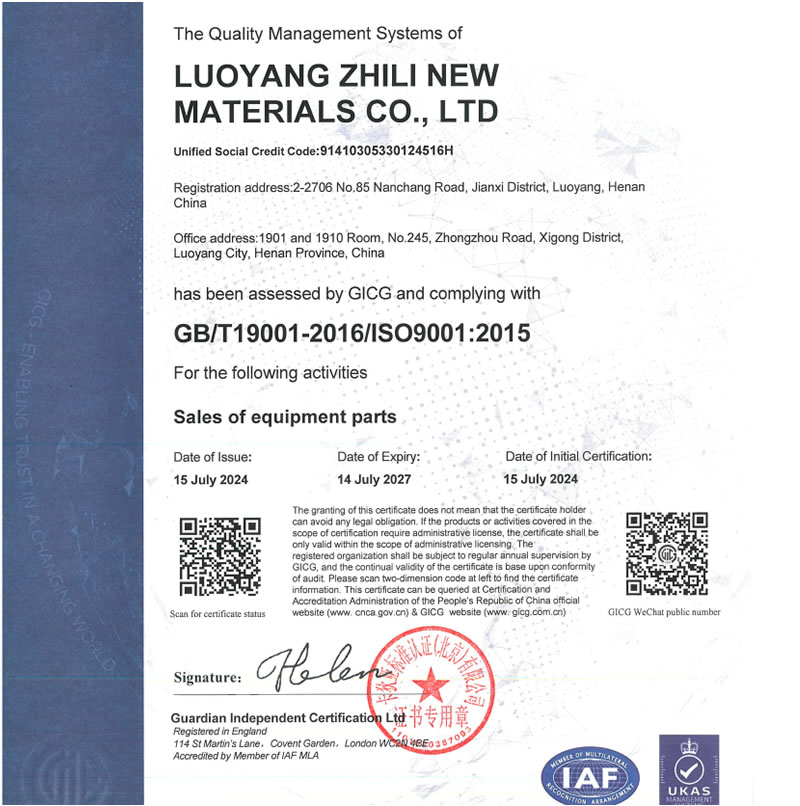
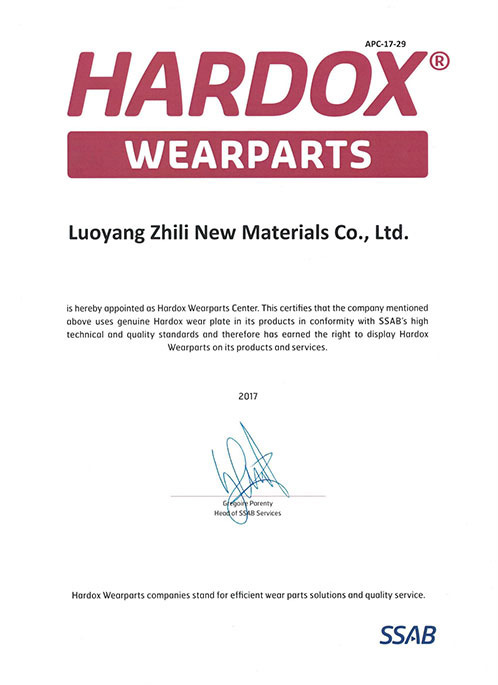
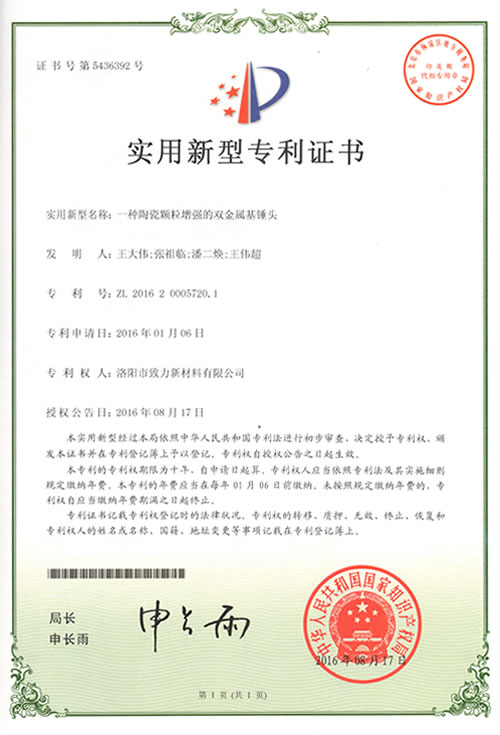
Certifications & Authorizations
Quality you can verify. Partners you can trust.
Custom OEM / ODM
From drawing to delivery — one-stop customization, no minimum order
Send Drawing
Upload your technical drawing (PDF, DWG, STEP, IGES) or share sample photos with dimensions
Engineering Review
Material recommendation, casting process design, DFM analysis — free quotation within 24 hours
Sampling & Test
Prototype production with full inspection: hardness test, spectrometer, dimensional check
Production & Ship
ISO 9001 certified. 15-25 days standard lead time. Global shipping with full documentation
Frequently Asked Questions
Roller Press Side Baffle / Cheek Plate
The gap between the cheek plate and the roller side face is the single most important operating parameter for an HPGR side baffle. It directly controls material bypass, plate wear rate, and catastrophic failure risk.
Gap Too Small (<1mm cold-set)
Rollers expand 0.3-0.8mm at operating temperature (100-150°C). Cold-set gap under 1mm closes to zero at temperature.
Roller-to-plate contact causes friction heating (300-500°C at contact point). Rapid galling and scoring.
Bolt loads spike 3-5x from thermal jamming stress. Bolts shear or plate cracks.
Result: Plate destroyed in hours, roller face damaged
Gap Too Large (>6mm)
10-15% of feed material escapes through the side gap instead of passing through the roller nip.
Bypassed material is un-crushed, reducing product quality and increasing recirculating load 15-25%.
High-velocity material jet through gap erodes the cheek plate 2-3x faster (particle velocity > gap velocity).
Result: Throughput loss, accelerated wear, lower product quality
Optimal gap management:
- Cold-set gap: 2-4mm for standard cement operation. 4-6mm for hot clinker duty (allowance for higher thermal expansion). Measure at 3 points per side (top, mid, bottom) with feeler gauges.
- Hot gap check: Verify gap at operating temperature after 2-4 hours of continuous run. Hot gap should be 1-2mm minimum. If gap closes to zero, increase cold-set gap by 1mm and re-check.
- Gap adjustment systems: Hydraulic or wedge-type adjustable mounts allow gap correction without removing the plate. Fixed bolted plates require shimming (add shims to increase gap) or replacement (to reduce gap).
- Gap monitoring: Install proximity sensors or linear transducers to monitor gap in real-time. Trending gap closure over weeks indicates plate wear. Accelerating closure rate = plate reaching end of life.
Three fundamentally different cheek plate constructions, each optimized for a specific operating environment. The wrong choice either wastes money on unnecessary premium material or risks catastrophic plate failure.
Monolithic White Iron (Cr15/Cr20/Cr26)
Single-piece casting, through-hard
Hardness: HRC 58-66 full thickness
Wear life: maximum abrasion resistance
Impact tolerance: low (brittle)
Cost: 1.0-2.2x (baseline)
Mounting: bolted holes only
Best for: Clean feed, no tramp metal, standard cement
Bi-Metallic (White Iron + Mild Steel)
Two-layer: hard face + tough back
Hardness: HRC 60-64 face / HRC 15-20 back
Wear life: near white iron on face
Impact tolerance: high (steel back absorbs)
Cost: 2.0x
Mounting: bolted + weldable back
Best for: Tramp metal risk, high side thrust, slag
Decision framework:
- Choose monolithic white iron (Cr15/Cr20) when: Operating standard cement raw mix or clinker with well-controlled feed. No history of tramp metal events. Clean, dry feed. Preferred for >70% of cement HPGR applications. Cr20 is the sweet spot — adequate wear resistance at 1.3x cost of Cr15.
- Upgrade to Cr26/Cr27Mo2 when: Feed contains quartz (SiO2 >15%), Bond Wi >18 kWh/t, or feed is consistently hot (>120°C). The Mo addition in Cr27Mo2 maintains hardness at elevated temperature where standard Cr grades soften. Cost premium (1.8-2.2x) is justified by 40-60% longer service life in abrasive conditions.
- Switch to bi-metallic when: Tramp metal events occur more than twice per year, side thrust forces are high, or previous monolithic plates have cracked. The mild steel backing prevents catastrophic fracture — if the white iron face cracks, the crack stops at the steel interface. The plate remains functional (albeit worn) rather than shattering into pieces that enter the roller gap.
- Choose hardfaced mild steel when: The plate geometry is complex or custom, making casting uneconomical. Also the best choice if you want in-place rebuild capability — hardfaced plates can be re-welded without removal from the machine. Trade-off: 15-20% lower wear life than equivalent Cr-grade cast plate.
Cheek plate wear follows predictable patterns. Understanding these patterns lets you schedule replacement before failure, avoiding emergency shutdowns and secondary damage.
Three wear zones — not evenly worn:
- Upper Zone (top 25% of plate): Mildest wear. Material enters vertically and has not yet been compressed. Upper edge acts as a deflector, redirecting material into the roller gap. The top 25% typically wears at 0.3-0.5x the rate of the center zone.
- Center Zone (mid 50% of plate): Severest wear — 2-3x faster than top and bottom. This is the roller nip zone where material undergoes the highest pressure (100-300 MPa). Material is forced outward radially, creating a high-velocity abrasive slurry against the plate surface. This zone typically wears to replacement thickness first.
- Lower Zone (bottom 25% of plate): Moderate wear. Discharged material falls away from the plate, reducing particle-to-plate contact. However, misaligned scrapers can redirect discharge flow back onto the plate, accelerating lower zone wear.
Normal Contact Wear (Expected)
Uniform grooving in center zone, parallel to roller rotation direction. Gradual thickness loss at 0.5-1.5mm per 1,000 hours for cement clinker.
Smooth, polished surface with shallow directional scoring. Thickness loss is measurable with ultrasonic gauge.
Action: Monitor, schedule replacement at next planned shutdown when center zone reaches 15mm remaining.
Abnormal Wear (Requires Investigation)
Deep gouging, angled scoring (not parallel to rotation), or scalloped erosion pattern. Wear rate >3mm per 1,000 hours.
Indicates: gap too large (material jetting), feed misalignment (material hitting plate at angle), or roller-side material plowing into gap.
Action: Check gap immediately. Inspect feed chute alignment. Reduce gap or add hardfacing bead to leading edge.
Replacement criteria:
- Minimum thickness trigger: Replace when the center zone thickness drops below 15mm (or 25% of original thickness, whichever is greater). Below 15mm, counterbore depth for bolt heads is compromised. Bolts become exposed to material flow and wear accelerates rapidly. A bolt head worn through = bolt failure = plate shifts = catastrophe.
- Uneven wear trigger: Replace if thickness difference between left and right side plates exceeds 5mm. Uneven wear indicates feed distribution problem that must be corrected. Running uneven plates creates asymmetric loading on the roller frame.
- Crack trigger: Replace immediately if any crack penetrates >50% of plate thickness or extends from a bolt hole to the plate edge. Bolted plates under load with edge cracks can propagate to complete failure in a single pressure cycle.
- Cycle count trigger: For preventative maintenance planning, schedule cheek plate replacement every 8,000-10,000 operating hours for cement HPGR. This aligns with the typical major shutdown cycle and avoids pushing plates into the danger zone. Always keep one spare set on site.
Related Products
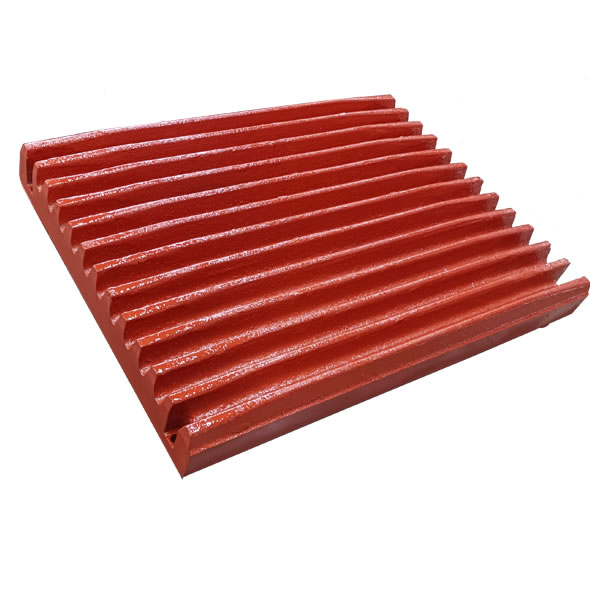
Jaw Plate
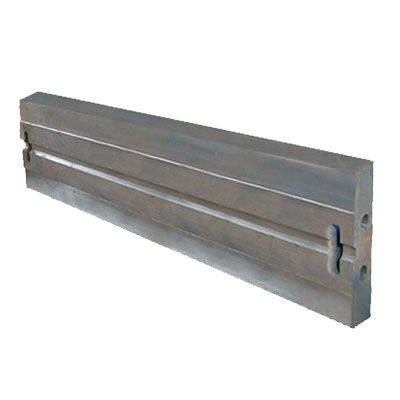
Blow Bar
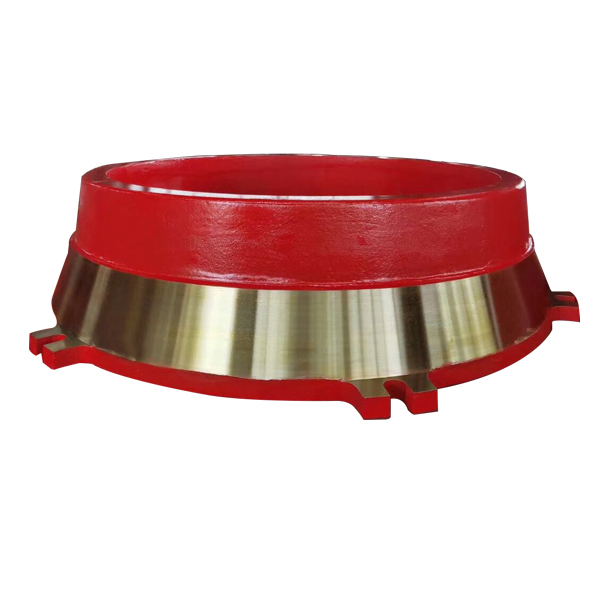
Mantle & Concave
Grate Bar
Contact Us
Get a quote within 24 hours. Send us your inquiry today.

+86 178 4242 1247
Mon-Sat 8AM-10PM CST Scan to chat — English, Spanish, Chinese Send photos of worn parts for instant quote

+86 178 4242 1247
Scan to follow — factory updates and quotes Chat in Chinese or English