

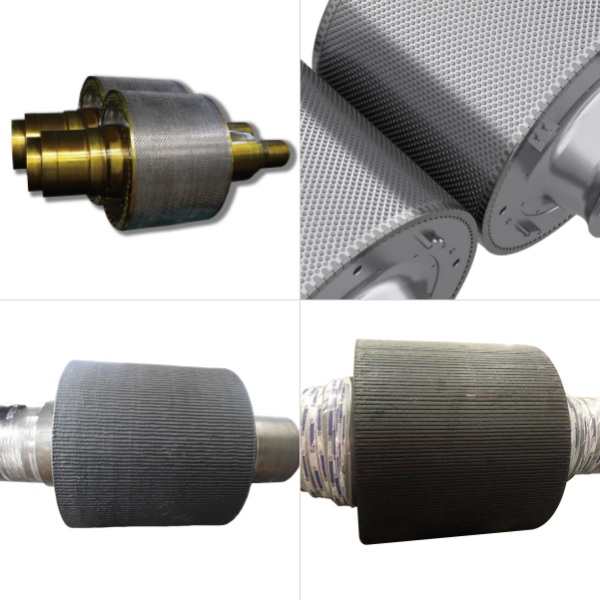
Roller Press Roller / Roller Press Tire / HPGR Roller
High Pressure Grinding Rolls (HPGR) / Roller Press Rollers — High Chrome Cast Iron (Cr20 / Cr26 / Cr30) / Hardfaced Composite / Tungsten Carbide Insert — For KHD / Polysius / FLSmidth / Sinoma / Citic Roller Press
Roller Press Roller / HPGR Roller
Material Specifications & Selection Guide
| Surface Type | Material | Hardness | Carbide Content | Life Factor | Application |
|---|---|---|---|---|---|
| High Chromium Cast | Cr26-28% + Mo | 58-65 HRC | 35-45% | 2.0-2.5x | Cement raw meal, clinker |
| Hi-Cr + Ceramic | Cr20-24% + ZTA/Al2O3 | 62-68 HRC | 40-50% | 2.5-3.5x | Silica abrasive, iron ore |
| Tungsten Carbide | WC-Co (10-12% Co) | HRA 86-89 | 85-92% | 4.0-6.0x | Hard rock, extreme abrasion |
| Ni-Hard IV | Ni4 + Cr8 | 56-62 HRC | 20-28% | 1.5-2.0x | Moderate abrasion, cost-effective |
| Hardfaced Overlay | Cr-Ni-Mo + Carbides | 55-62 HRC | Variable | 1.2-1.8x | Repair / rebuild applications |
| Component | Material | Hardness | Process | Feature |
|---|---|---|---|---|
| Surface Ring | High Cr White Iron | 60-65 HRC | Centrifugal cast | Dense, carbide-rich surface |
| Bonding Layer | 42CrMo + Ni-Based | 35-42 HRC | Interfacial fusion | Metallurgical bond to core |
| Roller Core | 35CrMo / 42CrMo | 28-35 HRC | Forged + Q+T | High toughness, fatigue resist |
| Shaft | 40Cr / 42CrMo | 28-32 HRC | Forged + tempered | Torque transmission |
| Bearings (KOYO/NSK) | GCr15 | 58-64 HRC | Through-hardened | Heavy-load cylindrical |
| Roller Model | Dia. (mm) | Width (mm) | Pressure (MPa) | Throughput (t/h) | OEM Equiv. |
|---|---|---|---|---|---|
| RP 80-40 | 800 | 400 | 5-8 | 80-120 | KHD / FLSmidth |
| RP 100-60 | 1,000 | 600 | 6-10 | 150-220 | KHD / ThyssenKrupp |
| RP 120-80 | 1,200 | 800 | 8-12 | 250-350 | FLSmidth / Polysius |
| HPGR 1200 | 1,200 | 500-800 | 100-150 N/mm2 | 300-500 | Metso / Weir / ThyssenKrupp |
| HPGR 1600 | 1,600 | 800-1,200 | 100-150 N/mm2 | 500-900 | Metso HRC / Weir Enduron |
| HPGR 2000 | 2,000 | 1,200-1,800 | 100-150 N/mm2 | 800-1,500 | Weir / ThyssenKrupp |
Selection Quick Reference
- Cement raw meal / clinker (moderate abrasion, continuous duty): High Chromium Cast (Cr26-28%) surface — the industry standard for cement roller presses, balancing wear life and cost with 2.0-2.5x baseline life
- Silica-rich / abrasive ore (iron ore, copper ore, quartz): Hi-Cr + Ceramic Insert (ZTA/Al2O3) — the ceramic particles provide 2.5-3.5x life in high-silica environments where carbide alone spalls under impact
- Hard rock / extreme abrasion (diamond ore, granite): Tungsten Carbide (WC-Co) surface — maximum hardness and carbide density for 4.0-6.0x life in the most demanding HPGR applications
- Cost-sensitive / moderate duty: Ni-Hard IV surface — economical choice for moderate abrasion with 1.5-2.0x life, suitable for pre-crushing and softer materials
- Roller rebuild / sleeve replacement: Hardfaced Overlay or complete surface ring replacement — restore worn rollers to OEM or better-than-OEM specifications with matched composite bonding to forged core
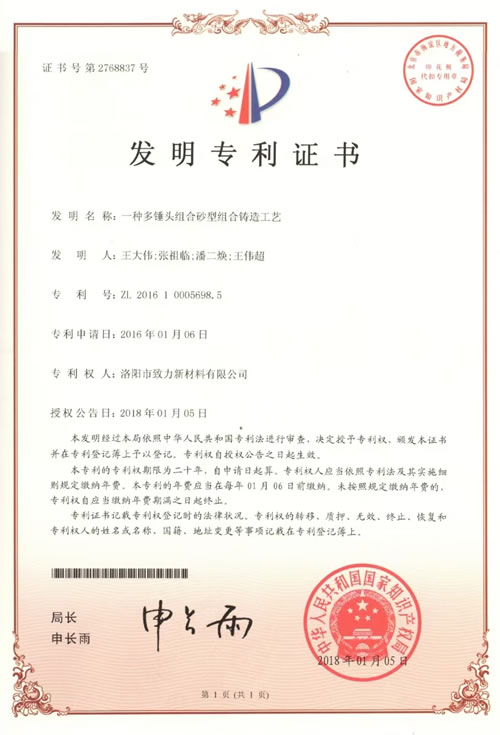
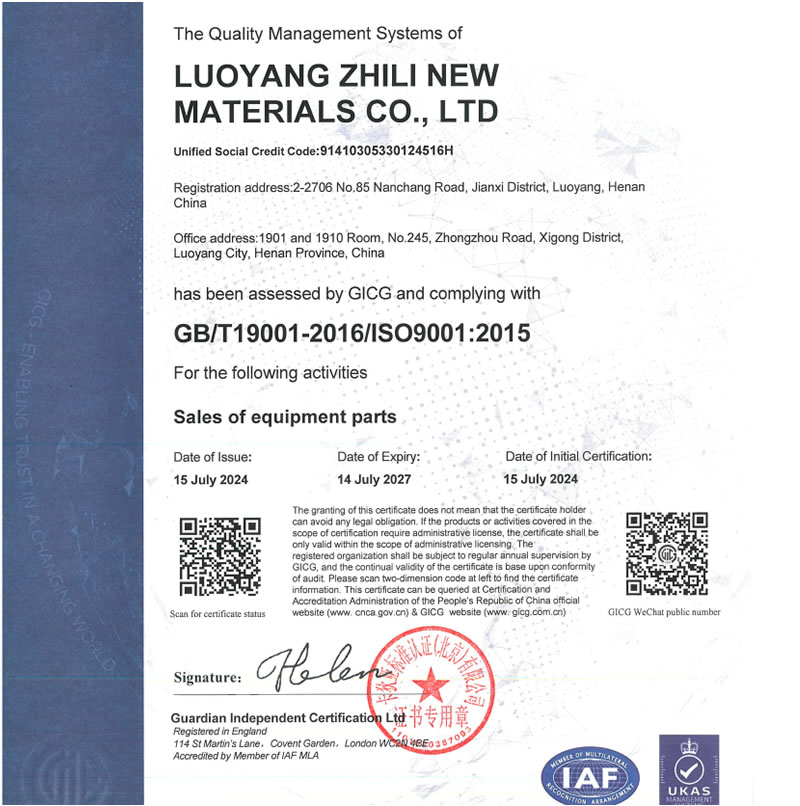
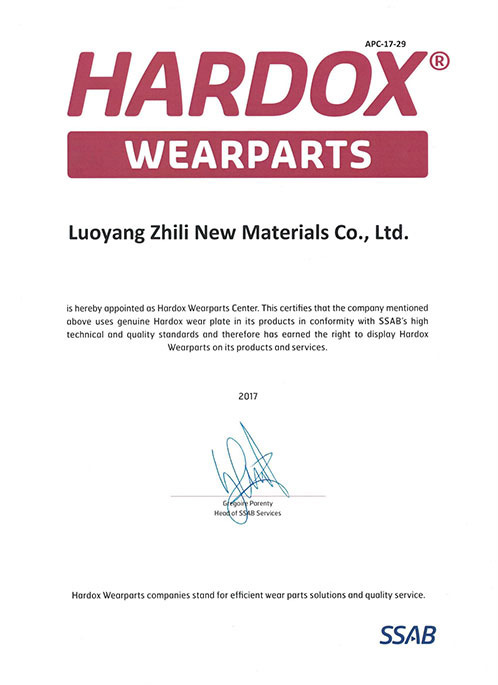
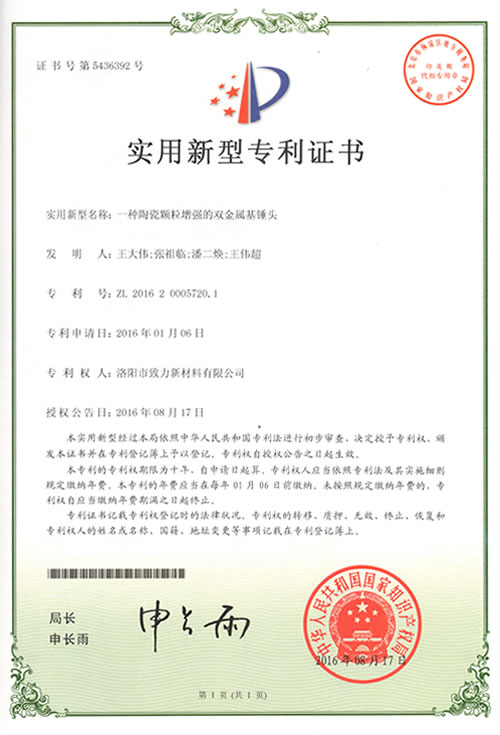
Certifications & Authorizations
Quality you can verify. Partners you can trust.
Custom OEM / ODM
From drawing to delivery — one-stop customization, no minimum order
Send Drawing
Upload your technical drawing (PDF, DWG, STEP, IGES) or share sample photos with dimensions
Engineering Review
Material recommendation, casting process design, DFM analysis — free quotation within 24 hours
Sampling & Test
Prototype production with full inspection: hardness test, spectrometer, dimensional check
Production & Ship
ISO 9001 certified. 15-25 days standard lead time. Global shipping with full documentation
Frequently Asked Questions
HPGR and VRM rollers operate under fundamentally different conditions despite both being called “rollers”:
Three key differences that drive material selection:
- Pressure intensity (10x difference): HPGR operates at 100-300 MPa between two counter-rotating rolls. VRM operates at 10-30 MPa between a roller and a table. The HPGR’s 10x higher pressure means the roller surface material is compressed to its limit — micro-cracking and spalling of the surface layer are the dominant wear mechanisms, not gradual abrasion. This is why HPGR rollers are typically replaced as segments or re-hardfaced rather than running to complete thickness loss.
- Contact geometry: HPGR = roll-to-roll (material crushed between two rolls rotating at same speed). VRM = roll-to-table (roll rotates faster than table, creating shear). The HPGR has no shear component — it’s pure compression. VRM has significant shear, which creates a different wear pattern (scuffing + abrasion).
- Temperature: HPGR generates less friction heat than VRM (no sliding) but the roller surface can reach 150 C from material compression work. Cr30 for HPGR has Mo content specifically for carbide stability at this temperature. VRM uses Cr27Mo2 for 250-450 C — over-specified for HPGR.
What this means for you: Use VRM-grade materials (Cr27Mo2) in your HPGR, and you’re paying for Mo content designed for 400 C that you’ll never need. Use HPGR-grade materials (Cr20/Cr26/Cr30) in your VRM, and you’ll get premature failure from rolling contact fatigue and thermal softening. The material must match the wear mechanism, not the component name.
The best roller surface depends on your operating philosophy — minimize cost per ton, or maximize uptime?
Cast Cr Segments (Cr20/Cr26/Cr30) — cost per ton winner:
- How it works: Individual cast segments (typically 20-50 per row) are bolted onto the roller body. When worn, you replace only the worn rows — not the entire roller surface. The center of the roller (widest gap) wears fastest; edge rows wear slower.
- Best for: Plants with frequent planned shutdowns (quarterly), maintenance teams comfortable with segment changes. Total cost per ton ground is typically lowest because you only replace what’s worn.
- Limitation: Segment changes require 12-24 hours. If you only shut down annually, you may have to accept running with partially worn segments for months.
Hardfaced Surface — best rebuild flexibility:
- How it works: The roller has a factory-applied hardfacing layer (6-15mm). When worn, the hardfacing is rebuilt on-site using a mobile welding setup. Can be rebuilt 2-5 times before the roller body needs re-machining.
- Best for: Plants that want to avoid roller removal and have space for on-site welding. Lowest logistics cost (no shipping heavy rollers).
WC Studded — maximum uptime, minimum maintenance:
- How it works: Tungsten carbide studs (pins) are pressed into the roller surface. Material gets trapped between the studs, forming an autogenous wear layer — the ore grinds against itself, protecting the studs. Stud life: 15,000-25,000 hours.
- Best for: Critical mills where unplanned downtime is unacceptable (>$50,000/hour), plants running >7,500 hours/year, or applications with extremely abrasive feed.
ZHILI ROI comparison (typical RP 13-140/08, 250 t/h clinker): Cr20 segment = $18,000/yr roller cost with quarterly row changes + 96 hrs downtime/yr. WC Studded = $35,000/yr roller cost with single annual rebuild + 0 hrs unplanned downtime. If your downtime cost exceeds $180/hr, WC Studded wins on total cost.
Roller edge wear is the #1 cause of premature roller replacement in roller presses. The edges wear 2-3x faster than the roller center due to a combination of mechanical and process factors:
Why edges wear faster:
- Material escape at the gap ends: At the roller center, material is trapped and compressed between the two rolls. At the roller edges, material escapes sideways out of the compression zone. This escaping material flows at high velocity across the roller edge surface, creating intense three-body abrasive wear.
- Edge effect concentration: The roller edges define the ends of the compression zone. The pressure gradient at the edges is steeper than in the center — material experiences rapid pressure drop, creating a “sandblasting” effect on the roller edge surface.
- Misalignment: Even 0.5mm of axial misalignment between the two rollers concentrates the entire roll force onto one edge. The edge then wears into a “step” profile, which accelerates further edge wear. A 0.5mm misalignment can reduce edge life by 40-50%.
Four strategies to minimize edge wear:
- 1. Edge cheek plates / side dams: Install abrasion-resistant cheek plates at each roller end to contain the material in the compression zone. These are sacrificial wear parts — replace them before they wear through and expose the roller edge. Cheek plates cost $500-2,000 vs roller edge repair at $5,000-15,000.
- 2. Roller edge profile design: Specify chamfered or radiused edge profiles rather than sharp 90 corners. A 10-15mm radius at the roller edge reduces the pressure concentration at the corner by 30-40%, slowing edge wear. ZHILI offers optimized edge profiles based on your material properties.
- 3. Alignment check at every shutdown: Use a dial indicator to measure axial alignment between the two rollers. Tolerance: <0.3mm axial offset. Correct misalignment immediately — the cost of a 2-hour alignment check is trivial compared to a roller that loses 50% of its edge life.
- 4. Feed distribution: Ensure feed material is distributed evenly across the full roller width. A biased feed (more material on one edge) creates uneven pressure distribution that accelerates wear on the overloaded side. Install a feed distribution box or adjustable feed gate if uneven feeding is observed.
ZHILI edge protection package: We supply complete roller press maintenance kits including replacement cheek plates, edge segment rings (for Cr segment rollers), and alignment tools. Edge segments with +15mm extra thickness are available for high-wear applications.
Related Products
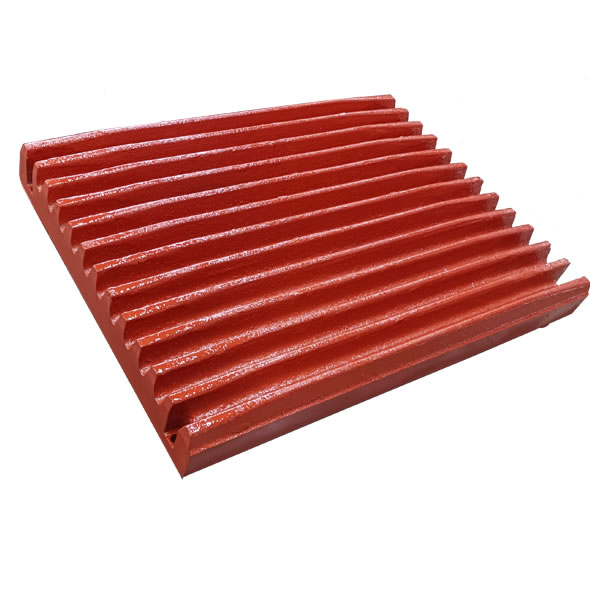
Jaw Plate
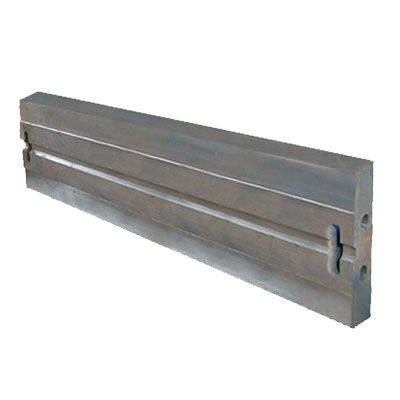
Blow Bar
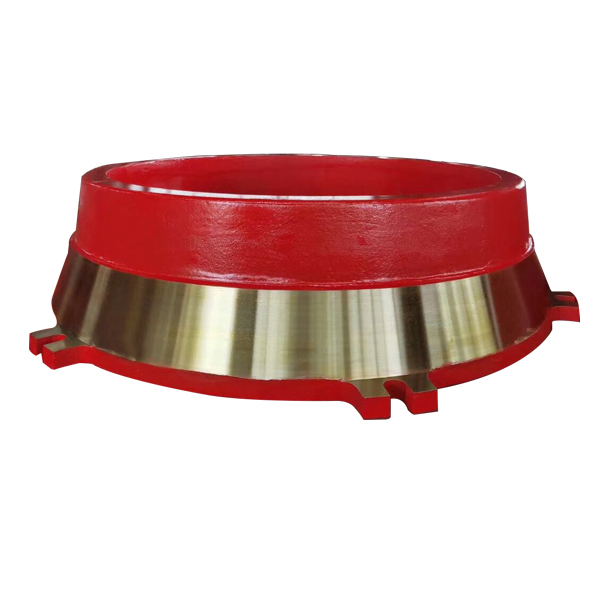
Mantle & Concave
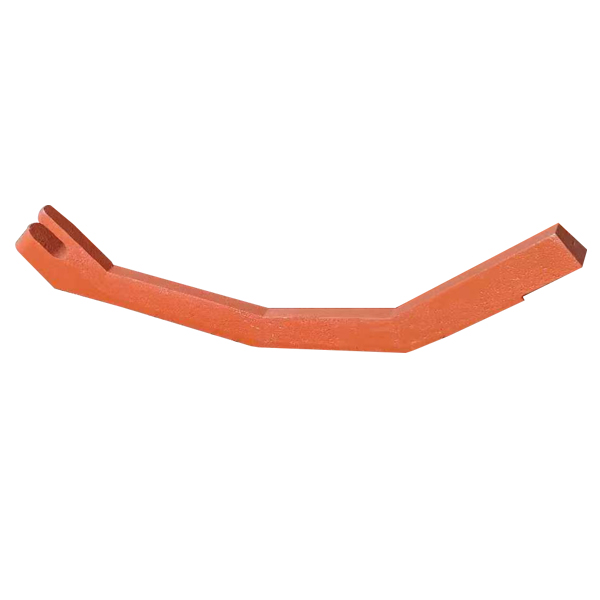
Grate Bar
Contact Us
Get a quote within 24 hours. Send us your inquiry today.

+86 178 4242 1247
Mon-Sat 8AM-10PM CST Scan to chat — English, Spanish, Chinese Send photos of worn parts for instant quote

+86 178 4242 1247
Scan to follow — factory updates and quotes Chat in Chinese or English