

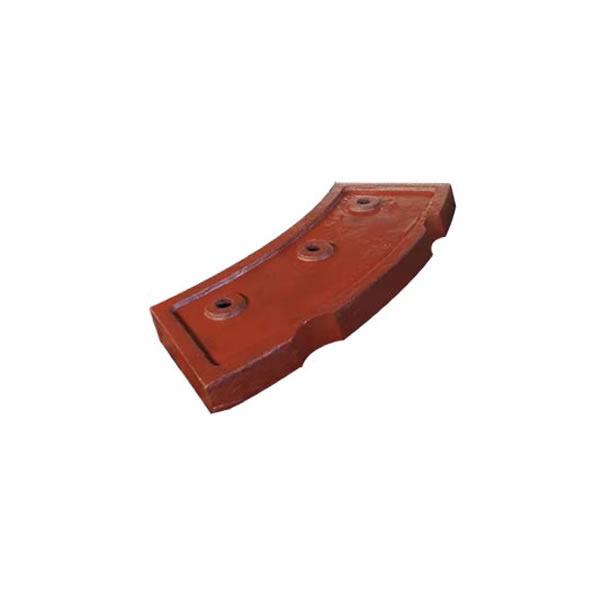
Mill Liner Segment
High-performance mill liner segments for ball mills, SAG mills, and rod mills. Manufactured in high manganese steel and high chrome iron for maximum wear resistance and grinding efficiency. Compatible with Metso, FLSmidth, CITIC, and Chinese OEM mill designs
Mill Liner Segment
Material Specifications & Selection Guide
| Grade | Class | Standard | Hardness | Key Feature | Application |
|---|---|---|---|---|---|
| Mn13 | High Mn Steel | GB/T 5680 | 180-220 HBW (as-cast) | Classic work-hardening steel, tough core | Ball mill shell liners, heavy impact |
| Mn13Cr2 | High Mn Steel | GB/T 5680 | 200-240 HBW (as-cast) | Cr-alloyed, faster work hardening rate | SAG/AG mill shell & end liners |
| Mn18Cr2 | High Mn Steel | GB/T 5680 | 210-250 HBW (as-cast) | Superior impact toughness, thick-section | SAG mill liners >100 mm thick |
| Cr15 (HCWI) | High Cr Iron | GB/T 8263 | 55-60 HRC | Excellent sliding abrasion resistance | Ball mill liners, fine grinding |
| Cr20 (HCWI) | High Cr Iron | GB/T 8263 | 58-62 HRC | Maximum wear resistance, low impact | Cement mill liners, end liners |
| Cr26 (HCWI) | High Cr Iron | GB/T 8263 | 60-64 HRC | Highest Cr, ultimate wear performance | Fine grinding, classifier liners |
| Grade | C (%) | Mn (%) | Cr (%) | Si (%) | Mo / Ni | P Max |
|---|---|---|---|---|---|---|
| Mn13 | 1.10-1.40 | 11.0-14.0 | – | 0.30-0.80 | – | 0.070 |
| Mn13Cr2 | 1.10-1.40 | 11.0-14.0 | 1.50-2.50 | 0.30-0.80 | – | 0.070 |
| Mn18Cr2 | 1.10-1.40 | 16.0-19.0 | 1.50-2.50 | 0.30-0.80 | – | 0.070 |
| Cr15 | 2.40-3.00 | 0.50-1.00 | 14.0-17.0 | 0.50-1.00 | Mo 0.50-1.00 | 0.060 |
| Cr20 | 2.60-3.20 | 0.50-1.00 | 18.0-22.0 | 0.50-1.00 | Mo 1.00-2.00 | 0.060 |
| Grade | Initial Hardness | Work-Hardened / Final | Impact Toughness (J/cm2) | Abrasion Index | Best For |
|---|---|---|---|---|---|
| Mn13 | 180-220 HBW | 450-550 HBW (surface) | 150-200 | 1.0 (reference) | Heavy impact grinding |
| Mn13Cr2 | 200-240 HBW | 480-580 HBW (surface) | 120-180 | 1.1-1.2x | Medium-high impact |
| Mn18Cr2 | 210-250 HBW | 500-600 HBW (surface) | 180-250 | 1.0-1.1x | Maximum impact, thick sections |
| Cr15 | 55-60 HRC | 55-60 HRC (through-hard) | 10-20 | 1.8-2.2x | Fine grinding, low impact |
| Cr20 | 58-62 HRC | 58-62 HRC (through-hard) | 8-15 | 2.0-2.5x | Cement finish grinding |
Selection Quick Reference
- SAG / AG mill (heavy ball impact, large feed >100 mm): Mn18Cr2 shell liners — highest toughness (180-250 J/cm2) for extreme impact. Use Mn13Cr2 for end liners with medium impact
- Ball mill — 1st chamber (coarse grinding, 60-90 mm balls): Mn13Cr2 shell liners — Cr addition accelerates work hardening, liners reach 480-580 HBW surface within 200-300 operating hours
- Ball mill — 2nd chamber (fine grinding, 20-40 mm balls): Cr15 or Cr20 shell liners — high chrome iron for maximum sliding abrasion resistance, 1.8-2.5x longer life vs manganese steel in low-impact conditions
- Cement finish mill: Cr20 end liners + Cr15 shell liners — through-hard chrome iron for consistent wear profile and minimal maintenance
- All liners supplied with heat treatment certificate. Mn steels are solution-annealed (1050-1100 C water quench). Cr irons are stress-relieved (550-600 C) after casting
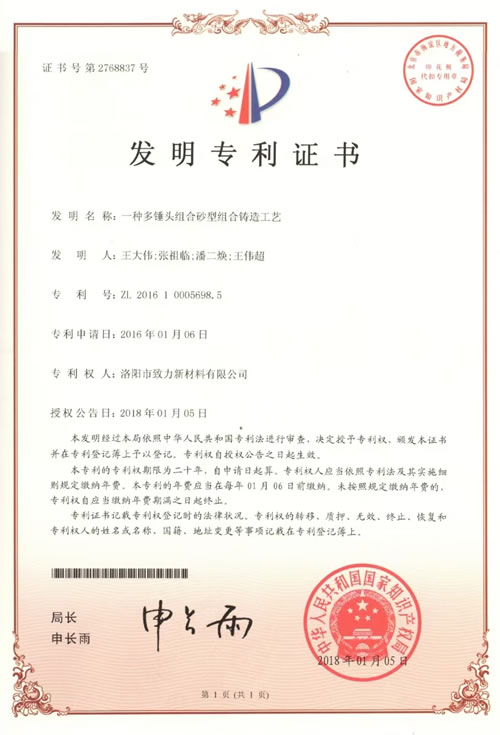
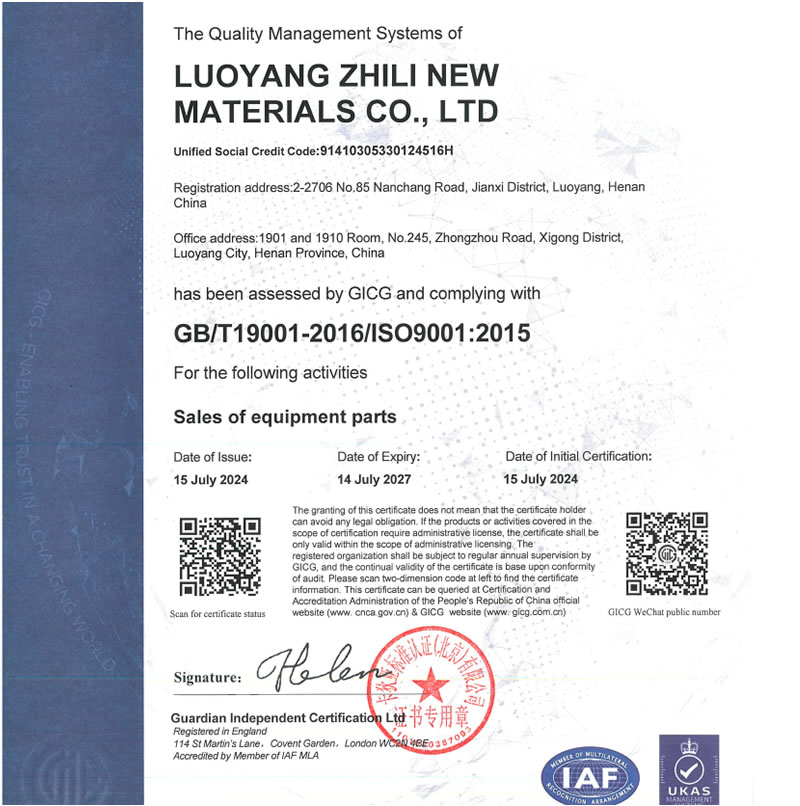
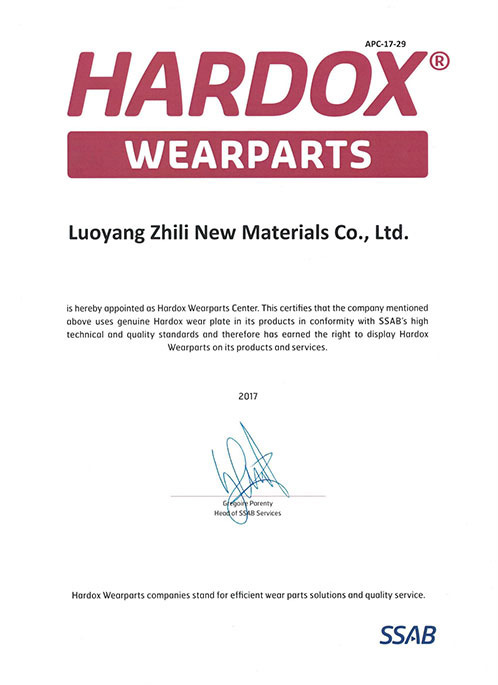
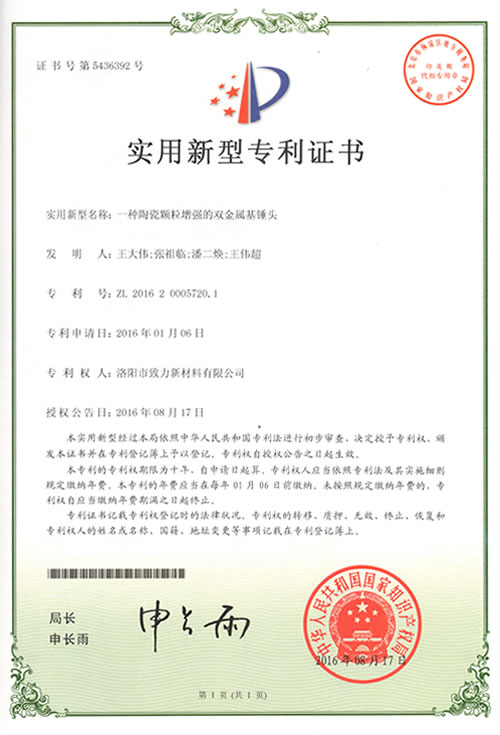
Certifications & Authorizations
Quality you can verify. Partners you can trust.
Custom OEM / ODM
From drawing to delivery — one-stop customization, no minimum order
Send Drawing
Upload your technical drawing (PDF, DWG, STEP, IGES) or share sample photos with dimensions
Engineering Review
Material recommendation, casting process design, DFM analysis — free quotation within 24 hours
Sampling & Test
Prototype production with full inspection: hardness test, spectrometer, dimensional check
Production & Ship
ISO 9001 certified. 15-25 days standard lead time. Global shipping with full documentation
Frequently Asked Questions
The choice between high manganese steel (Mn13/Mn13Cr2/Mn18Cr2) and high chrome white iron (Cr15/Cr20/Cr26) is the most critical decision for mill liner performance. The wrong choice can reduce liner life by 40-60% or cause premature catastrophic failure:
Decision rule by mill type and grinding media:
- SAG / AG mills (100-150 mm balls, large feed): ALWAYS high manganese steel (Mn18Cr2 or Mn13Cr2). The impact from 125 mm balls dropping 5+ meters will shatter chrome iron liners. Mn steel absorbs impact through work hardening.
- Ball mill — 1st chamber (60-90 mm balls, medium impact): Mn13Cr2 is the standard choice. Cr2 addition accelerates work hardening to 480 HBW within 200 hours. Chrome iron is NOT recommended here.
- Ball mill — 2nd chamber (20-40 mm balls, low impact): Cr15 or Cr20 chrome iron. At this ball size, impact is minimal and sliding abrasion dominates. Chrome iron lasts 1.8-2.5x longer than Mn steel.
- Cement finish mill (15-25 mm balls, very low impact): Cr20 or Cr26 exclusively. Maximum wear resistance. Chrome iron liners can last 24-36 months vs 10-14 months for Mn steel.
Golden rule: If you hear the grinding media impacting loudly, use Mn steel. If the mill runs quietly with a steady grinding hum, chrome iron will give you the best value.
Mill liners wear progressively and predictably. Proper inspection timing can prevent unplanned downtime and avoid the costly mistake of running liners until shell exposure (which damages the mill shell):
Wear measurement protocol:
- UT thickness measurement (every 500 hours): Use an ultrasonic thickness gauge at marked grid points (minimum 6 points per liner segment). Record readings in a wear log to track wear rate trends.
- Replace shell liners when: Remaining thickness reaches 30% of original. Example: 100 mm original liner = replace at 30 mm remaining. Running below 25% risks bolt head exposure and shell damage.
- Replace end liners (mill heads) when: 25% remaining thickness. End liners protect the mill head — a critical structural component. Earlier replacement is cheaper than mill head repair.
- Visual inspection checklist: Check for bolt loosening (hammer test each bolt), cracking at bolt holes, and uneven wear patterns. Uneven wear indicates misaligned charge or incorrect liner profile.
Wear rate logging tip: Track wear rate in mm/1,000 hours. When wear rate suddenly accelerates by >30%, the liner profile has been lost and the remaining liner life is less than your trend line predicts. Plan replacement immediately.
Yes. ZHILI manufactures custom liner profiles for any mill make and model. We maintain a database of 1,500+ liner drawings covering Metso, FLSmidth, Outotec, CITIC, Shenyang, and Chinese OEM designs. We support four procurement approaches:
- From OEM part numbers: Provide the mill model and OEM liner part number. We cross-reference to our drawing database and manufacture exact replacements. Lead time: 15-20 days.
- From your existing drawings: Submit CAD files (DWG, STEP, PDF). Our foundry produces patterns directly from your geometry. Lead time: 18-25 days.
- From worn liner samples: Ship 1-2 worn liner segments. Our metrology lab performs 3D laser scanning and reverse-engineers the profile, including unworn areas to reconstruct original geometry. Lead time: 20-28 days.
- Design optimization: We can suggest profile modifications to extend life (e.g., increasing lifting bar height, adding wear indicators, modifying bolt pattern for better sealing). Our engineering team will provide a CAD model for your approval before casting.
First-time order recommendation: Order a trial set of 6-12 liner segments for one mill row. Test performance over one full wear cycle (3-6 months). After performance validation, we will hold the pattern and offer 12-day lead times on repeat orders.
Related Products
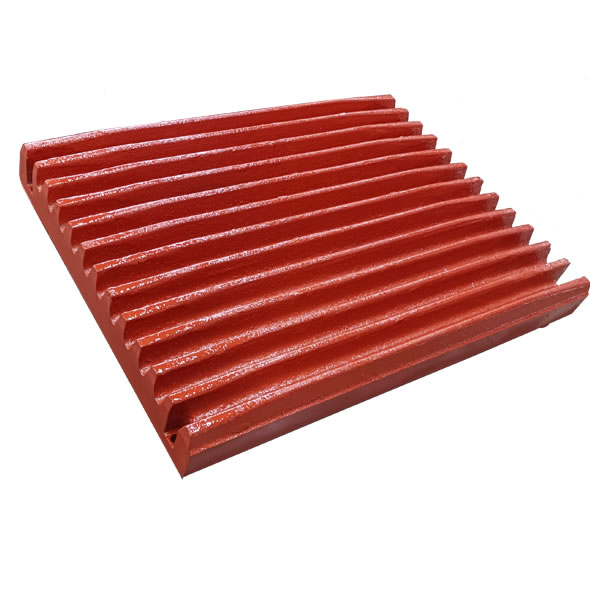
Jaw Plate
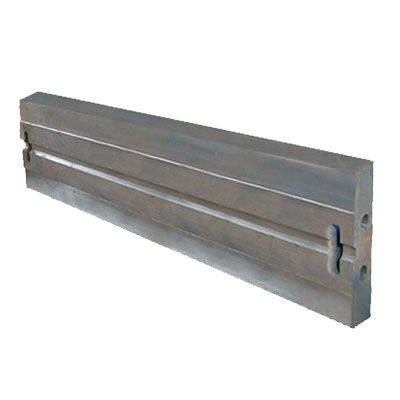
Blow Bar
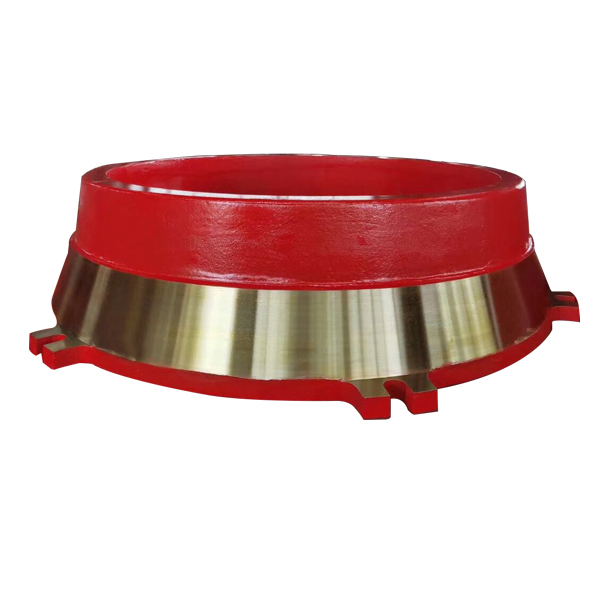
Mantle & Concave
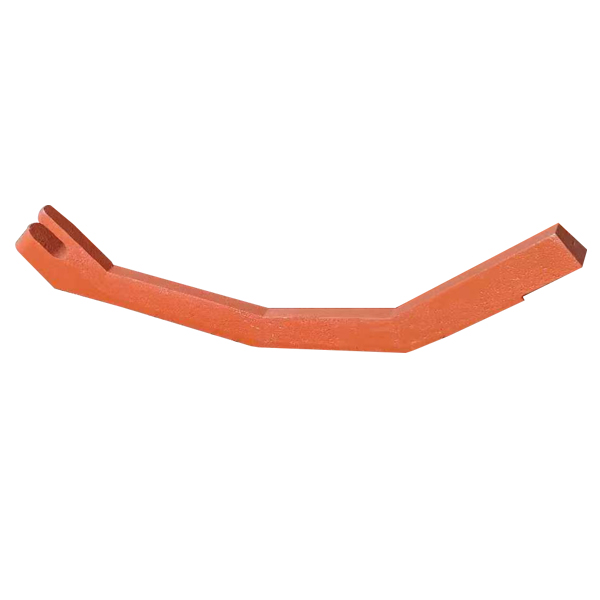
Grate Bar
Contact Us
Get a quote within 24 hours. Send us your inquiry today.

+86 199 8785 7268
Mon-Sat 8AM-10PM CST Scan to chat — English, Spanish, Chinese Send photos of worn parts for instant quote

+86 199 8785 7268
Scan to follow — factory updates and quotes Chat in Chinese or English