

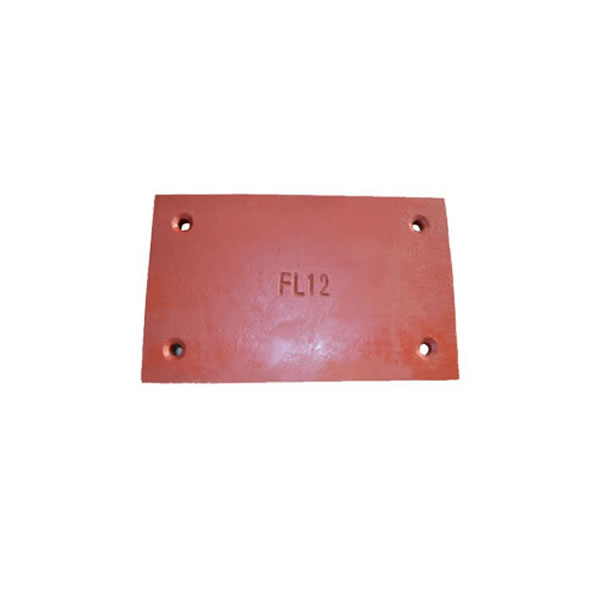
Crusher Liners / Mill Liners
Crusher Side Liners & Ball Mill Shell Liners — High Manganese Steel (Mn13Cr2 / Mn18Cr2 / Mn22Cr2) / High Chrome Alloy (Cr15 / Cr20 / Cr26) / Alloy Steel — For Jaw Crusher / Cone Crusher / Ball Mill Shell Protection
Crusher Liners / Mill Liners
Material Specifications & Selection Guide
| Grade | Material | As-Cast HB | Work-Hardened | Impact | Application |
|---|---|---|---|---|---|
| Mn13 (Hadfield) | Mn12-14% + C1.0-1.4% | 200-220 | 450-550 HB | Excellent | Jaw crushers, impact liners |
| Mn13Cr2 | Mn12-14% + Cr1.5-2.5% | 210-230 | 500-600 HB | Excellent | Cone crushers, gyratory |
| Mn18Cr2 | Mn17-19% + Cr2.0-3.0% | 220-240 | 550-650 HB | Superior | Heavy impact, large feed |
| Mn22Cr2 | Mn20-22% + Cr2.0-3.0% | 230-250 | 600-700 HB | Superior | Extreme impact, SAG mills |
| Mn13Mo | Mn12-14% + Mo0.5-1.0% | 210-230 | 480-580 HB | Excellent | High-temp, asphalt crushing |
| Grade | Material | Hardness | Carbide | Impact | Application |
|---|---|---|---|---|---|
| Cr15 | Cr14-17% + C2.4-3.2% | 56-60 HRC | 22-30% | Low | Ball mill, low impact |
| Cr20 | Cr18-22% + C2.4-3.2% | 58-62 HRC | 25-33% | Low | Cement mill, abrasion |
| Cr26 | Cr23-28% + C2.3-3.0% | 58-63 HRC | 28-38% | Low | Slag mill, high silica |
| Ni-Hard IV | Ni4% + Cr8% + C2.8-3.6% | 55-60 HRC | 20-28% | Moderate | Coal mill, moderate wear |
| Alloy Steel | Cr-Mo + C0.4-0.8% | 320-400 HB | — | High | AG/SAG mill shell liners |
| Equipment | Model/Size | Liner Type | Thickness (mm) | Material | Rec. Grade |
|---|---|---|---|---|---|
| Jaw Crusher | PE400x600 to PE1500x1800 | Fixed/Movable | 50-180 | High Mn Steel | Mn13 / Mn13Cr2 |
| Cone Crusher | HP100 to HP800 / Symons 2-7ft | Bowl/Mantle | 30-120 | High Mn Steel | Mn13Cr2 / Mn18Cr2 |
| Gyratory Crusher | 42-65 to 60-110 | Concave/Mantle | 80-200 | High Mn Steel | Mn18Cr2 / Mn22Cr2 |
| Impact Crusher | PF1007 to PF1820 | Blow Bar/Liner | 40-150 | High Mn / High Cr | Mn13Cr2 / Cr20 |
| Ball Mill | 1.5×3.0m to 5.5×8.5m | Shell/End Liner | 40-120 | High Cr / Mn Steel | Cr20 / Mn13Cr2 |
| SAG Mill | 7.0×3.5m to 12.2×7.0m | Shell/Grate Liner | 60-180 | High Mn Steel | Mn18Cr2 / Mn22Cr2 |
| AG Mill | 6.0×3.0m to 10.0×5.5m | Shell Liner | 50-150 | High Mn / Alloy | Mn13Cr2 / Alloy Steel |
| Rod Mill | 2.1×3.0m to 4.0×6.0m | Shell Liner | 40-100 | High Mn Steel | Mn13 / Mn13Cr2 |
Selection Quick Reference
- Jaw crusher liners (primary crushing, heavy impact): Mn13 or Mn13Cr2 — high manganese work-hardens to 450-600 HB under impact, excellent for large feed ore (300-1200 mm), plate thickness 50-180 mm
- Cone crusher liners (secondary/tertiary, moderate impact): Mn13Cr2 or Mn18Cr2 — Cr addition improves wear resistance for medium feed (50-300 mm), bowl and mantle configuration
- Gyratory crusher liners (large capacity, primary): Mn18Cr2 or Mn22Cr2 — highest impact resistance for massive feed (up to 1500 mm), concave and mantle design
- Impact crusher blow bars (high speed, abrasion + impact): Cr20 high chrome for abrasion-dominated; Mn13Cr2 for impact-dominated — balanced wear and toughness
- Ball mill liners (grinding, low impact): Cr20 high chrome for cement/slag; Mn13Cr2 for ore grinding — choice depends on abrasion vs impact ratio
- SAG/AG mill liners (severe impact + abrasion): Mn18Cr2 or Mn22Cr2 for shell; alloy steel for feed end — withstands 100-150 mm ball impact and ore abrasion
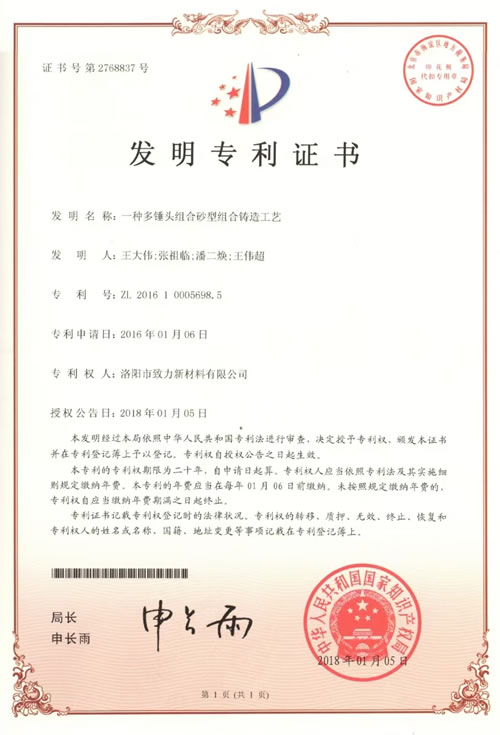
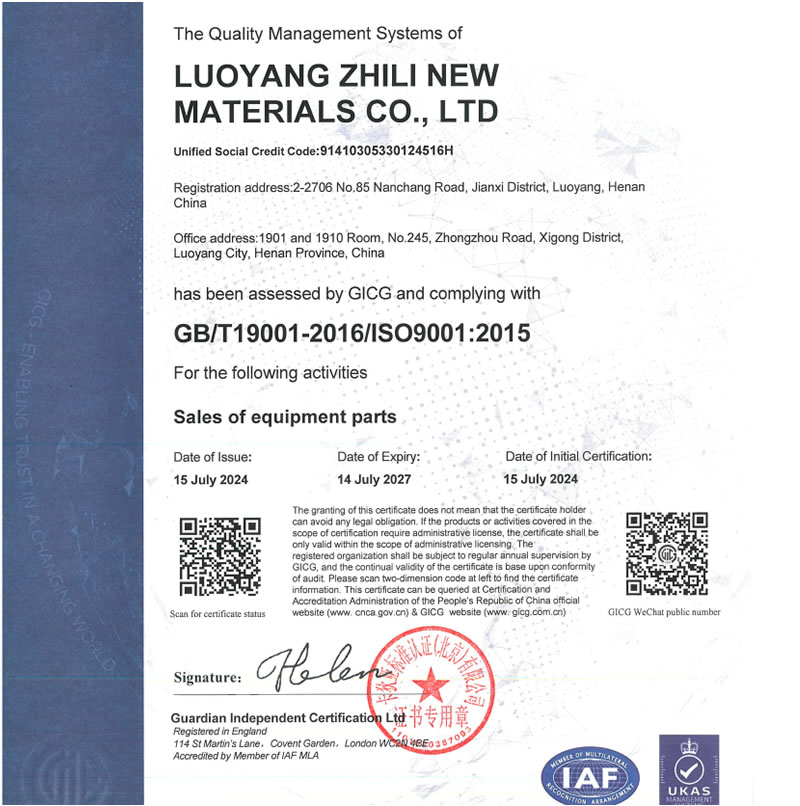
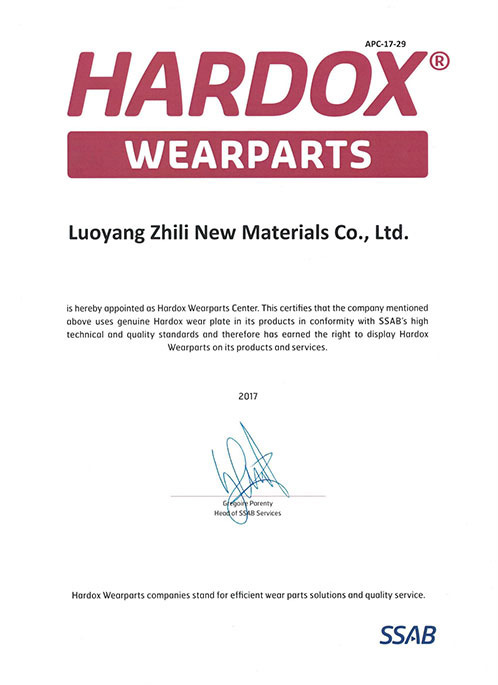
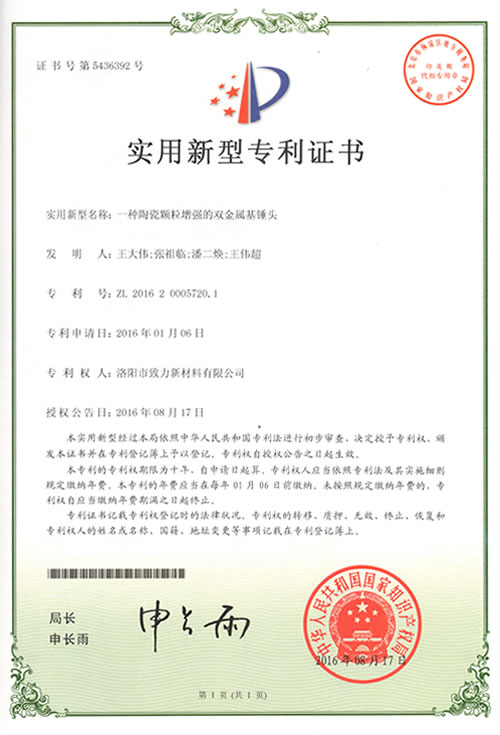
Certifications & Authorizations
Quality you can verify. Partners you can trust.
Custom OEM / ODM
From drawing to delivery — one-stop customization, no minimum order
Send Drawing
Upload your technical drawing (PDF, DWG, STEP, IGES) or share sample photos with dimensions
Engineering Review
Material recommendation, casting process design, DFM analysis — free quotation within 24 hours
Sampling & Test
Prototype production with full inspection: hardness test, spectrometer, dimensional check
Production & Ship
ISO 9001 certified. 15-25 days standard lead time. Global shipping with full documentation
Frequently Asked Questions
This is the most common confusion in wear part purchasing. Liners and wear parts serve completely different functions:
Wear Parts (active): Jaw plates, blow bars, mantle/concave, hammers — these are the components that actually strike, crush, or grind the material. They are designed to be replaced on a schedule and they participate directly in size reduction. Their profile, thickness, and material grade directly affect product quality and throughput.
Liners (passive): Side liners, shell liners, frame liners — these bolt onto the interior of the crusher or mill housing. Their only job is to protect the steel structure from being worn away by material that slides, bounces, or ricochets off the working wear parts. They do NOT participate in crushing.
Why you need both — the cost of skipping liners:
- Without side liners in a jaw crusher, material ejected sideways from the crushing chamber erodes the crusher frame. Replacing a jaw crusher frame costs $50,000-200,000 and 2-4 weeks downtime. A set of side liners costs $800-3,000 and takes 2-3 hours to change.
- Without shell liners in a ball mill, the rotating steel shell is abraded by the tumbling ball charge. Replacing a mill shell costs $500,000-1,500,000 and 4-8 weeks downtime. A set of shell liners costs $15,000-60,000 and takes 24-48 hours to change.
ZHILI recommendation: Always budget liners at the same time you budget wear parts. If you replace jaw plates every 6 months, inspect side liners at the same interval and plan for replacement every 2-3 jaw plate changes. The cost ratio is typically 1:5 to 1:10 (liners are much cheaper than the housing they protect).
The decision depends on the wear mechanism at the liner position — specifically whether impact or abrasion dominates:
Manganese Steel (Mn13Cr2 / Mn18Cr2 / Mn22Cr2) — for HIGH IMPACT positions:
- Why it works: Mn steel is soft when installed (HB 200-250) but work-hardens to HB 400-620 under repeated impact. The harder the impact, the harder the surface becomes. This is perfect for positions where material or grinding balls strike the liner at speed.
- Where to use: Ball mill 1st compartment shell liners (60-90mm balls striking continuously), SAG mill shell liners (100-150mm balls + ore, highest impact in any mill), gyratory crusher top shell liners (large rocks dropping from feed hopper).
- Where NOT to use: Positions with only sliding abrasion and no impact — Mn steel never work-hardens and remains soft (HB 200-250), wearing 3-5x faster than properly selected alloy steel.
High Chrome Cast Iron (Cr15 / Cr20) — for LOW IMPACT, HIGH ABRASION positions:
- Why it works: High chromium content (15-22%) forms hard M7C3 carbides that resist abrasive wear from fine material sliding across the surface. No impact needed — hardness is achieved through metallurgy, not work-hardening. HRC 50-62 as-cast.
- Where to use: Ball mill 2nd compartment shell liners (small 15-30mm balls, fine material, abrasion dominant), cone crusher upper frame liners (material slides along surface, minimal direct impact).
- Where NOT to use: Any position with ball impact above 40mm diameter or drop height above 2 meters — high Cr is brittle (4-8 J/cm²) and will fracture under impact.
Alloy Steel (ZG35CrMo / ZG42CrMo) — the MIDDLE GROUND:
- Why it works: Quenched and tempered to HRC 35-48 with impact toughness of 35-60 J/cm². It bridges the gap: harder than as-cast Mn steel (before work-hardening), tougher than high Cr cast iron.
- Where to use: Mill shell liners with moderate ball impact (30-50mm balls), crusher liners with occasional rock impact but no continuous hammering.
Quick rule: If you hear impact (balls/rocks striking the liner) → Mn steel. If material just slides across → High Cr. If somewhere in between → Alloy steel.
Liner replacement is judged by remaining thickness, not failure. Unlike crushing wear parts where profile loss affects product quality, liners only need replacement before they wear through to the housing. However, premature failure has several common causes:
When to replace — the 30% rule:
- Replace when remaining thickness reaches 30% of original. Example: if original liner is 80mm thick, replace at 24mm. This leaves safety margin for uneven wear (some spots wear faster than others) and prevents the bolts from becoming exposed.
- Measure thickness at the thinnest point (typically the center of the impact zone), not at the edges. Use ultrasonic thickness gauge through the liner from the outside if the mill is running.
- If any bolt head becomes visible below the liner surface, replace immediately — exposed bolts will snap, and a loose liner section can cause catastrophic damage.
Three common causes of premature liner failure:
- Wrong material for the wear mechanism: The #1 mistake. Using Mn steel in a low-impact zone where it never work-hardens leaves a soft HB 200 liner in a zone that needs HRC 50+. Using high Cr in a high-impact zone causes fracture. A $5,000 wrong-material liner that fails in 3 months is far more expensive than a $7,000 correct-material liner that lasts 2 years.
- Loose bolts: As liners wear thinner, bolts stretch and loosen. A loose bolt allows the liner to vibrate, which accelerates bolt hole elongation, which allows more vibration — a self-reinforcing failure cycle. Check bolt torque at every planned shutdown. Use Nord-Lock washers or Belleville spring washers to maintain tension as the liner wears.
- Uneven wear due to incorrect installation: Liners must sit flush against the shell. If debris or old backing material is left between the liner and the shell, the liner bridges over high spots and cracks under impact. Always clean the shell surface completely before installing new liners. ZHILI supplies zinc-based backing compound for gap filling.
ZHILI liner replacement package: We supply complete liner sets with all bolts, washers, gaskets, and installation instructions. Bolt torque specifications are provided for each liner type. We can also arrange on-site supervision for the first liner change by a ZHILI engineer.
Related Products
Jaw Plate
Blow Bar
Mantle & Concave
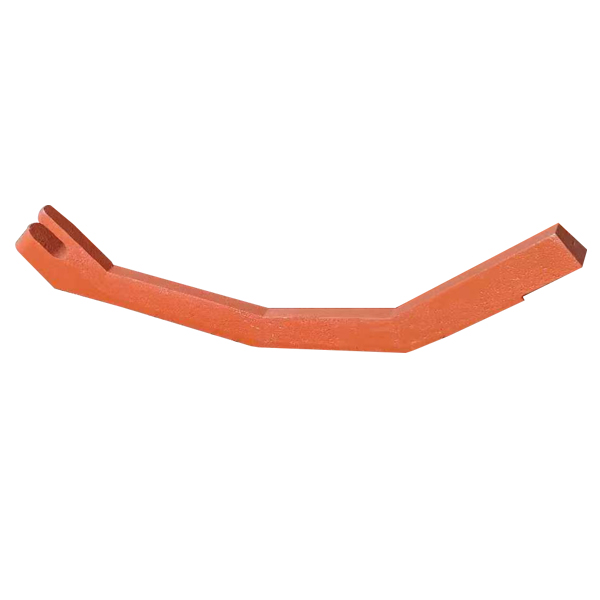
Grate Bar
Contact Us
Get a quote within 24 hours. Send us your inquiry today.

+86 199 8785 7268
Mon-Sat 8AM-10PM CST Scan to chat — English, Spanish, Chinese Send photos of worn parts for instant quote

+86 199 8785 7268
Scan to follow — factory updates and quotes Chat in Chinese or English