

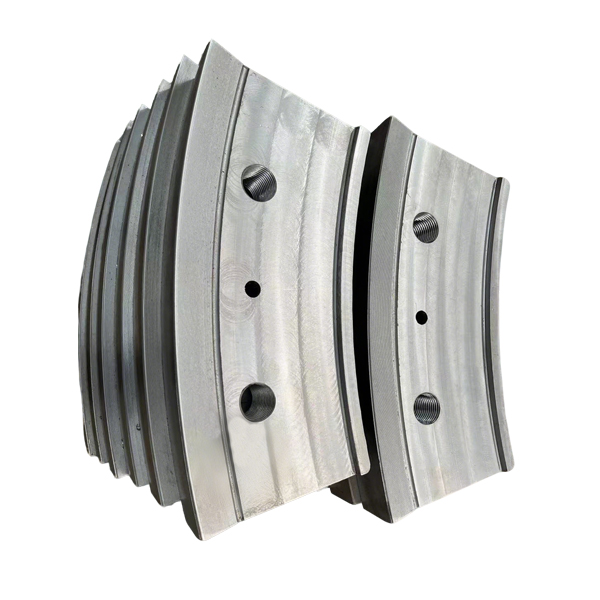
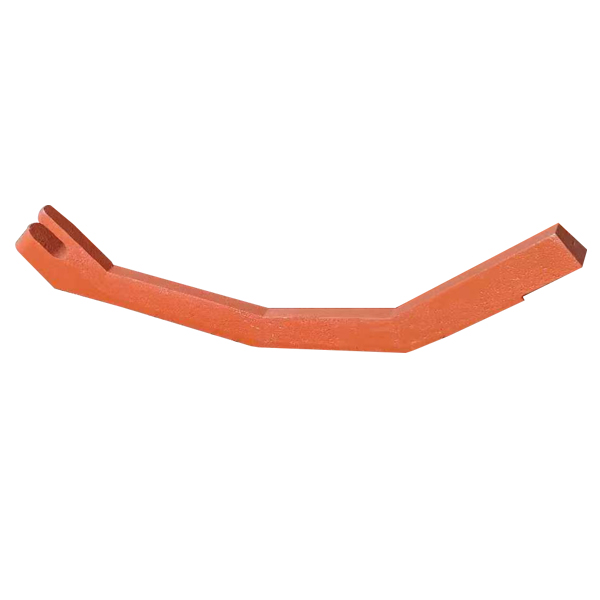
Clamp in Vertical Mill / Grinding Roller Clamp
VRM Grinding Roller Clamps & Retaining Plates — High Strength Alloy Steel (ZG35CrMo / ZG42CrMo / 35CrMo Forged) — For Loesche / Pfeiffer / FLSmidth / Polysius / UBE / Sinoma
Clamp in Vertical Mill / Grinding Roller Clamp
Material Specifications & Selection Guide
| Grade | Material | Hardness | Tensile (MPa) | Application |
|---|---|---|---|---|
| Q345B | Low Alloy Steel | — | 470-630 | Light duty, static load |
| ZG270-500 | Cast Carbon Steel | — | 500 | Standard clamp, medium load |
| ZG35CrMo | Cr-Mo Cast Steel | 200-250 HB | 690 | Heavy duty, fatigue resist |
| 42CrMo | Forged Alloy Steel | 28-35 HRC | 1080 | High strength, impact load |
| 40Cr | Forged Alloy Steel | 25-32 HRC | 980 | Standard forged clamp |
| Parameter | Range | Tolerance | Feature |
|---|---|---|---|
| Clamp Length | 200-800 mm | +2/-0 mm | Matches roller width |
| Clamp Width | 80-200 mm | +1/-0 mm | Contact surface width |
| Thickness | 30-80 mm | +1/-0 mm | Load bearing capacity |
| Bolt Hole Dia. | M20-M48 | H11 | High strength bolts |
| Hole Spacing | 100-300 mm | +0.5/-0 mm | Even load distribution |
| Curvature Radius | 150-500 mm | +2/-0 mm | Matches roller profile |
| Surface Finish | Ra 6.3-12.5 | — | Machined contact face |
| VRM Brand | Model | Clamp Length (mm) | Clamp Width (mm) | Material |
|---|---|---|---|---|
| Loesche | LM 28.3D | 280 | 100 | ZG270-500 |
| Loesche | LM 46.4 | 450 | 150 | ZG35CrMo |
| Loesche | LM 56.3+3 CS | 550 | 180 | 42CrMo |
| Pfeiffer | MPS 3750 B | 320 | 110 | ZG270-500 |
| Pfeiffer | MPS 4750 B | 420 | 140 | ZG35CrMo |
| Pfeiffer | MPS 5600 BC | 520 | 170 | 42CrMo |
| FLSmidth | Atox 35 | 300 | 100 | ZG270-500 |
| FLSmidth | Atox 50 | 480 | 160 | ZG35CrMo |
| FLSmidth | OK 42-4 | 400 | 130 | ZG35CrMo |
| Polysius | RM 41/19 | 360 | 120 | ZG270-500 |
| Polysius | RM 54/27 | 500 | 170 | 42CrMo |
| UBE | UM 38.4 | 380 | 130 | ZG35CrMo |
| UBE | UM 50.4 | 520 | 180 | 42CrMo |
| Sinoma | TRM 38.4 | 380 | 130 | ZG270-500 |
| Sinoma | TRM 53.4 | 580 | 190 | 42CrMo |
Selection Quick Reference
- Small VRM clamps (LM28, MPS3750, Atox35): ZG270-500 cast steel or Q345B — sufficient strength for small mills (1,200-2,000 kW), clamp length 200-320 mm, standard duty application
- Medium VRM clamps (LM46, MPS4750, Atox50): ZG35CrMo cast alloy steel — Cr-Mo content provides fatigue resistance for medium mills (2,000-4,000 kW), clamp length 360-480 mm
- Large VRM clamps (LM56, MPS5600, UM50.4): 42CrMo forged steel — maximum strength and toughness for heavy-duty mills (>4,000 kW), withstands high grinding forces and vibration
- Critical clamp features: Machined contact surface (Ra 6.3-12.5) ensures even pressure distribution on grinding roller; curved profile matches roller diameter for secure retention
- High-torque applications: High-strength bolts (M20-M48, Grade 10.9+) through precision-drilled holes — clamping force must exceed roller separation force under maximum grinding pressure
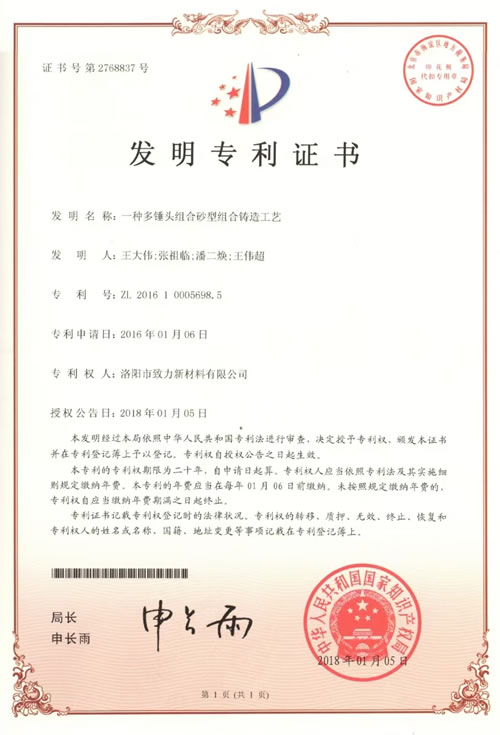
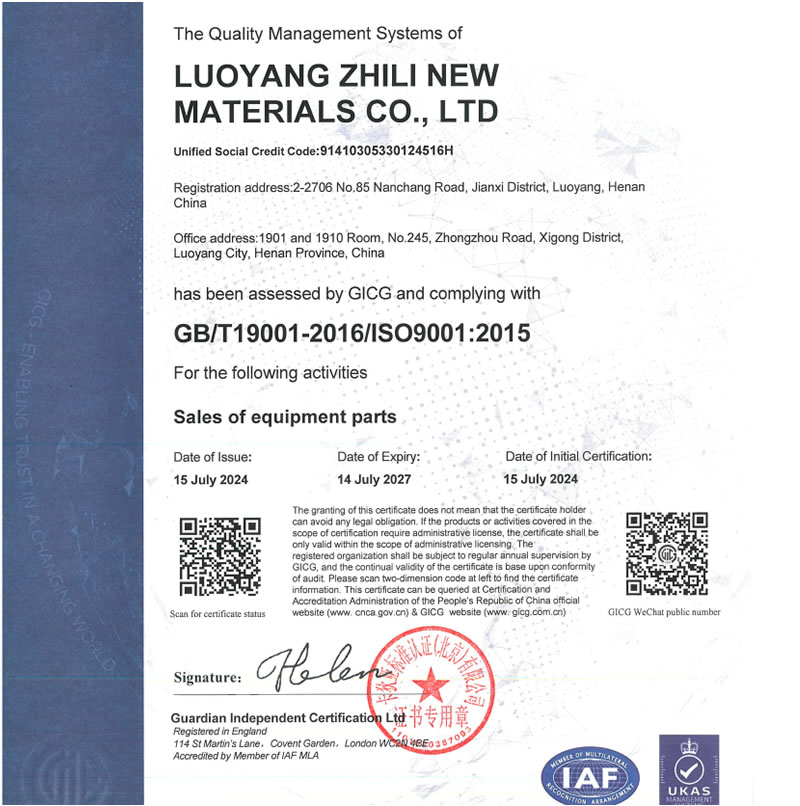
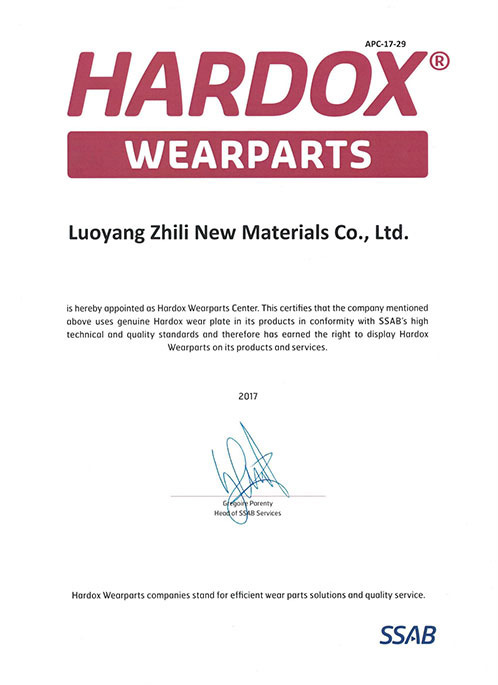
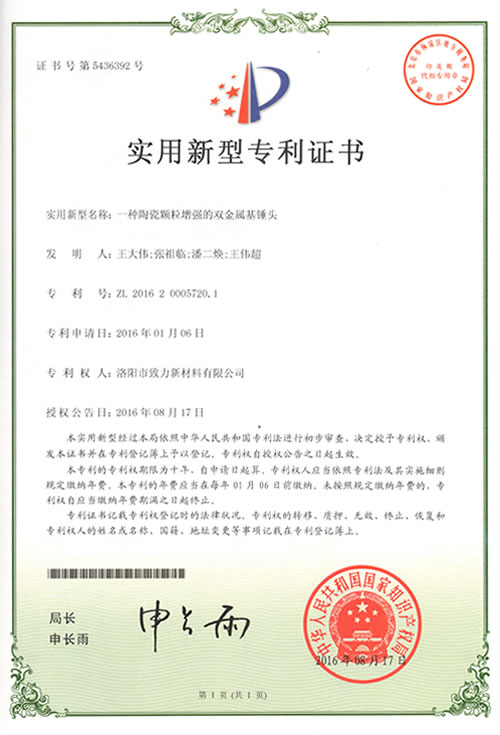
Certifications & Authorizations
Quality you can verify. Partners you can trust.
Custom OEM / ODM
From drawing to delivery — one-stop customization, no minimum order
Send Drawing
Upload your technical drawing (PDF, DWG, STEP, IGES) or share sample photos with dimensions
Engineering Review
Material recommendation, casting process design, DFM analysis — free quotation within 24 hours
Sampling & Test
Prototype production with full inspection: hardness test, spectrometer, dimensional check
Production & Ship
ISO 9001 certified. 15-25 days standard lead time. Global shipping with full documentation
Frequently Asked Questions
A roller clamp failure is one of the most catastrophic events that can happen in a VRM. The clamp is the only thing holding a 2-8 ton roller onto its hub while it rotates at 20-35 rpm under 100-300 tons of hydraulic force:
Failure sequence:
- Stage 1 — Bolt loosening: Inferior material or incorrect heat treatment causes the clamp to micro-deform under load. Bolts lose preload. This happens silently over weeks.
- Stage 2 — Clamp movement: The loose clamp begins to fret against the roller and hub surfaces. Fretting wear accelerates, creating a gap that allows the roller to shift on the hub.
- Stage 3 — Roller detachment: The roller comes off the hub and drops onto the grinding table. Result: destroyed roller, destroyed table segments, bent roller shaft, damaged mill housing, possible main bearing damage.
Why a local workshop clamp is dangerous:
- Material certification: A “looks like 45# steel” plate from a local workshop has no documented heat treatment, no mechanical test certificates, no chemical analysis. You don’t know its yield strength, fatigue limit, or impact toughness.
- Clamp profile precision: The clamp surface that contacts the roller must match the roller’s curvature exactly — not “close enough.” A 0.5mm gap creates a stress concentration that initiates a fatigue crack within months.
- Bolt torque specification: VRM clamps use Grade 12.9 bolts torqued to 1,500-7,000 Nm with controlled tightening sequences. Using wrong torque or wrong bolt grade equals a guaranteed field failure.
Cost comparison: OEM-quality ZHILI clamp: $800-4,000 per piece. Cost of one roller detachment: $200,000-500,000 (roller replacement + table repair + 2-4 weeks downtime at 200 tph = 67,000-134,000 tons lost production). The clamp is the cheapest insurance policy in the entire mill.
Both cast and forged clamps are viable, but they have different strengths:
Cast clamps (ZG35CrMo / ZG42CrMo) — best for most applications:
- Advantages: Can produce complex 3D geometries (curved clamp faces, integrated ribs, non-uniform thickness) that would be impossible or expensive to machine from a forging. Lower cost for large clamps (>100 kg).
- Limitations: Internal casting quality depends on riser design and NDT inspection. Porosity or shrinkage at critical sections can initiate fatigue cracks. ZHILI mitigates this with FEA solidification simulation + 100% UT + 100% MT.
Forged clamps (35CrMo Forged) — best for critical/maximum safety applications:
- Advantages: Forging refines the grain structure, eliminating the internal porosity risk inherent in castings. Higher impact toughness (40-60 vs 30-50 J/cm² for equivalent cast grade). More uniform mechanical properties through-thickness.
- Limitations: Higher material and machining cost (1.3-1.5x vs equivalent casting). Limited to simpler geometries that can be forged and machined. Not practical for clamps over 500 kg.
ZHILI recommendation:
- Use forged 35CrMo for: SAG mill VRM clamps, mills with known vibration issues, replacement clamps where a previous clamp failed, Loesche 56+ or Pfeiffer MPS 5600+ (largest roller sizes with highest clamping loads).
- Use cast ZG42CrMo for: Standard raw meal and cement mills, mills with stable operation and no history of clamp issues. When properly cast and NDT-inspected, ZG42CrMo clamps are completely reliable for 99% of applications.
Bolt torque and tightening procedure are as critical as the clamp material itself. Improper bolt tension is the #1 cause of clamp failure:
Bolt specifications:
- Grade 12.9 only. Never use Grade 8.8 or 10.9 bolts on roller clamps — they do not have sufficient yield strength to maintain preload under VRM vibration.
- Nord-Lock washers or Belleville spring washers are mandatory. Standard flat washers will not prevent bolt loosening as the clamp and roller thermally cycle (ambient to 200 C every startup-shutdown).
Three-step tightening procedure:
- Step 1 (50% torque): Tighten all bolts in a star/crisscross pattern to 50% of final torque. This draws the clamp evenly onto the roller face and prevents warping.
- Step 2 (100% torque): Tighten all bolts to final torque in the same star pattern. Use a calibrated hydraulic torque wrench — never an impact wrench (impact wrenches produce inconsistent tension).
- Step 3 (verification): Go around all bolts a second time at 100% torque. The first bolts tightened will relax slightly as later bolts are tensioned — the second pass ensures uniform preload.
Bolt re-torque schedule: Re-torque all clamp bolts after 24 hours of initial operation (thermal cycling settles the clamp). After that, check bolt torque at every planned shutdown — a single loose bolt means the entire clamp is losing preload. Any bolt found at less than 80% of specified torque requires removing and inspecting the bolt for fretting wear or stretching. Never re-tension a stretched bolt — replace it.
ZHILI bolt kit: Supplied with every clamp — Grade 12.9 bolts, Nord-Lock washers, torque specification card, and step-by-step tightening procedure diagram. Never reuse old bolts with a new clamp.
Related Products
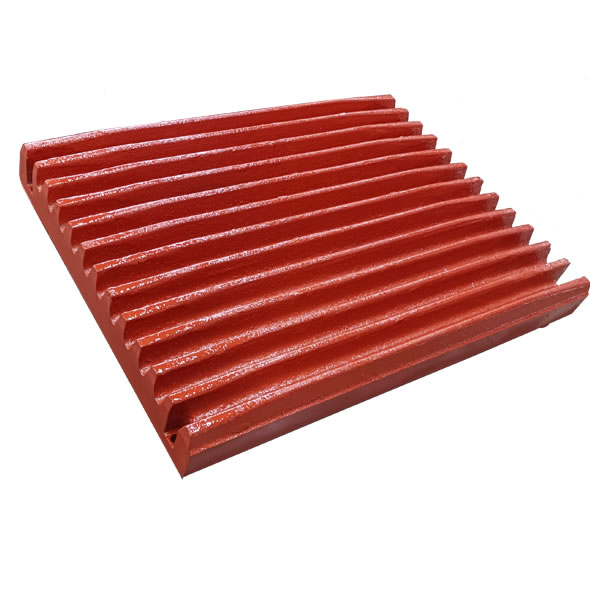
Jaw Plate
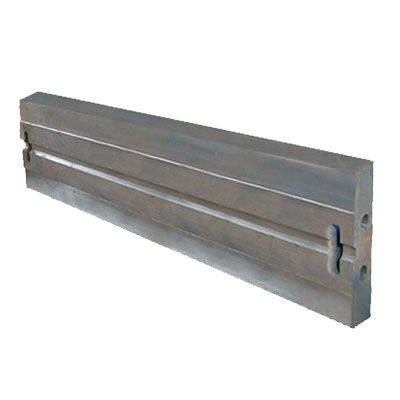
Blow Bar
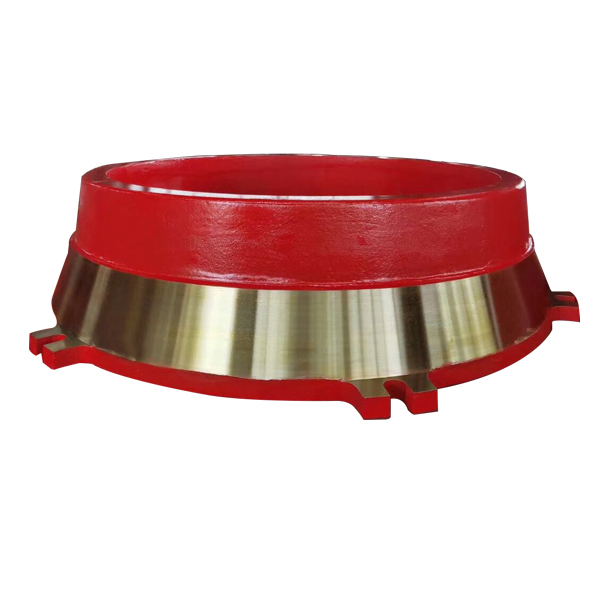
Mantle & Concave
Grate Bar
Contact Us
Get a quote within 24 hours. Send us your inquiry today.

+86 199 8785 7268
Mon-Sat 8AM-10PM CST Scan to chat — English, Spanish, Chinese Send photos of worn parts for instant quote

+86 199 8785 7268
Scan to follow — factory updates and quotes Chat in Chinese or English