

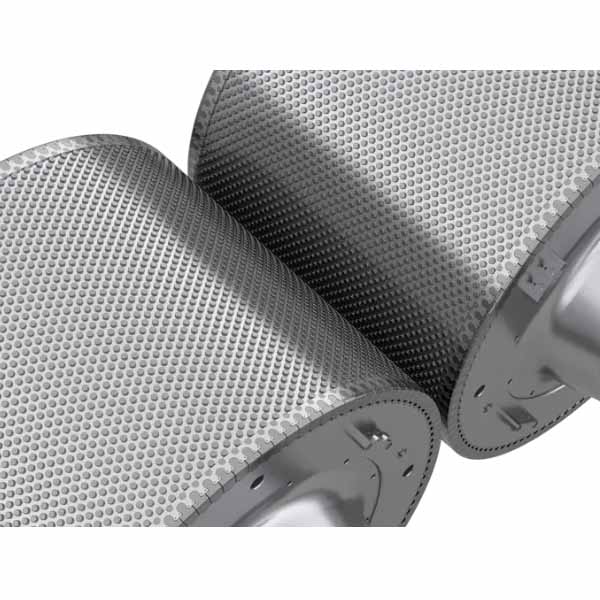
HPGR Stud Rollers / Tyres
HPGR Segmented Studded Rollers — Cast Alloy Steel Segments (35CrMo / 42CrMo) + WC-Co Alloy Stud Overlay — Interference Fit Installation with Hardfacing Underlay
HPGR Stud Rollers / Tyres
Material Specifications & Selection Guide
| Stud Grade | Material | Hardness | Dia. (mm) | Pattern | Application |
|---|---|---|---|---|---|
| High Cr-Ni | Cr20-24% + Ni | 58-65 HRC | 14-20 | Hex / Diamond | Iron ore, copper ore |
| Ultra Cr-Mo-V | Cr24-28% + Mo+V | 62-68 HRC | 16-22 | Dense Hex | Hard rock, granite |
| WC Composite | WC-Co (10-12%) | HRA 86-89 | 12-18 | Dot Matrix | Diamond ore, extreme |
| Cr-Ni-Nb | Cr20-24% + Nb | 58-64 HRC | 14-20 | Hex | High temp (300C+) |
| Mixed Grade | High Cr + WC | Variable | 14-20 | Zoned | Mixed ore types |
| Component | Material | Hardness | Process | Feature |
|---|---|---|---|---|
| Stud Surface | Pre-cast studs | 58-68 HRC | Welded in grid | Wear-resistant grid |
| Base Weld | Cr-Ni Hardfacing | 50-58 HRC | GMAW / PTA | Locks studs to tyre |
| Tyre Ring | High Cr White Iron | 58-62 HRC | Centrifugal cast | Carbide-rich surface |
| Bonding Layer | 42CrMo + Ni-based | 35-42 HRC | Interfacial fusion | Metallurgical bond |
| Tyre Core | ZG35CrMo / 42CrMo | 28-35 HRC | Cast + forged | High toughness base |
| Shaft / Hub | 42CrMo | 28-32 HRC | Forged + Q+T | Torque transmission |
| HPGR Model | Dia. (mm) | Width (mm) | Pressure | Power (kW) | OEM |
|---|---|---|---|---|---|
| HRC 800 | 800 | 250-400 | 80-120 N/mm2 | 2 x 110-200 | Metso Outotec |
| HRC 1000 | 1,000 | 300-600 | 80-120 N/mm2 | 2 x 200-400 | Metso Outotec |
| HRC 1400 | 1,400 | 500-800 | 100-150 N/mm2 | 2 x 400-750 | Metso Outotec |
| Enduron RP 120 | 1,200 | 400-800 | 100-150 N/mm2 | 2 x 350-650 | Weir Minerals |
| Enduron RP 160 | 1,600 | 600-1,200 | 100-150 N/mm2 | 2 x 600-1,200 | Weir Minerals |
| Polycom 21-16 | 2,100 | 1,600 | 100-150 N/mm2 | 2 x 1,500-2,500 | ThyssenKrupp |
Selection Quick Reference
- Iron ore / copper ore HPGR (moderate to high abrasion): High Cr-Ni studs (58-65 HRC) with hexagonal pattern — industry standard for most mining HPGR applications, balanced wear life and cost with 14-20 mm stud diameter
- Hard rock / granite / quartz-rich ore (severe abrasion): Ultra Cr-Mo-V studs (62-68 HRC) with dense hexagonal pattern — vanadium addition provides secondary hardening for hard rock applications where maximum wear resistance is critical
- Diamond ore / extreme abrasion (maximum wear): WC Composite studs (HRA 86-89) with dot matrix pattern — tungsten carbide provides exceptional hardness for the most demanding mining applications, distributed pattern reduces impact stress
- High-temperature HPGR (pyro-metallurgy, hot feed): Cr-Ni-Nb studs (58-64 HRC) with hexagonal pattern — niobium stabilizes carbides at elevated temperatures, maintains hardness above 300 C for thermal processing circuits
- Mixed ore with variable hardness (ore blending): Mixed Grade configuration with high Cr studs in high-wear zones and WC studs in impact zones — optimized zoned pattern matched to specific ore characteristics and wear profile
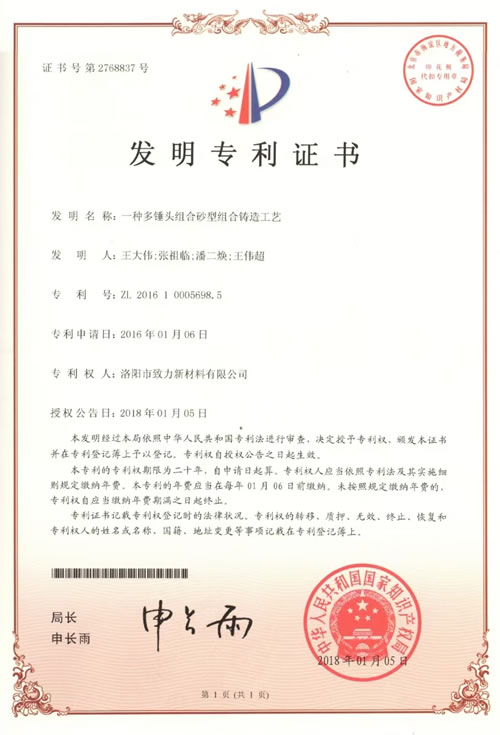
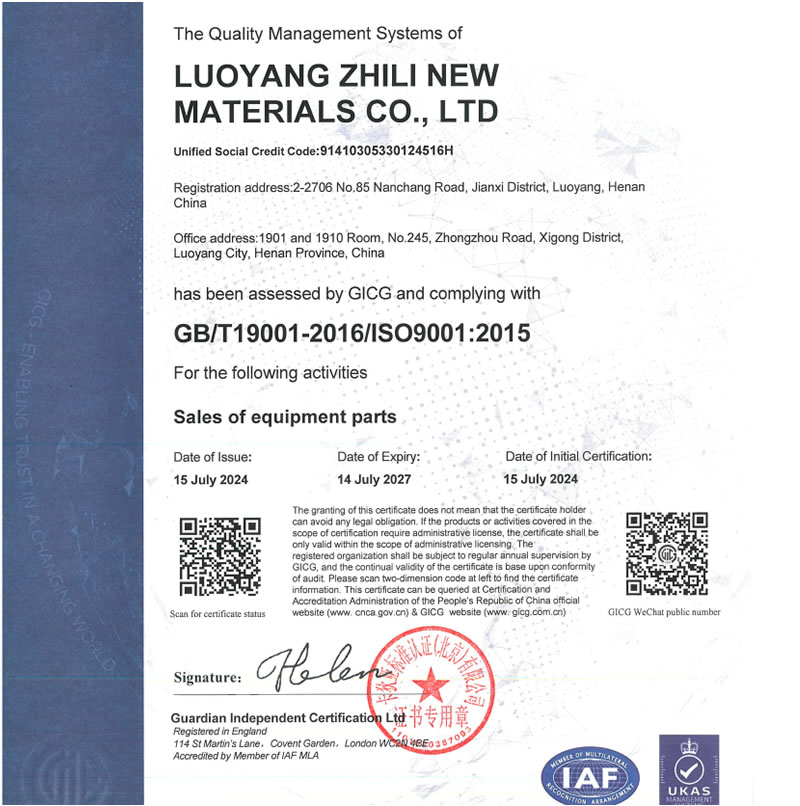
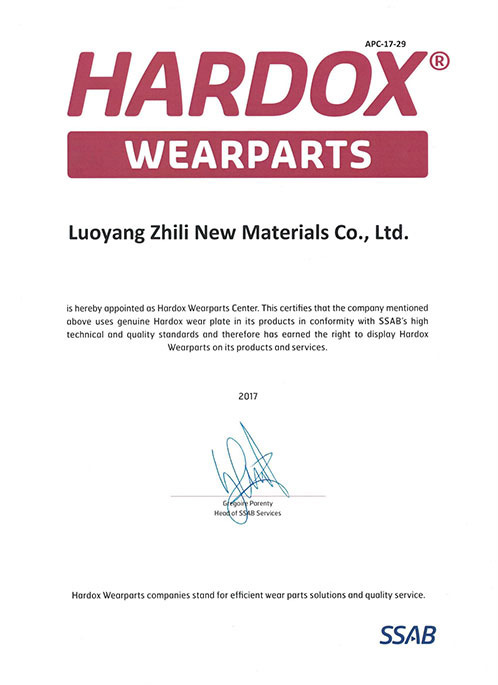
Certifications & Authorizations
Quality you can verify. Partners you can trust.
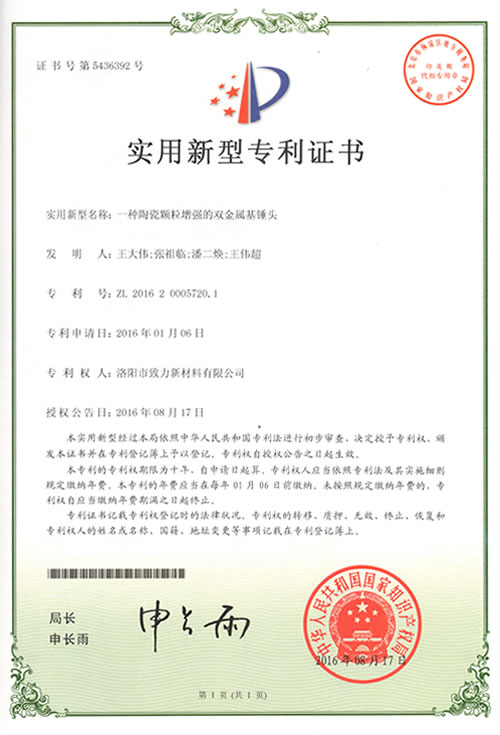
Custom OEM / ODM
From drawing to delivery — one-stop customization, no minimum order
Send Drawing
Upload your technical drawing (PDF, DWG, STEP, IGES) or share sample photos with dimensions
Engineering Review
Material recommendation, casting process design, DFM analysis — free quotation within 24 hours
Sampling & Test
Prototype production with full inspection: hardness test, spectrometer, dimensional check
Production & Ship
ISO 9001 certified. 15-25 days standard lead time. Global shipping with full documentation
Frequently Asked Questions
HPGR Stud Rollers / Tyres
HPGR rollers are almost universally designed as segmented assemblies (8-24 individual segments bolted to a central hub) rather than a single-piece roll. This is a deliberate engineering choice with specific advantages and manageable trade-offs.
Segmented Roller (8-24 pieces)
Individual segments under 500kg each
Replace single segment for localized damage
Shop-built: segments machined individually
Thermal expansion room between joints
Bolted attachment, torque-controlled
Cost: 30-40% lower new build than forged
Downtime for segment swap: 2-3 days
Monolithic Forged Roller (1 piece)
Single forging up to 50,000 kg
Entire roller scrapped for any damage
Requires very large forge press (>10,000t)
No expansion joints = thermal stress concentration
Shrink-fit or keyed to shaft
Cost: 30-40% higher than segmented
Downtime for replacement: 7-10 days
Why segmentation wins for HPGR:
- Replaceability: If a single segment fails (edge cracking, stud zone damage, or bolt-hole elongation), replace that one segment in 2-3 days. With monolithic, the entire $200k-500k roller is scrap. This alone justifies the segmented design.
- Manufacturing feasibility: Large HPGR rollers (2,000-2,400mm OD x 1,600-1,800mm wide) are at the limit of casting and forging capability. Segmented design uses pieces under 500kg that can be cast and machined with standard equipment.
- Thermal stress relief: The 1-3mm gaps between segments allow for thermal expansion during operation (5-15°C temperature rise). Monolithic rollers develop thermal stress rings that can initiate fatigue cracks.
- Selective upgrade: Edge segments wear 1.5-2x faster than center segments. With segmented design, you can use premium material (e.g., WC-6Co studs) on edge segments while using standard material on center segments, optimizing cost vs performance.
HPGR stud pattern is not one-size-fits-all. The material being processed determines the optimal stud diameter, spacing, density, and grade. Using a cement pattern for hard rock will destroy studs in months. Using a hard rock pattern for cement wastes money on unnecessary stud density.
Cement Raw Mix / Clinker
Bond Wi: 10-16 kWh/t
SiO2: 5-15%
Stud: WC-8Co, 12-14mm dia
Pattern: Hexagonal, S/D 2.0-2.5x
Density: 80-120 / 100cm2
Segment: ZG35CrMo (standard)
Edge boost: +20% density
Stud life: 12,000-18,000 h
Gold / Hard Rock (Bond Wi >20)
Bond Wi: 20-28 kWh/t
SiO2: 40-80%
Stud: WC-6Co, 10-12mm dia
Pattern: Fine hexagonal, S/D 1.5-2.0x
Density: 120-180 / 100cm2
Segment: Forged 34CrNiMo6 (premium)
Edge boost: +30% density
Stud life: 4,000-8,000 h
Application-specific adjustments:
- Iron Ore / Copper Ore: Intermediate between cement and hard rock. WC-8Co or WC-10Co studs, 14-16mm diameter, S/D 2.0-2.5x. The larger stud diameter handles the coarser particle size (iron ore typically has more +50mm particles than cement raw mix). Segment: ZG42CrMo or ZG35CrNiMo for impact toughness.
- Slag Grinding: Unique challenge — slag is angular, sharp, and often wet. WC-10Co studs (high toughness) with 2.5-3.0x S/D (wider spacing for coarse slag). Ni-Cr-B-Si hardfacing underlay between studs for corrosion protection. Density: 50-80/100cm2 (lower than cement to allow slag particle trapping).
- Kimberlite / Diamond Ore: Very abrasive but soft matrix. Use WC-6Co fine studs (10mm) at high density (150-200/100cm2) for maximum wear resistance. The autogenous layer forms quickly (50-100 h) due to the friable nature of kimberlite.
- Edge Zone Universal Rule: Regardless of application, the last 100mm of roller width ALWAYS needs 20-30% higher stud density than the center zone. This is due to the pressure gradient at roller edges and the edge bypass effect (material tends to escape laterally rather than pass through the gap at the edges).
Segment replacement strategy is the single biggest operating cost lever for HPGR owners. Replacing the right parts at the right time saves hundreds of thousands of dollars over a roller’s 10-20 year service life.
Individual Segment Swap
Replace 1-4 worn edge segments
Stud protrusion: edge segments 0-2mm, center OK
No hub disassembly needed
Bolted segments: unbolt, lift out, replace
Cost: $15,000-40,000 per segment
Downtime: 2-3 days
When: Edge wear only, center >4mm protrusion
Full Segment Set Replacement
Replace all 12-24 segments as a set
Stud protrusion: all segments approaching 2mm
Hub remains on shaft
Systematic unbolt, inspect hub, replace all
Cost: $180,000-600,000 per set
Downtime: 5-7 days
When: Center segments <4mm protrusion
Segment condition assessment (every 2,000 operating hours):
- Ultrasonic thickness on segment body: Measure at 3 points per segment (edge, mid, center). Segment body wear should be uniform across all segments. Localized thinning >3mm vs adjacent segments = root cause investigation needed (feed distribution, alignment, or segment quality issue).
- Stud protrusion check: Measure protrusion at 6-8 points per segment. Map wear pattern across roller width. Create a wear curve: plot protrusion vs position. A U-shaped curve (edges worn, center OK) is normal. A W-shaped or irregular curve signals feed distribution problem or segment misalignment.
- Bolt torque inspection: Check 100% of segment bolts for correct torque. Any bolt below 80% of specification = retorque immediately. Bolts below 60% = remove and inspect for fretting damage. Loose bolts allow micro-movement that elongates bolt holes and destroys the segment.
- Joint hardfacing integrity: Visually inspect all segment-to-segment joints. Cracks or gaps in the hardfacing seal allow material ingress, which accelerates under-segment corrosion and bolt damage.
The lifetime economics of a studded HPGR roller:
- Year 1-3 (new roller): Normal stud wear. Re-stud at 12,000-18,000 h. No segment body issues expected.
- Year 3-6: First edge segment replacements (edges wear 1.5-2x faster). Replace 2-4 edge segments per re-stud cycle. Total: 6-12 segments over this period.
- Year 6-10: First full segment set replacement. Hub and shaft inspected for fatigue at this milestone. Typically 2-3 complete re-studs cycle before full set replacement.
- Year 10-20: Second full segment set installed. Hub may need replacement at this point (bolt-hole elongation from cumulative torque cycles). Shaft inspected for fretting at bearing seats.
Related Products
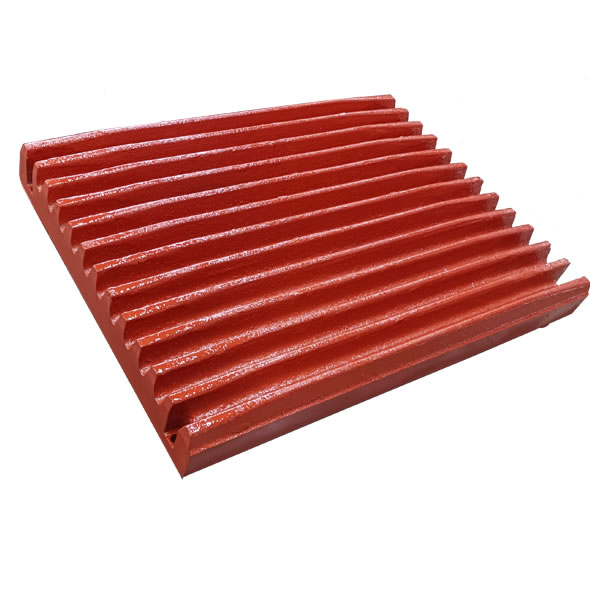
Jaw Plate
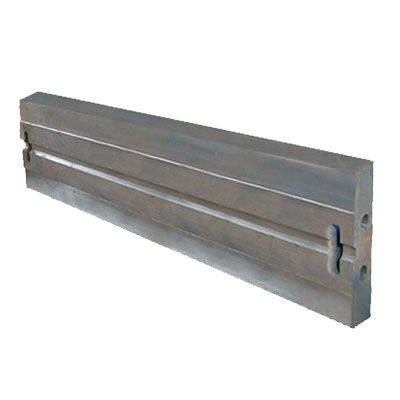
Blow Bar
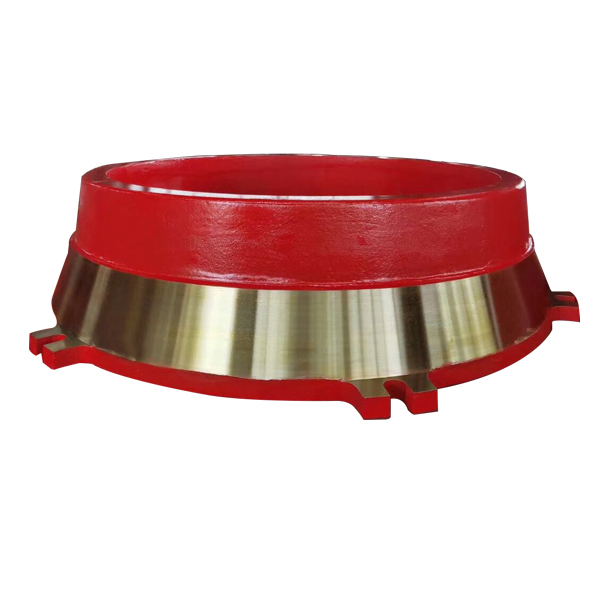
Mantle & Concave
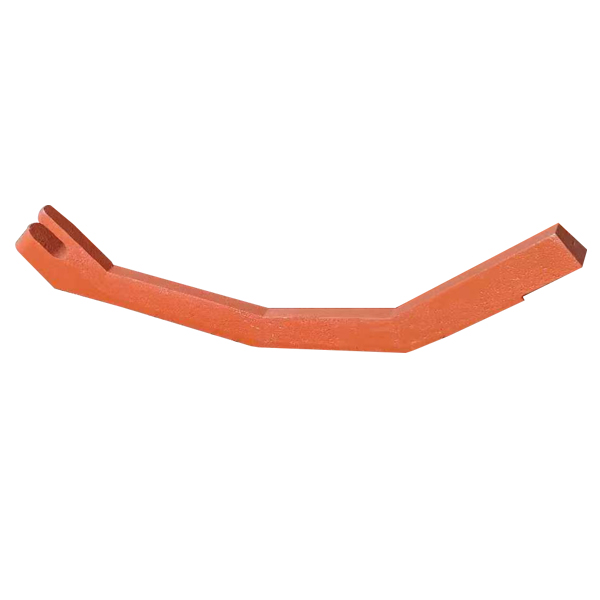
Grate Bar
Contact Us
Get a quote within 24 hours. Send us your inquiry today.

+86 178 4242 1247
Mon-Sat 8AM-10PM CST Scan to chat — English, Spanish, Chinese Send photos of worn parts for instant quote

+86 178 4242 1247
Scan to follow — factory updates and quotes Chat in Chinese or English