

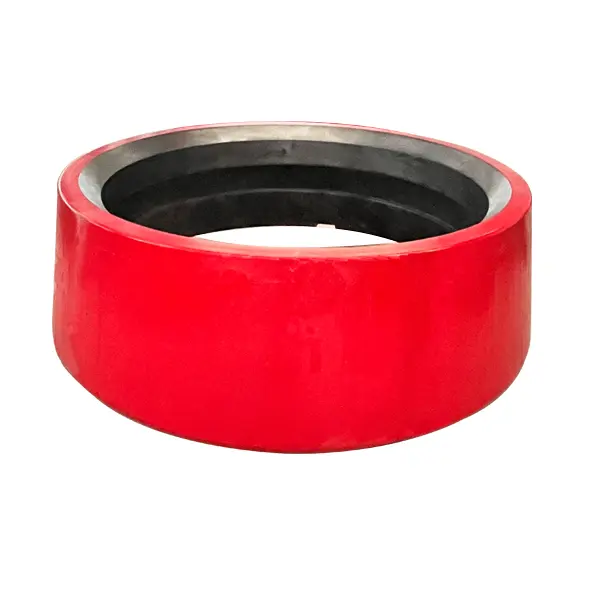
Grinding Roller / Roller Tire
VRM Grinding Roller Segments & Roller Tires — Ni-Hard IV / High Chrome Alloy (Cr20 / Cr26 / Cr27Mo2) / Hardfaced Composite — For Loesche / Pfeiffer / FLSmidth Atox / Polysius / UBE
Grinding Roller / Roller Tire
Material Specifications & Selection Guide
| Grade | Material | Hardness | Carbide | Life Factor | Application |
|---|---|---|---|---|---|
| Ni-Hard IV | Ni4-Cr8 (ASTM A532) | 55-60 HRC | 20-28% | 1.0x | Coal, raw meal, moderate wear |
| High Cr Cr20 | Cr18-22% + Mo | 58-62 HRC | 25-33% | 1.3-1.5x | Cement raw meal, standard duty |
| High Cr Cr26 | Cr23-28% | 58-63 HRC | 28-38% | 1.5-1.8x | Slag grinding, high silica |
| Cr27Mo2 | Cr26-29% + Mo1.5-2.5% | 58-65 HRC | 30-42% | 1.8-2.2x | Cement clinker, high temp |
| Ceramic Insert | ZTA / Al2O3 + Cr matrix | 62-68 HRC | 40-50% | 2.5-3.5x | Silica-rich ore, extreme wear |
| Component | Material | Hardness | Process | Feature |
|---|---|---|---|---|
| Surface Ring | High Cr White Iron | 58-65 HRC | Centrifugal cast | Carbide-rich wear surface |
| Bonding Layer | 42CrMo + Ni-Based | 35-42 HRC | Interfacial fusion | Metallurgical bond to core |
| Roller Core | 35CrMo / 42CrMo | 28-35 HRC | Forged + Q+T | High toughness, fatigue resist |
| Shaft | 40Cr / 42CrMo | 28-32 HRC | Forged + tempered | Torque transmission |
| Bearings | GCr15 (KOYO/NSK) | 58-64 HRC | Through-hardened | Heavy-load cylindrical |
| VRM Brand | Model | Roller Dia. | Width (mm) | Material | Rec. Grade |
|---|---|---|---|---|---|
| Loesche | LM 28.3D | 1,900 | 650 | High Cr White Iron | Cr20 |
| Loesche | LM 46.4 | 3,100 | 1,050 | High Cr White Iron | Cr26 |
| Loesche | LM 56.3+3 CS | 3,800 | 1,250 | High Cr + Ceramic | Cr27Mo2 |
| Pfeiffer | MPS 3750 B | 2,200 | 750 | High Cr White Iron | Cr20 |
| Pfeiffer | MPS 4750 B | 2,650 | 920 | High Cr White Iron | Cr26 |
| Pfeiffer | MPS 5600 BC | 3,100 | 1,100 | High Cr + Ceramic | Cr27Mo2 |
| FLSmidth | Atox 35 | 2,200 | 700 | High Cr White Iron | Cr20 |
| FLSmidth | Atox 50 | 3,000 | 980 | High Cr White Iron | Cr26 |
| FLSmidth | OK 42-4 | 2,600 | 850 | High Cr White Iron | Cr26 |
| Polysius | RM 41/19 | 2,400 | 800 | High Cr White Iron | Cr20 |
| Polysius | RM 54/27 | 3,100 | 1,050 | High Cr White Iron | Cr26 |
| UBE | UM 38.4 | 2,700 | 900 | High Cr White Iron | Cr26 |
| UBE | UM 50.4 | 3,500 | 1,200 | High Cr + Ceramic | Cr27Mo2 |
| Sinoma | TRM 38.4 | 2,700 | 900 | High Cr White Iron | Cr20/Cr26 |
| Sinoma | TRM 53.4 | 3,700 | 1,250 | High Cr + Ceramic | Cr27Mo2 |
Selection Quick Reference
- Coal mill grinding roller (lower abrasion, moderate temp): Ni-Hard IV or Cr20 — most economical for coal and petcoke grinding, roller diameter 1,900-2,400 mm, service life 15,000-22,000 hrs
- Raw meal grinding roller (limestone + clay, standard abrasion): Cr20 standard; upgrade to Cr26 for hard limestone with chert/flint, roller diameter 2,200-3,100 mm, life 12,000-18,000 hrs
- Slag grinding roller / GGBFS (high silica, 30-35% SiO2): Cr26 minimum, Cr27Mo2 preferred for >200 tph — requires hardfacing rebuild every 2,000-3,000 hrs on roller surface
- Cement finish grinding roller (250-350 C, clinker + gypsum): Cr27Mo2 with Mo content >1.5% essential for hot hardness retention at elevated operating temperatures
- Silica-rich ore grinding (quartz, extreme abrasion): Ceramic insert (ZTA/Al2O3) in high Cr matrix — 2.5-3.5x life vs standard high Cr, for severely abrasive applications
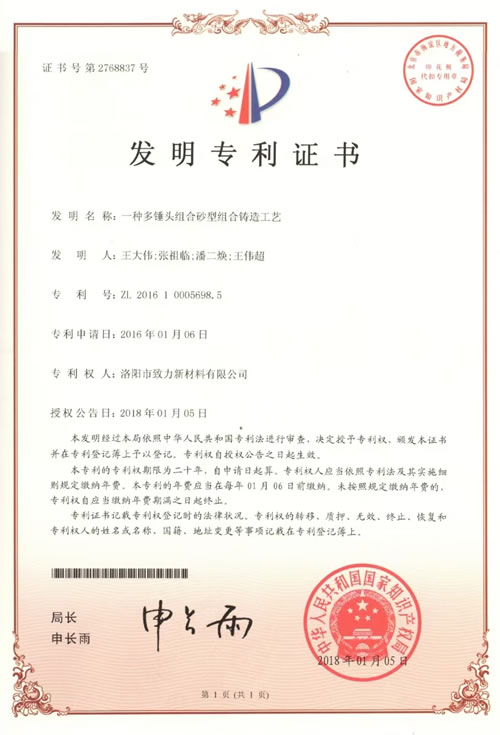
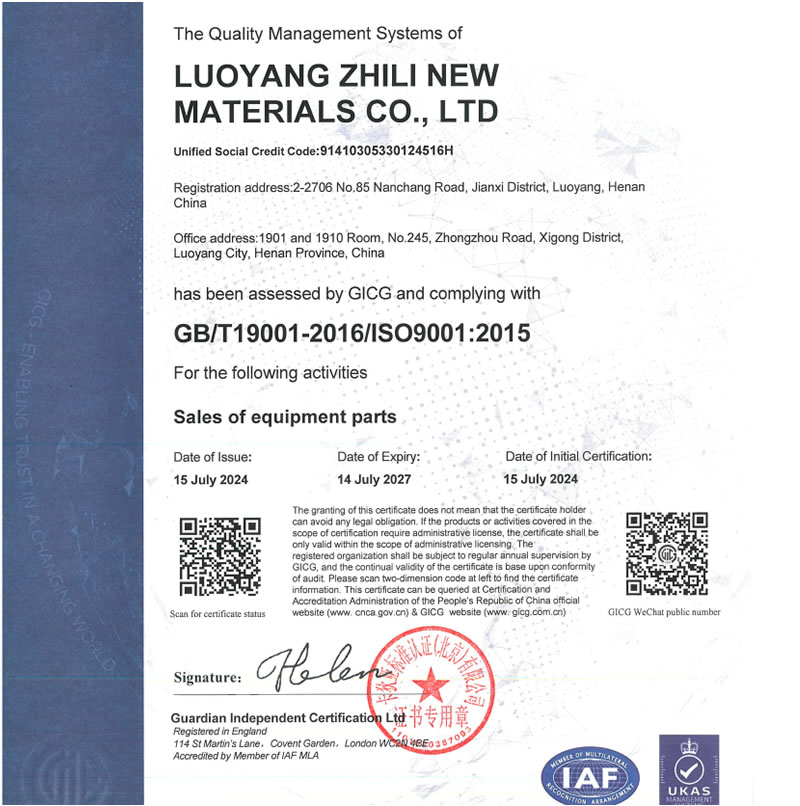
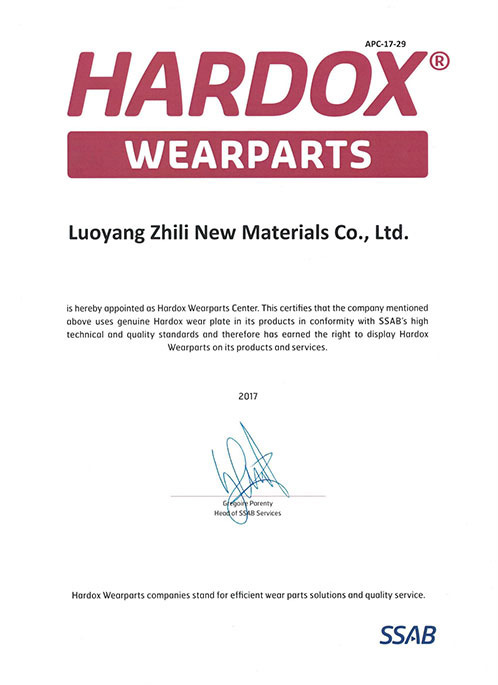
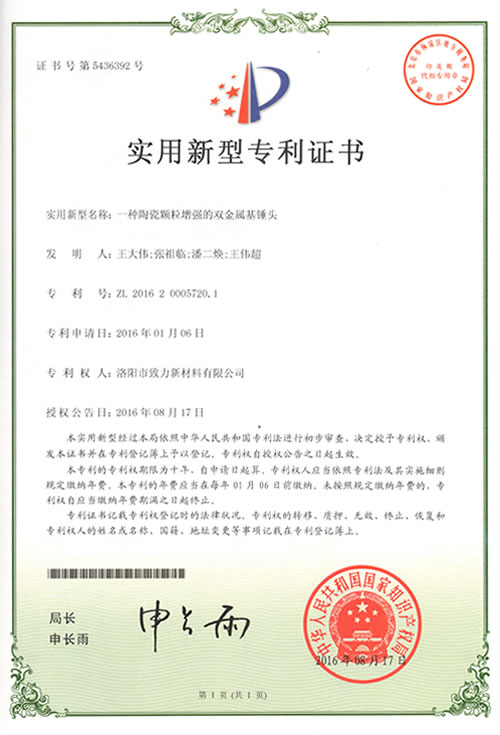
Certifications & Authorizations
Quality you can verify. Partners you can trust.
Custom OEM / ODM
From drawing to delivery — one-stop customization, no minimum order
Send Drawing
Upload your technical drawing (PDF, DWG, STEP, IGES) or share sample photos with dimensions
Engineering Review
Material recommendation, casting process design, DFM analysis — free quotation within 24 hours
Sampling & Test
Prototype production with full inspection: hardness test, spectrometer, dimensional check
Production & Ship
ISO 9001 certified. 15-25 days standard lead time. Global shipping with full documentation
Frequently Asked Questions
Unlike crusher wear parts that fail by pure abrasion, VRM grinding rollers fail primarily through rolling contact fatigue combined with abrasive wear. The roller experiences cyclic compression every revolution, creating sub-surface shear stress that leads to material spalling (flaking off in large pieces).
Three main failure modes:
- Surface wear (normal): Gradual abrasive wear by the material bed. Managed by hardfacing rebuild every 2,000-5,000 hours depending on material grade and feed abrasiveness.
- Spalling (fatigue): Sub-surface cracks propagate parallel to the surface, causing chunks to flake off. Most common in brittle materials like Ni-Hard IV. Cr27Mo2 with tempered martensite matrix reduces spalling risk by 60-70% vs Ni-Hard.
- Catastrophic fracture: Radial cracking from tramp metal impact or thermal shock. The hard Cr grades are brittle — if your feed contains occasional tramp iron, a bi-metallic roller (Mn13Cr2 core + Cr26 outer shell) is the safest choice.
Uneven wear pattern: The roller leading edge typically wears 30-40% faster than the trailing edge due to higher contact pressure on material entry. Our profile restoration rebuild restores the original OEM contour within +/- 1.0mm.
Yes. ZHILI offers three rebuild service levels specifically engineered for VRM grinding rollers:
1. On-Site Roller Rebuild (Mobile Service)
- Our team deploys to your plant with a powered roller turning device that rotates the roller at controlled 0.5-1.5 m/min surface speed for uniform overlay deposition — this is critical because uneven hardfacing causes out-of-round vibration.
- Hardfacing applied inside the mill without removing the roller assembly. Typical rebuild time: 18-36 hours per roller.
- Standard Fe-Cr-C or premium Nb/WC-reinforced flux-cored wire. Single or double pass, 3-8mm total buildup.
- Includes preheat to 250-300 C (gas burner or induction), interpass temperature control, and controlled cool-down.
2. Workshop Full Rebuild (Factory Quality)
- Roller removed and shipped to our facility. Full process: UT/MT inspection, crack gouging and repair welding, 300-400 C preheat, multi-layer robotic overlay (6-axis robot, +/-0.3mm uniformity), post-weld stress relief heat treatment, CMM dimensional check within +/- 1.0mm.
- Includes complete documentation: NDT report, overlay chemistry, dimensional report, EN 10204 3.1.
3. Profile Restoration (Uneven Wear Correction)
- Specialized rebuild for rollers with uneven leading-edge-to-trailing-edge wear. Restores the original OEM profile (convex, flat, grooved) within 0.5mm deviation across the roller width. This restores even grinding pressure distribution and prevents vibration.
Which option? On-site = fastest (18-36 hrs/roller, zero removal). Workshop = highest precision (+/-1.0mm). Profile Restoration = best for rollers with uneven wear pattern. Our engineers help evaluate based on remaining roller thickness, wear pattern, and production schedule.
Roller material selection is driven by feed abrasiveness, operating temperature, and failure mode tolerance. Here is the decision flow:
Three factors unique to rollers (not applicable to grinding tables):
- Spalling risk vs wear rate trade-off: Ni-Hard IV is cheap and has decent wear resistance, but its brittle M3C carbide structure makes it prone to spalling under cyclic rolling loads. Cr27Mo2 with tempered martensite matrix costs 1.5-2x more but reduces spalling failure risk by 60-70%. If a roller spalls catastrophically, the replacement cost ($15,000-60,000 per roller) plus 3-5 days downtime far exceeds the material cost difference.
- Hot hardness requirement: Cement finish mills operate at 280-350 C. Ni-Hard IV softens significantly above 250 C; Cr27Mo2 retains hardness to 450 C. Always choose Cr27Mo2 for clinker grinding, regardless of SiO2 content.
- Master/slave roller pairing: Mills with master + slave rollers (e.g., Loesche 3+3, Pfeiffer MVR) should use matched material pairs. Uneven wear between the pair causes vibration and uneven grinding pressure. ZHILI supplies weight-matched roller sets (difference < 0.5%) with identical material grade and heat treatment batch.
ZHILI recommendation: For new installations, we recommend starting with Cr26 (good balance of cost and performance) and evaluating wear rate over the first 6 months. Upgrade to Cr27Mo2 + hardfacing if annual roller consumption exceeds 2 sets. For plants already running Ni-Hard and experiencing spalling, switching to Cr26 typically reduces roller-related downtime by 40-50%.
Related Products
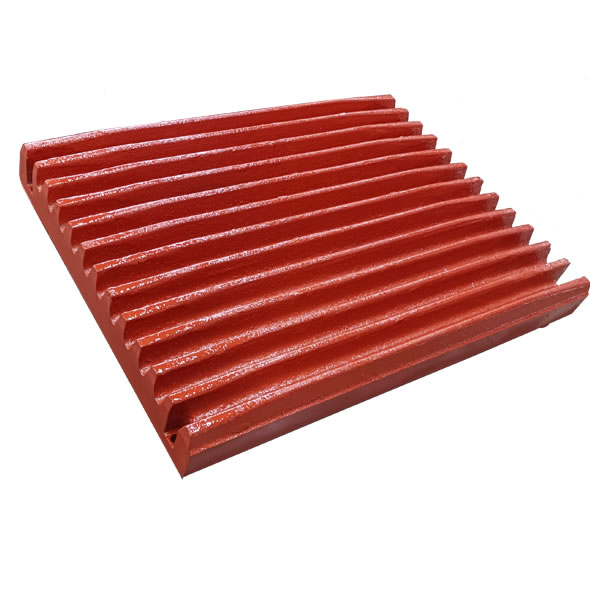
Jaw Plate
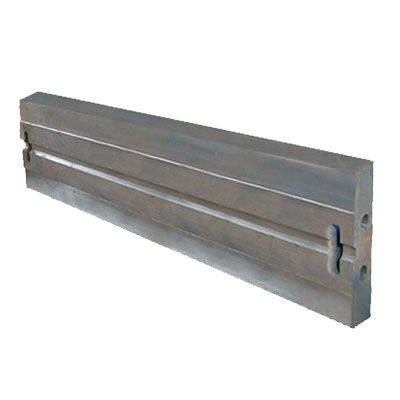
Blow Bar
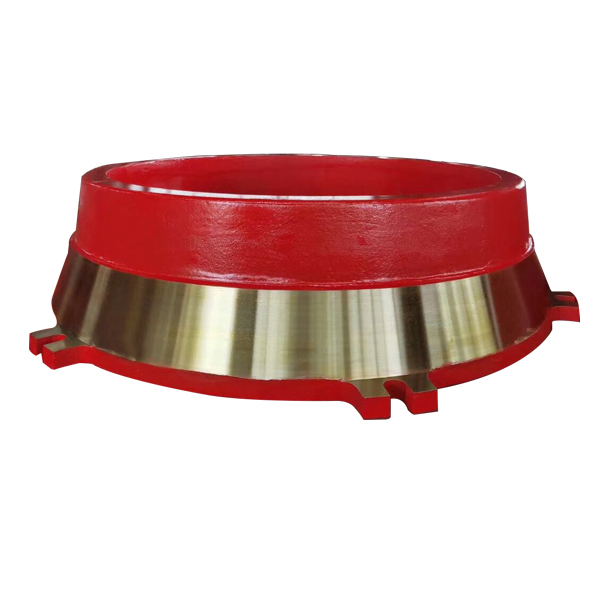
Mantle & Concave
Grate Bar
Contact Us
Get a quote within 24 hours. Send us your inquiry today.

+86 199 8785 7268
Mon-Sat 8AM-10PM CST Scan to chat — English, Spanish, Chinese Send photos of worn parts for instant quote

+86 199 8785 7268
Scan to follow — factory updates and quotes Chat in Chinese or English