

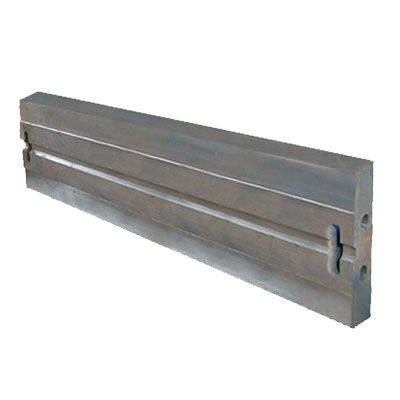
Crusher Blow Bar
Impact Crusher Blow Bars — Martensitic Steel / Chrome Iron / High Chrome / High Chrome with Ceramic Insert / Manganese Steel
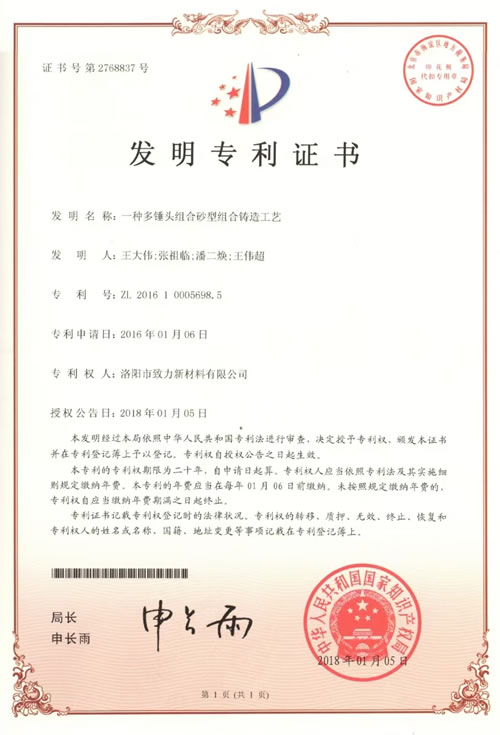
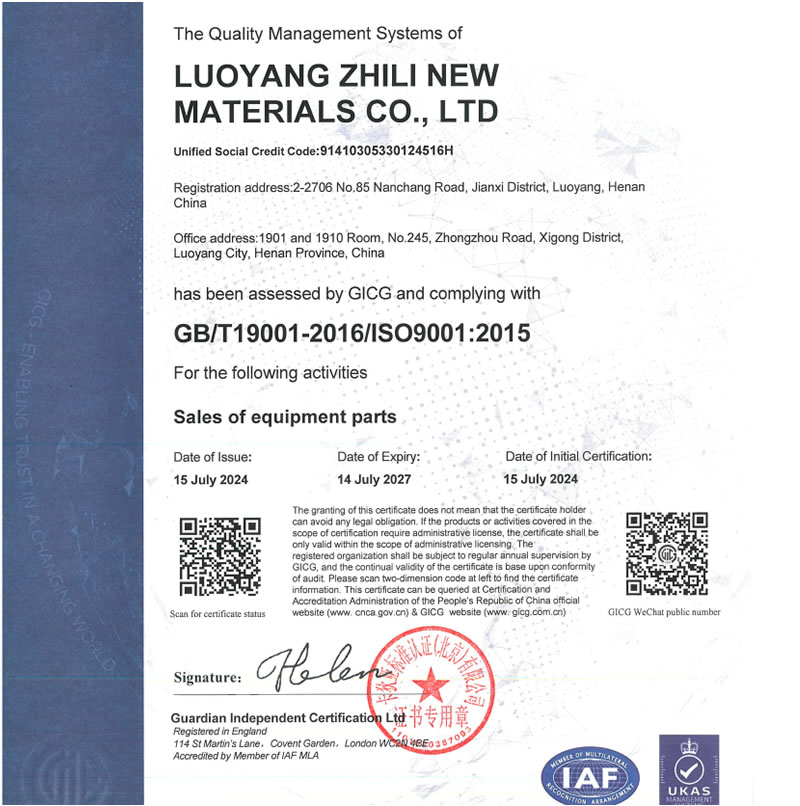
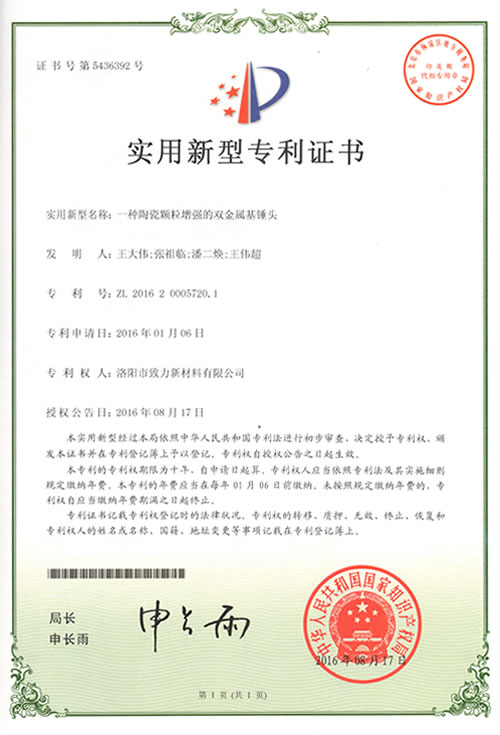
Certifications & Authorizations
Quality you can verify. Partners you can trust.

Custom OEM / ODM
From drawing to delivery — one-stop customization, no minimum order
Send Drawing
Upload your technical drawing (PDF, DWG, STEP, IGES) or share sample photos with dimensions
Engineering Review
Material recommendation, casting process design, DFM analysis — free quotation within 24 hours
Sampling & Test
Prototype production with full inspection: hardness test, spectrometer, dimensional check
Production & Ship
ISO 9001 certified. 15-25 days standard lead time. Global shipping with full documentation
Frequently Asked Questions
Quick answers to common questions about our impact crusher blow bars
Blow bar material selection is a balancing act between wear resistance and impact toughness. Unlike hammer crushers where impact energy is absorbed by the material bed, impact crusher blow bars strike the material directly at rotor tip speeds of 30-55 m/s:
- Cr20 high chrome (standard, 60% of applications): The benchmark for limestone, dolomite, and soft rock crushing where SiO2 content is below 5%. At 58-62 HRC through-hardness, Cr20 provides excellent wear resistance against low-stress abrasion. Blow bar life of 200-400 hours in clean limestone at 200-300 t/h is typical. Cost is the lowest of all high-chrome options. Use Cr20 when the crusher processes consistent, known feed with minimal contamination. The 25-33% carbide volume fraction is sufficient for non-abrasive material but inadequate when silica exceeds 8-10%.
- Cr26 / Cr27Mo2 high chrome (heavy duty, 30% of applications): For abrasive materials containing 10-25% silica — granite, quartzite, recycled concrete, slag. Cr26 (23-28% Cr) increases carbide volume fraction to 28-38%, dramatically reducing micro-ploughing wear. Blow bar life improves 1.6-2.0x over Cr20 in these conditions. Cr27Mo2 adds 1.5-2.5% molybdenum for two critical benefits: (a) improved thermal fatigue resistance — blow bars heat to 300-500 C at the striking edge from repeated impact friction, and Mo suppresses carbide coarsening at these temperatures; (b) higher impact toughness (8-12 J/cm2 vs. 6-9 J/cm2 for Cr26) — important when feed contains occasional 300-500 mm lumps that deliver high-energy impact to the blow bar face.
- Martensitic steel (safety choice, 5-10% of applications): When processing demolition waste, mixed C&D material, or feed contaminated with rebar, structural steel, and tramp iron, high chrome blow bars risk catastrophic fracture. Martensitic steel (50-58 HRC, 15-25 J/cm2 toughness) deforms plastically — the blow bar mushrooms at the striking edge rather than shattering. This protects the crusher rotor, housing, and operators from flying fragments. Life is 30-40% shorter than Cr27Mo2, but zero-shatter safety justifies the cost when tramp metal probability exceeds 0.1% by weight. Use martensitic when: (a) the crusher has no effective tramp metal detector or magnet; (b) feed is sourced from demolition or recycling; (c) a blow bar explosion incident has occurred previously.
- Ceramic composite (premium option, 5% of applications): TiC or WC ceramic particles cast into the Cr26 matrix at the striking face create a composite where the wear surface is 2,800-3,200 HV (ceramic) while the body retains chrome toughness. The ceramic particles are immune to the micro-ploughing that erodes chrome carbide. Life is 2.5-3.5x Cr27Mo2, but per-bar cost is 80-120% higher. Payback requires >1,500 hours of continuous operation or downtime cost >$2,000/hour. Best for 24/7 quarry operations processing abrasive granite where blow bar change downtime costs $50,000+ per event.
Quick selection rule: Can you scratch the feed material with a knife blade? No (Mohs >5.5) → Cr26/Cr27Mo2 or ceramic. Does your magnet capture >5 kg of tramp metal per shift? Yes → martensitic. Is blow bar life <200 hours and crusher is production bottleneck? → ceramic composite. Send 5 kg of your feed material to ZHILI — we will run an abrasion index test and recommend the optimal material within 5 working days.
Uneven blow bar wear is the #1 cause of premature rotor re-balancing and crusher vibration. Blow bars wearing 3-4 mm differently creates kilogram-level imbalance at 500-1,000 RPM:
- Leading edge concentration wear (most common pattern): The leading face of the blow bar wears 3-5x faster than the trailing edge because it is the primary striking surface. A flat-profile blow bar will develop a pronounced concave radius at the leading edge, reducing impact efficiency and increasing recirculation load as the effective striking angle changes. Rotation solution: most blow bars are designed with 180-degree symmetry — flip the bar end-to-end so the unworn trailing edge becomes the new leading edge. This effectively doubles blow bar life at zero material cost. Rotate every 100-150 operating hours — do not wait until the leading edge is completely flat, as the heavily worn side may have developed micro-cracks that propagate after rotation.
- Uneven wear across multiple bars (rotor imbalance risk): On a 4-bar rotor, the two bars positioned to receive the bulk of gravity-fed material (typically the 6 o’clock and 3 o’clock positions in the rotation) wear 1.2-1.5x faster than the other bars. When bar weight difference exceeds 1% (0.5 kg for a 50 kg bar), the rotor imbalance creates vibration exceeding 4.5 mm/s RMS — bearing life drops 50-70% within weeks. Solution: (a) rotate not just individual bars but swap positions — move the most-worn bar to the least-worn position; (b) weigh all bars at every rotation and pair the heaviest and lightest at opposite positions; (c) replace the full set when the heaviest-worn bar reaches 25-30% weight loss, even if other bars appear serviceable — the imbalance cost exceeds the residual bar value.
- Wedge and clamp wear (overlooked failure mode): The blow bar is secured in the rotor slot by wedges, clamps, or hydraulic locking mechanisms. These wear surfaces are not visible during routine inspection but wear progressively from vibration and crushing force reaction. When the wedge or clamp loses grip, the blow bar can shift in the slot during rotation — the sudden movement can break the bar or eject it through the crusher housing. Detection: check wedge tightness with a torque wrench at every bar rotation — any wedge accepting >1/4 turn to reach specification indicates seat wear. Replace wedges and clamps every 2-3 bar rotations regardless of appearance — the cost ($200-500 per set) is negligible compared to the damage from a thrown blow bar ($10,000-50,000).
- Bar reversal record keeping: Maintain a blow bar log documenting: date, hours, bar weight before/after rotation, bar position, and any visible cracking. This log reveals wear trends — if bar life decreases over successive rotations (e.g., 300 hours → 250 hours → 180 hours), the rotor slot seat or wedge clamping surface is worn and must be rebuilt. The bar itself is not failing — the worn mounting is causing uneven bar loading that accelerates wear.
The $0 rotation that doubles life: A blow bar designed for 180-degree reversal effectively costs half the purchase price per operating hour. Schedule rotation into the weekly maintenance plan — every Monday morning or every 100 hours. The 30-minute rotation procedure (loosen wedges, flip bars, re-tighten) pays back 50-100 hours of additional bar life per bar, per rotation. Over a 4-bar set costing $5,000, rotating twice before replacement saves $10,000 in bar cost alone, plus avoided downtime.
Blow bar installation is a precision clamping operation. A loose blow bar shifts under centrifugal force and impact, creating a cascade failure that can destroy the rotor within seconds:
- Rotor slot preparation (step 1 — cleanliness is critical): Remove all debris, rust, and old wedge fragments from the rotor slot seat and wedge clamping surfaces. Even a 0.5 mm particle of crushed rock under the blow bar creates a fulcrum — when the wedge is tightened, the bar bends microscopically around the particle, creating a tensile stress in the bar body. Under impact, the bar can crack from this bending stress. Use compressed air and a wire brush to clean all surfaces to bare metal. Apply a thin film of anti-seize compound (copper-based acceptable for chrome steel) to wedge threads only — never to the wedge or bar seating surfaces, as this reduces clamping friction.
- Blow bar seating and wedge sequence (step 2): (a) Insert the blow bar into the rotor slot and centre it laterally — the bar must overhang equally on both sides of the rotor. An off-centre bar creates a couple imbalance that is impossible to correct with balance weights. (b) Insert the wedges or clamps. For wedge-type rotors, the wedge angle (typically 7-10 degrees) is self-locking — the wedge tightens under centrifugal force during operation. (c) Tighten the wedge bolts in stages: 50% torque in a cross-pattern for multi-bolt wedges, then 100% torque. Use a calibrated torque wrench — impact wrenches are not accurate enough for wedge clamping. (d) After the wedge is fully tightened, tap the blow bar body with a brass hammer — the sound should be a solid “thunk”, not a ringing or rattling sound. A ringing sound indicates the bar is not fully seated.
- First-hour operation and re-torque (step 3 — do not skip): After installation, run the crusher empty for 5 minutes at low speed to verify no knocking or vibration. Run at full speed empty for 15 minutes. Feed material at 25% rate for 30 minutes, then 50% for 30 minutes, then full rate. After 8 hours of full-load operation, stop the crusher and re-torque all wedge bolts to specification. Expect 10-15% torque relaxation as the blow bar beds into the seat and the wedge angle settles under centrifugal load (the bar “grows” radially outward by 0.1-0.3 mm under centrifugal force, tightening the wedge). Skipping this re-torque is the single most common cause of wedge loosening and thrown blow bars.
- Blow bar selection for your rotor type: Impact crushers use three main rotor types: (a) open rotor (most common) — blow bar sits in an open slot, secured by wedge from one side, easy to change but relies entirely on wedge clamping force; (b) closed rotor — blow bar sits in a closed pocket, wedge clamped, better bar support but heavier rotor and more difficult bar change; (c) quick-change rotor (Metso NP series) — hydraulic or mechanical wedge release, fastest change time (15-30 minutes for a full set). Always specify your rotor type when ordering blow bars — the bar geometry (thickness, back profile, wedge angle) is specific to the rotor design. ZHILI can reverse-engineer bars for any rotor type from a sample or OEM drawing.
Safety protocol (life-critical): A 200 kg blow bar ejected at 45 m/s tip speed exits the crusher at >160 km/h with 2.5 MJ of kinetic energy — equivalent to a small car at highway speed. Before any blow bar work: (1) lock out and tag out main power; (2) mechanically secure the rotor with a rotor lock pin; (3) never stand in the plane of rotation during start-up after a bar change; (4) use a remote camera during the first 30 minutes — stop immediately if vibration exceeds 7.1 mm/s RMS. ZHILI supplies matched-weight blow bar sets with certified individual weights — every bar in a set is within 0.5% of the mean weight, eliminating the most common source of post-installation rotor imbalance.
Related Products
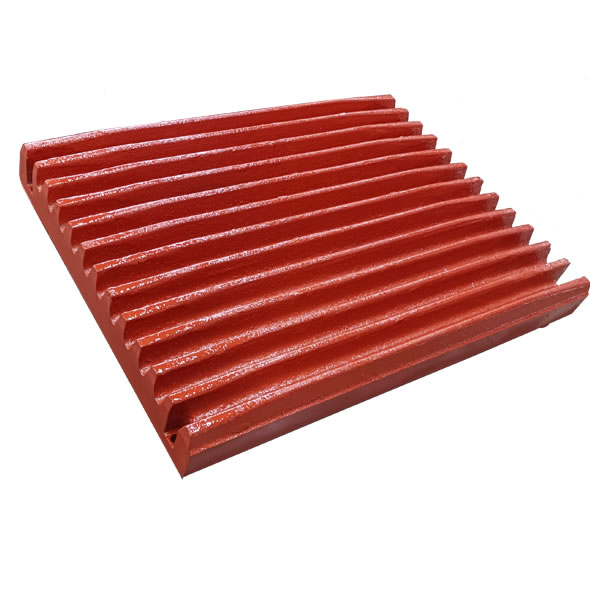
Jaw Plate
Blow Bar
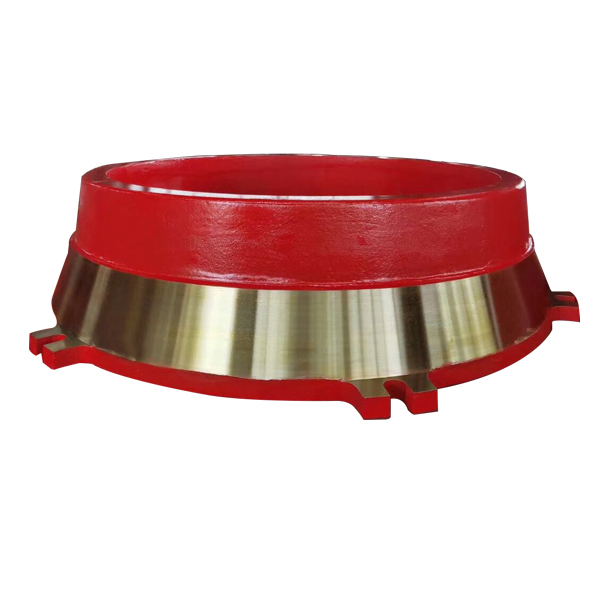
Mantle & Concave
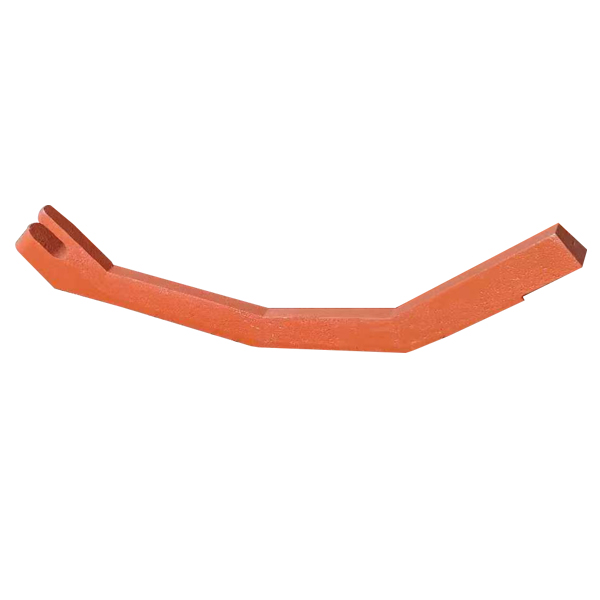
Grate Bar
Contact Us
Get a quote within 24 hours. Send us your inquiry today.

+86 199 8785 7268
Mon-Sat 8AM-10PM CST Scan to chat — English, Spanish, Chinese Send photos of worn parts for instant quote

+86 199 8785 7268
Scan to follow — factory updates and quotes Chat in Chinese or English